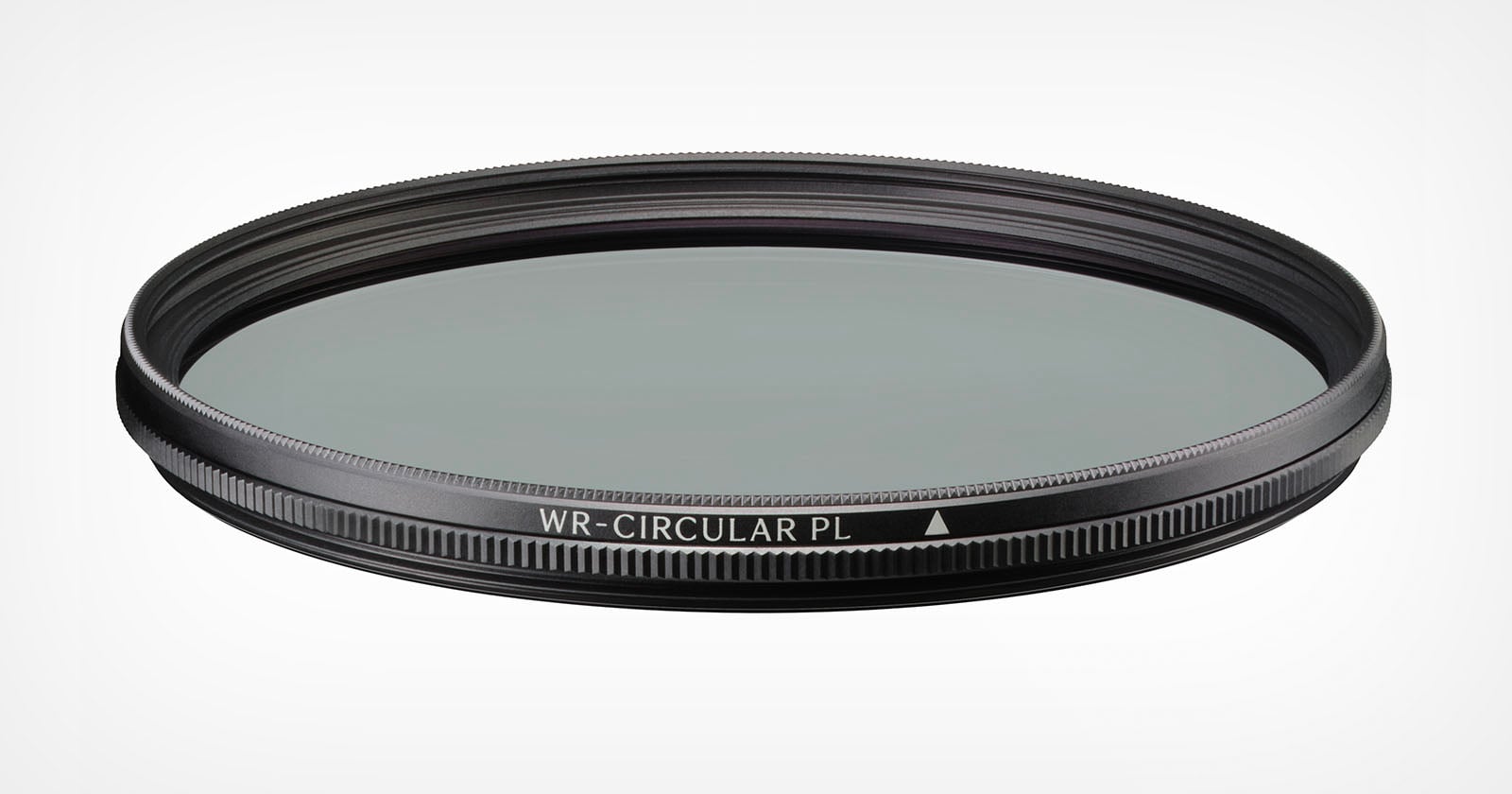
Sigma's announcement of its redesigned lens filters, arriving alongside two striking new full-frame lenses, feels less like a footnote and more like a quiet declaration. In an era where every gear release shouts for attention, Sigma has chosen to refine the unsung hero of the optical chain: the glass that sits between your lens and the world. We've long held that a great filter should be invisible in function and transformative in effect, and these slimmed-down designs, built with the same contemporary and Art-series DNA, suggest the company finally agrees that filtration deserves the same obsessive engineering as the optics themselves. It's an aspirational move, but one grounded in the practical reality that most of us have suffered a soft image or a vignette caused by a mediocre piece of glass.
For our readers, the practical takeaway is immediate and tangible. A redesigned circular polarizer, for instance, isn't just about cutting glare; it's about reclaiming contrast and color saturation with a precision that feels less like post-processing and more like pre-visualization. The slimmer profile is the quiet hero here, because on a mirrorless body, where every millimeter shifts the balance, a filter that doesn't add bulk or introduce mechanical vignetting becomes an extension of your creative hand rather than a necessary compromise. We'd tell any photographer who has ever hesitated before stacking a filter on a premium lens to look again. This is the kind of update that doesn't make the front page, but it raises the floor of your daily work in ways that are immediately felt in the field, not just measured in a lab. For more context on how these filters complement the new glass, check out our coverage of the 20-60mm f/2.8-4 DG Contemporary and the 85mm f/1.2 DG Art lenses, alongside the full Sigma filter announcement.
The authentic question we keep circling back to is whether this signals a broader industry shift toward treating filters as core optical elements rather than afterthought accessories. We hope so. For too long, the market has been dominated by generic, mass-produced threads that claim multi-coating but deliver flares and ghosting that betray the very lenses they're meant to protect. Sigma's move feels different because it's born from a company that understands optical formulas, not just retail margins. The specific consequence we're watching is whether this pushes competitors to raise their own standards, not just in sharpness, but in the nuanced handling of reflections and color neutrality. If Sigma's filters perform even half as well as their lenses suggest, the next question our readers should ask is simple: why would you ever mount a generic filter on a premium optic again? That's not a rhetorical question; it's a challenge to the status quo, and we're eager to see who answers.