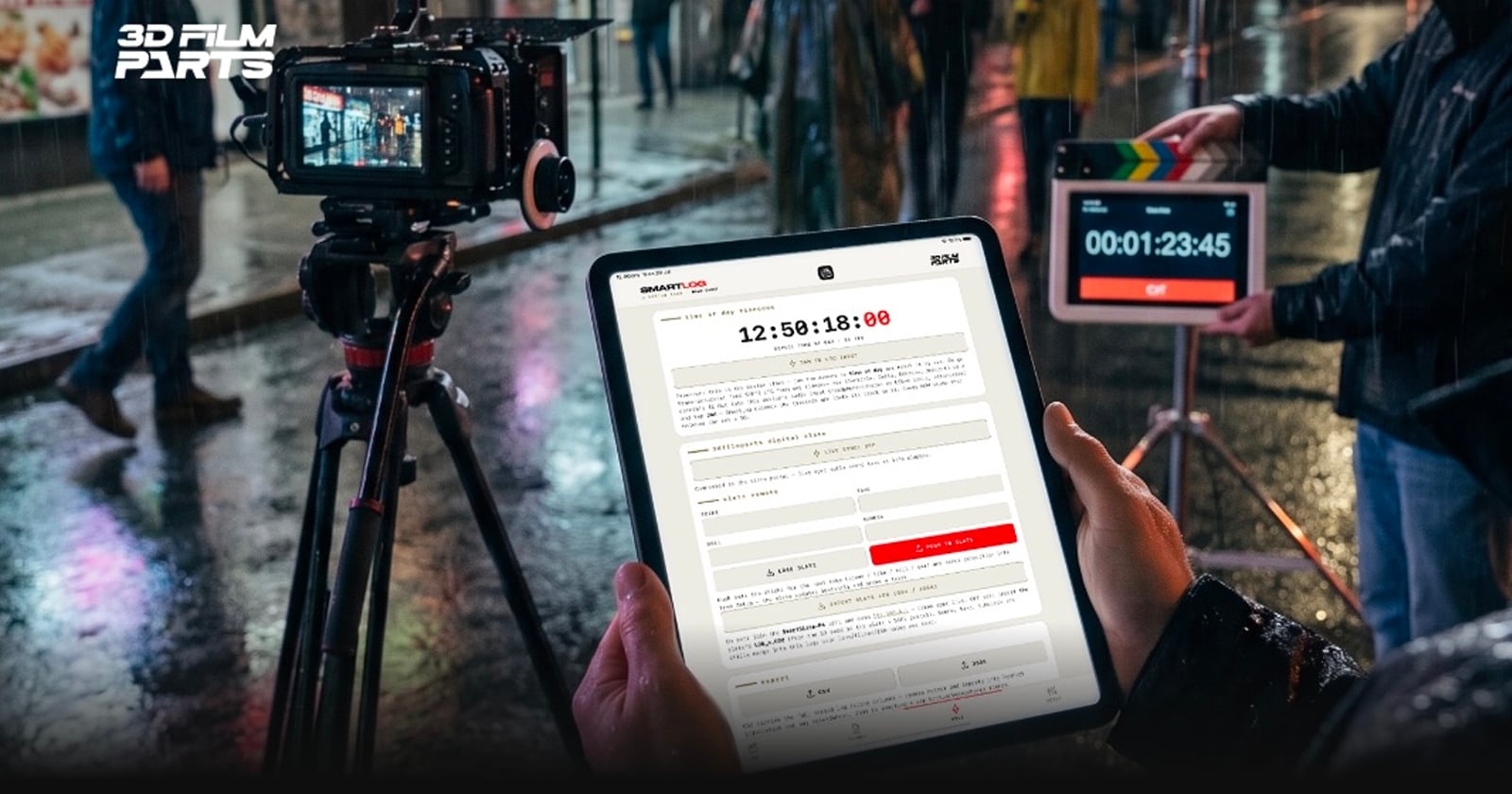
The film industry runs on controlled chaos, and the quietest revolutions are often the ones that bring order to it. So when an Australian startup like 3D Film Parts steps forward with tools designed to streamline the daily grind, we pay attention. Their latest offerings, a free digital camera report app called SmartLog and a proof-of-concept electronic clapperboard dubbed the Smart Slate P4, are not flashy attempts to reinvent cinema. They are, instead, a focused effort to solve two of the most tedious, error-prone tasks on any set: logging footage and syncing sound. This is the kind of practical innovation that rarely makes headlines but always makes better work possible.
Our take? This is where artistry meets logistics, and it is a beautiful thing to see. In an era where we often chase the next lens or the latest sensor, it is refreshing to see a company address the unglamorous backbone of production. The SmartLog app, by digitizing a process that still relies heavily on paper and manual data entry, speaks directly to the need for accuracy and efficiency. It is a tool for the crew member who wants to spend less time deciphering handwriting and more time framing the shot. This aligns with a broader trend we have championed, one where the technical and the creative are not at odds but in service of each other. Just as Embrace the Drama: Exploring the Allure of Ultra-Low ISO Film celebrates a deliberate, considered approach to image-making, SmartLog encourages a deliberate, considered approach to workflow. And for those who love capturing a look in-camera, the ethos here is similar: the more control you have over the process, the more freedom you have in the final image. It is about removing friction so that the vision, not the admin, leads the way.
What we would tell a reader who asked us about this is simple: this is not about the gear itself, but about the philosophy it represents. The P4 clapperboard, even as a proof-of-concept, is a signal that the industry is ready to move beyond the status quo. It is a nod to the future where data is captured intelligently, automatically, and without interrupting the creative flow. This is a far cry from the gimmicks that sometimes surface; this feels like a genuine attempt to understand the daily pain points of a camera crew. We see a direct parallel to the work of Elevate Your Vision: PolarPro’s Radial Filters Reimagine In-Camera Color, which proves that small, thoughtful tools can have an outsized impact on the final aesthetic. Here, the impact is on the reliability of the process, ensuring that the right shot is matched with the right sound, every single time. It is a quiet form of empowerment.
The practical consequence to watch is not whether the P4 gets adopted, but how quickly the industry embraces a more integrated digital pipeline. If a free app and an electronic clapperboard can save a crew just fifteen minutes a day, the math is undeniable. That is time returned to the director, the DP, and the editor. It is the kind of efficiency that allows for one more take, one more moment of spontaneity, one more chance to capture something extraordinary. And in a world where we are constantly told to be more creative, tools like this are the unspoken enablers. The question is not if this becomes standard, but who else will follow suit and build on this foundation. The next time you are on a set and the clapper loader calls out the scene number, pay attention to the tool in their hand. It might just be the most important piece of glass on the rig.