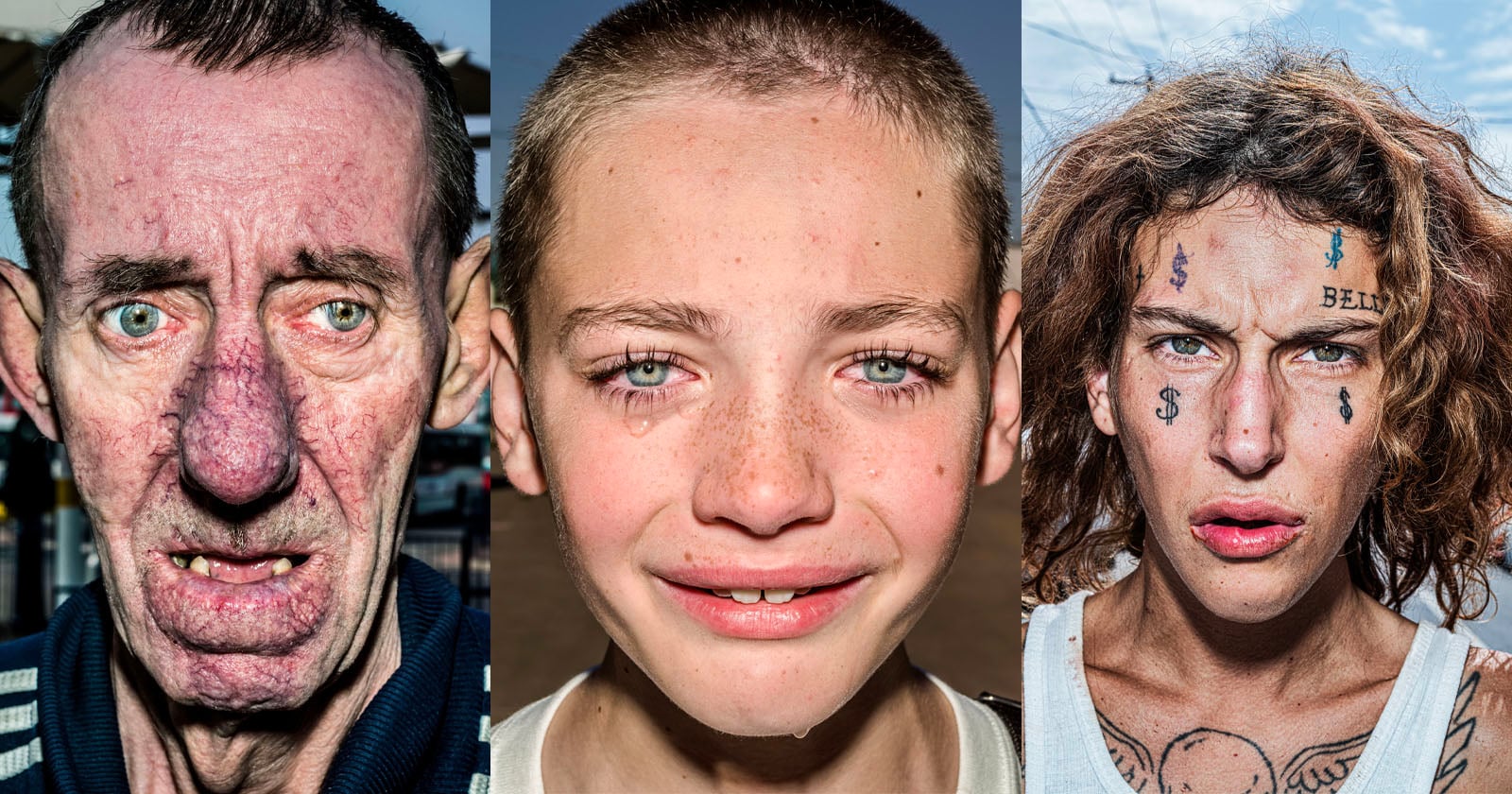
Bruce Gilden has spent decades shoving a camera and a flash into the faces of strangers, and the results are as disarming as they are unforgettable. His work is not polite, nor is it meant to be. In an era where we curate our lives into perfectly lit, carefully filtered squares, Gilden's portraits are a jolt of raw electricity. He doesn't ask for permission; he captures the moment before the mask goes on. For those of us who believe that style is as much about character as it is about couture, his images are a masterclass in the beauty of the unvarnished truth. He calls his subjects his "family," and while the label might sound sentimental, the photographs themselves reveal a deep, unflinching empathy for the people most of us are too busy to truly see.
We live in a world that encourages us to look away. We scroll past the unhoused, the eccentric, the weathered faces that tell a thousand stories, because engaging feels heavy. Gilden refuses to let us off the hook. His technique, a close-up flash that obliterates the background, forces an intimacy that is both uncomfortable and profound. This is where the "artistic and elevated" meets the "authentic and relatable." We talk a lot about immersive experiences, but Gilden's work is immersion by force. He challenges the notion that beauty must be soft or symmetrical, finding instead a vibrant energy in the lines of a hard life, the texture of a weathered brow, the defiant glint in a stranger's eye. For our readers, the takeaway is practical: authenticity is a choice. In your own life, whether you are curating a wardrobe or building a brand, the most striking thing you can offer is the courage to be present, to look beyond the surface, and to find the narrative in the faces you pass every day.
This isn't about celebrating grit for grit's sake, nor is it an excuse for invasive behavior. There is a fine line between observation and exploitation, and Gilden walks it with a deliberate swagger. He sees his subjects not as props, but as collaborators in a shared, fleeting moment. He gives them the gift of being seen, and in return, he gives us a mirror to our own biases. We might ask, "What makes his flash so special?" and the answer is that it levels the playing field. It removes the context of the city street, the noise and the chaos, leaving only the human condition. It is a reminder that style is not about what you wear, but how you carry your story. When we talk about aspirational living, we often picture perfection; Gilden shows us that true aspiration is about connecting with the world in a way that is honest, direct, and unapologetically alive.
If a reader asked us whether they should dive deeper into his work, our answer would be a resounding yes, with a caveat. Go in expecting to be confronted, not comforted. What you will find is a challenge to your own definitions of beauty and connection. The specific detail to watch for is the shift in his subjects' eyes from surprise to recognition, that split second where the guard drops and the soul peeks through. That is the moment Gilden is after, and it is the same moment we should all be seeking in our own creative and personal pursuits. It is not about the flash; it is about the spark of shared humanity that happens when you truly stop and look.