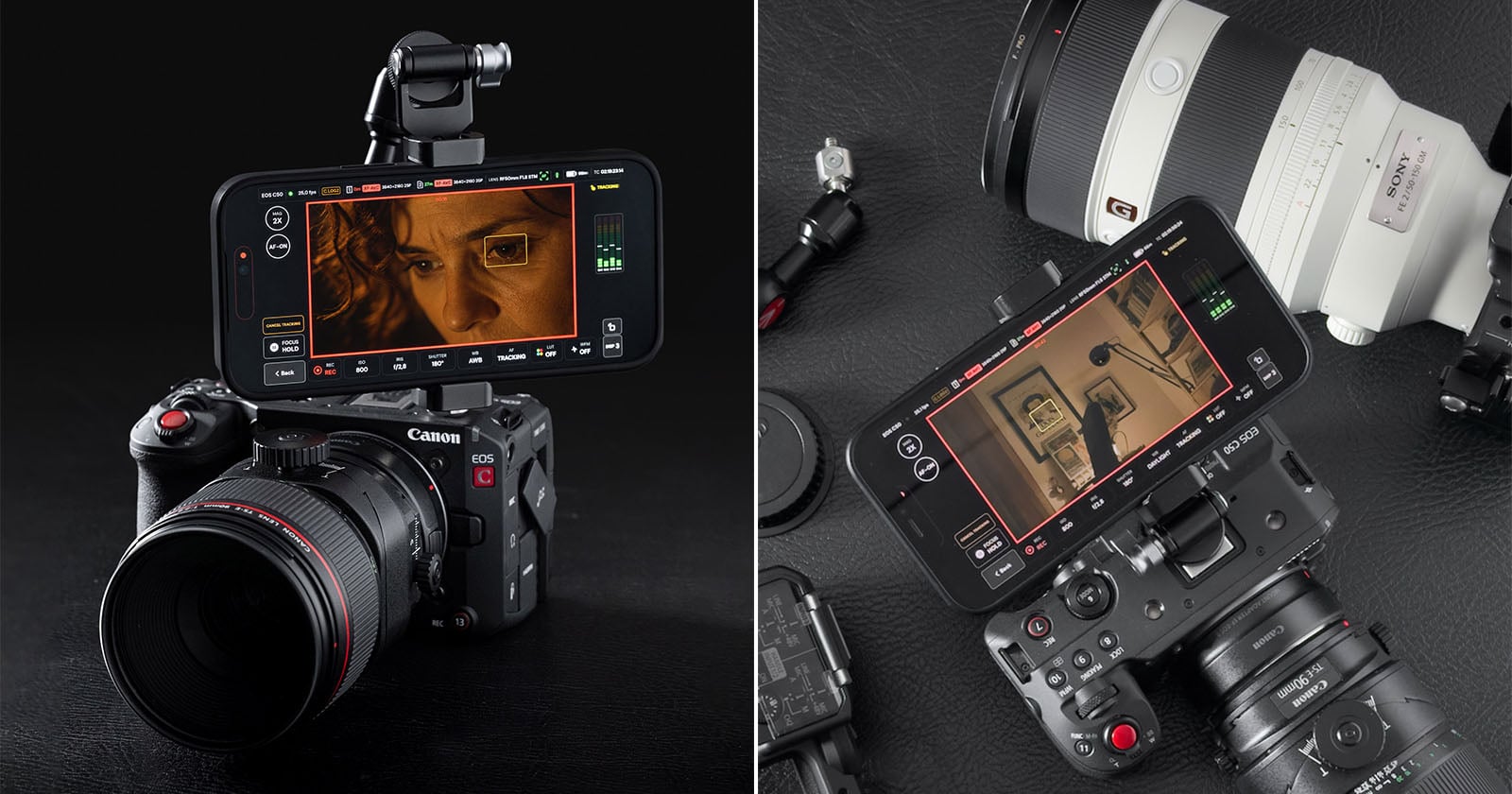
There is something quietly radical about Claudio Ripalti's Director Mode, and it has nothing to do with megapixels. By turning an iPhone or iPad into a command hub for up to four wirelessly connected Canon and Sony cameras, the Italian filmmaker has effectively democratized a workflow that once required a van full of monitors, cables, and a dedicated video assist operator. We think this is the kind of tool that reshapes how a set feels, not just how it functions. And for creators who have long felt that technology should serve the artistic impulse rather than fight it, Director Mode arrives as a rare convergence of practicality and vision.
Consider what this means in practice. A solo director can now stand beside the actor, glance at the iPhone in hand, and see exactly what each of four angles is catching, without shouting across a room or breaking the rhythm of a performance. The app does not promise to replace a professional video village, but it asks an honest question: how often do you actually need a full video village? For independent shoots, fashion films, and lifestyle content where authenticity and spontaneity matter as much as polish, the answer is seldom. This is where Director Mode feels like a natural companion to tools we have praised before, such as the Meike portrait lens for APS-C creators, which similarly prioritizes character and accessibility over sheer specs. Both pieces of gear understand that the best creative decisions often happen in the moment, not after a trip to the monitor tent.
What elevates Director Mode beyond a utility is the way it reframes the director's relationship with the camera. Ripalti's app does not just mirror a feed; it hands over control of exposure, focus, and recording from the same glass slab in your palm. That is a subtle but significant shift in authority. The camera becomes an extension of the director's intent rather than a sealed box that demands a separate operator for every adjustment. It echoes the sentiment we explored when looking at the enduring artistry of older Canon DSLRs, that the soul of an image lives in the choices made before the shutter closes, not in the number of buttons on the body. Director Mode simply gives those choices a faster, more fluid channel.
The immediate limitation is obvious: the app currently works only with Canon and Sony bodies. That leaves out a significant portion of the mirrorless and cinema-camera market. Yet we suspect this is less a design flaw than a strategic starting point. Ripalti has chosen the two ecosystems with the deepest libraries of glass and the widest adoption among independent filmmakers. The open question is whether the app will expand to other brands, or whether it will remain a curated ecosystem for those who have already invested in Canon or Sony. For now, the concrete takeaway is this: if you shoot with a compatible body and value the ability to direct from the actor's eyeline rather than from a tent, Director Mode is not a luxury, it is a new way to see your set.