Fractures Will Make You Rethink What Photography Is
Our take
## Beyond the Lens: Embracing Feeling in Photography's Evolving Landscape
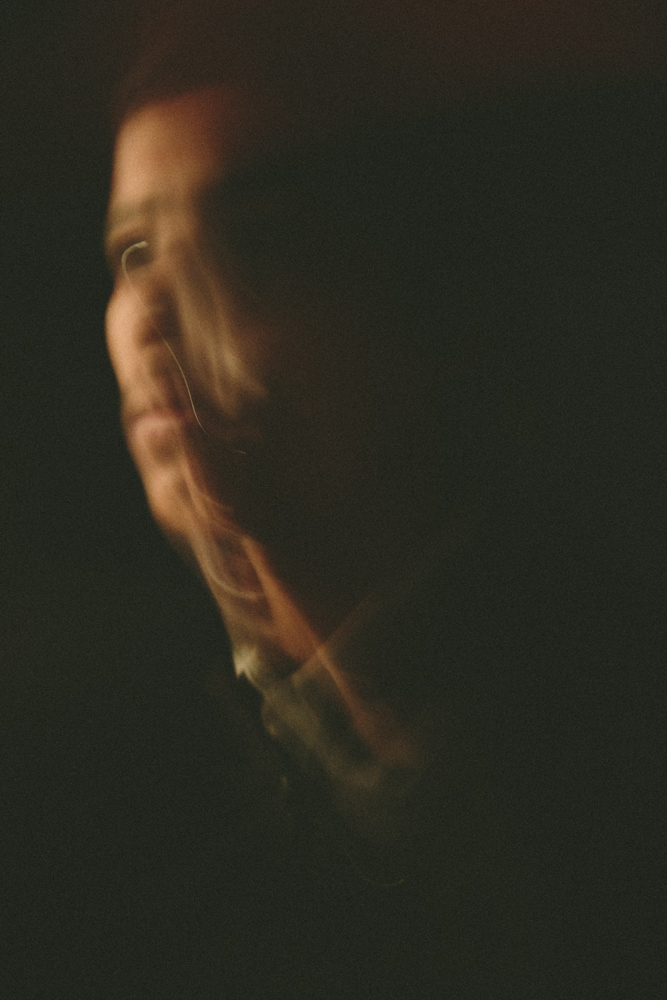
The recent piece on Tom Bradley and his approach to photography, as highlighted by The Phoblographer, resonates deeply with a shift we've been observing within the artistic community – a growing rejection of photography's perceived obligation to simply document reality. For too long, the medium has been tethered to the notion of capturing a precise, objective truth, often at the expense of emotional resonance. This perspective, while historically significant, feels increasingly limiting in a world saturated with imagery. We’ve previously explored this tension between documentation and artistic interpretation in The Rise of Intuitive Photography and discussed the challenges of authenticity in a digitally manipulated landscape in Beyond the Filter: Defining Genuine Visual Storytelling. Bradley’s work, and the philosophy underpinning it, suggests a powerful re-calibration, one where the photographer’s internal experience becomes the primary driver of the image, rather than a mere byproduct of its creation. It’s a compelling argument for moving beyond the purely representational and into a space of evocative expression.
The crux of Bradley's approach – and the central point of the article – is the realization that a camera, regardless of its technical prowess, can never truly capture how we *see* or, crucially, how we *feel*. This isn’t a technological limitation; it’s a fundamental truth about human perception. Our experience of the world is filtered through a complex web of emotions, memories, and biases, rendering any attempt at objective documentation inherently flawed. The beauty, then, lies not in striving for this impossible accuracy, but in acknowledging and leveraging the subjective lens. By tuning into their own emotional state, photographers can imbue their images with a palpable sense of feeling, creating a connection with the viewer that transcends the literal depiction of a scene. This isn't about fabricating emotion, but rather about channeling it – allowing it to inform composition, lighting, color choices, and ultimately, the overall narrative of the photograph.
This development has profound implications for the future of photography. We’re already witnessing a rise in experimental and conceptual photography that prioritizes feeling and atmosphere over technical perfection. The lines between photography, painting, and other visual art forms are blurring, as artists increasingly embrace manipulation and abstraction to convey their inner world. This isn't a descent into amateurism, but a deliberate move towards a more nuanced and expressive form of visual communication. It’s a rejection of the sterile precision that has, in some ways, defined much of contemporary photography and an embrace of the raw, unfiltered power of human emotion. Consider the work of artists like Gregory Crewdson, whose meticulously staged scenes evoke a profound sense of unease and mystery – a feeling far removed from a simple documentation of reality. His approach highlights the power of deliberately crafted imagery to tap into deeper psychological currents, a testament to the potential of photography as a conduit for emotional exploration.
Ultimately, Bradley’s perspective encourages us to re-evaluate what photography *is* and what it *can be*. It's a call to move beyond the limitations of the purely representational and to embrace the subjective, emotional core of the photographic experience. The shift toward prioritizing feeling could reshape the entire visual landscape, demanding new critical frameworks and challenging traditional notions of photographic truth. As technology continues to evolve and AI-generated imagery becomes increasingly prevalent, the human element – the ability to infuse an image with genuine feeling – will become even more valuable, a distinguishing characteristic that separates authentic artistic expression from algorithmic mimicry. The question then becomes: how will photographers continue to cultivate and communicate their emotional landscapes in an era of increasingly synthetic visuals, and will audiences continue to value this intensely personal form of storytelling?
Read on the original site
Open the publisher's page for the full experience