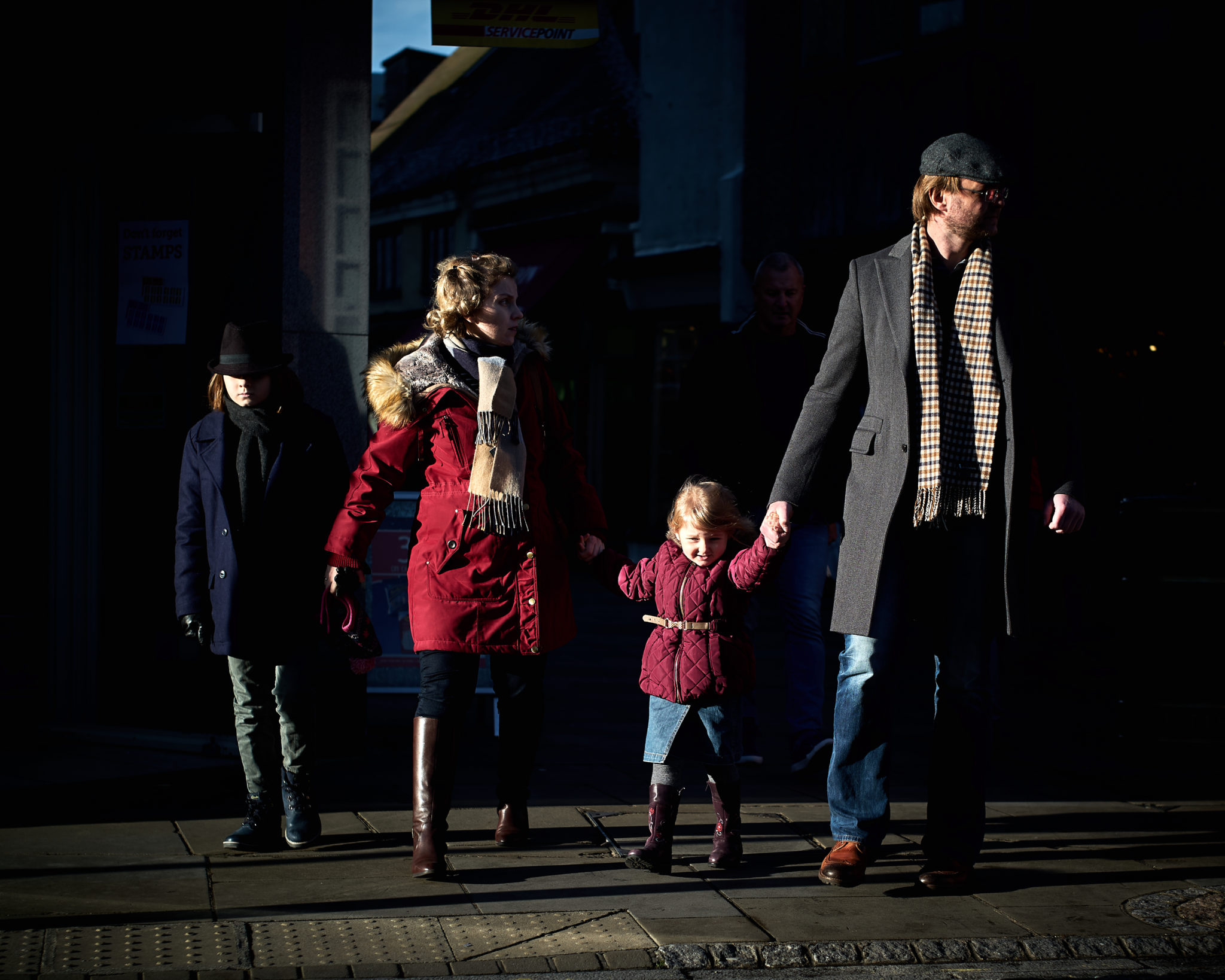
There is a moment in every street photographer's life when the candid frame starts to feel like a crutch. You hide behind the camera, capturing life as it happens, convincing yourself that invisibility is a virtue. But then the hunger shifts. You want to step out from behind the lens, to actually meet the eyes looking back at you. Greg Turner's journey, as explored in this piece from the archives, taps into that raw, universal transition. It's not about abandoning the street; it's about evolving within it, trading the safety of observation for the vulnerability of connection. For our audience, who understands that both fitness and art demand a certain courage, this is a familiar kind of growth, the move from the periphery to the center of the frame.
What strikes us most about Turner's reflection is the honesty around fear. We often romanticize the photographer as a bold, swaggering figure, but so many start out 'insanely nervous.' There is a quiet truth here: the subjects are often more scared of us than we are of them. This is a lesson in empathy that translates directly to how we approach our own creative and physical practices. The same way you might hesitate before trying a new pose in a fitness class or a bold fashion choice, the street photographer hesitates before breaking the invisible barrier between observer and observed. We love how this piece connects to the broader photographic dialogue we've been following, like the pursuit of Embrace the Drama: Exploring the Allure of Ultra-Low ISO Film, where technical control meets emotional texture. And in a world where the craft can be tainted by bad actors, as seen in A Photographer's Fall: Luxury, Swiftie Dreams, and a $4.6M Loss, Turner's earnest approach is a reminder that the art form's true currency is trust, not just light.
Our take? This evolution from candid to portrait is a masterclass in presence. For our readers, the practical takeaway is simple: stop treating your fears as boundaries and start treating them as invitations. Turner's story suggests that the most captivating portraits aren't the ones where the subject is perfectly posed, but where the connection is genuinely felt. The light matters, yes, but the emotional exchange is what separates a picture from a memory. We would tell any reader hesitating at the edge of this transition to lean in, not away. The nervousness never fully disappears, but it transforms into a kind of electric energy that your subject will feel. If you are looking for a concrete way to start, watch how the best portrait photographers use their own discomfort as a tool. The question we are left with is not whether you will make the leap, but what you will see when you finally stop hiding behind the shutter.