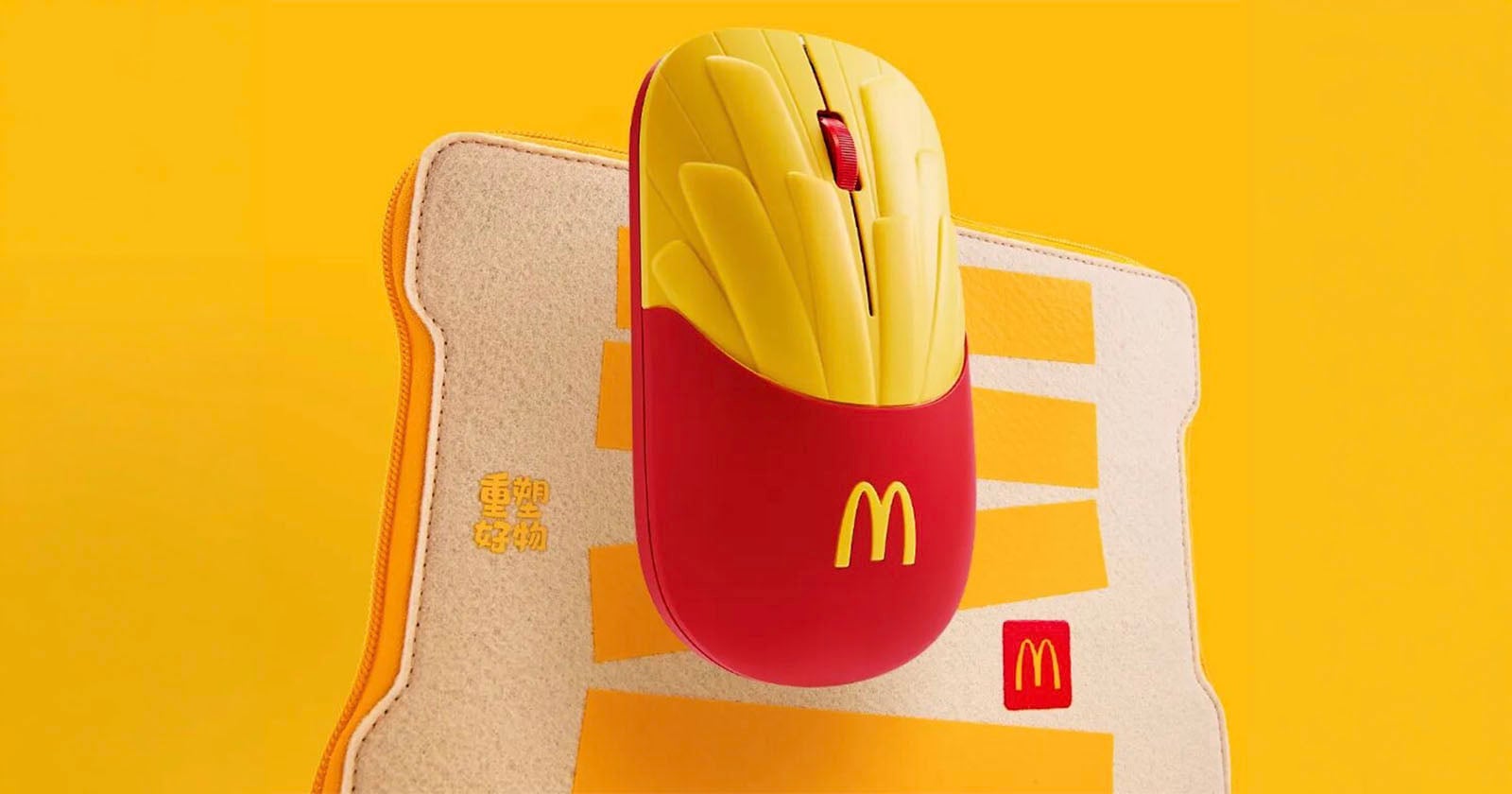
There is something genuinely thrilling about a fast-food giant and a tech company deciding that a computer mouse should look like a carton of french fries, and then making it from recycled toys. McDonald's and Lenovo have created a sculptural, whimsical object that refuses to take itself too seriously, and that is precisely why it works. This is not a gimmick; it is a quiet argument that the objects we use every day can be art, and that sustainability and playfulness can coexist without sacrificing design integrity.
The mouse, shaped like the iconic fry carton, is a physical reminder that the line between consumer culture and creative expression has never been thinner, or more interesting. It echoes a tension we have been watching closely, from China's AI Film Debuts to Empty Theaters, Proving Art Still Needs a Human Touch to the way Firefox Curates a Nostalgic Cast of Meme Legends for a Sweeter Internet. In each case, the question is the same: how do we infuse technology and mass-market appeal with genuine artistry? The AI film failed because it lacked the human instinct for story; the Firefox campaign succeeded by leaning into shared cultural memory. This mouse lands somewhere in between, it is a mass-produced object, but one that asks you to see a fast-food staple as a sculptural form, and to consider that the plastic in your hand might have lived a previous life as a toy.
For our readers, who move between fitness studios, gallery openings, and the quiet pursuit of a curated home, this collaboration matters because it models a kind of consumption that is both intentional and joyful. You do not need to own a single piece of McDonald's merchandise to appreciate what this object represents: the possibility that beauty can emerge from the most ordinary places, and that sustainability does not have to feel like a sacrifice. The mouse is not trying to be the most ergonomic or the most powerful peripheral; it is trying to be a conversation starter, a tiny sculpture that lives on your desk and reminds you that even a french fry carton can be reimagined as something worth looking at. Compare that to the Your Wrist Meets Your Workflow in a Curated Click approach from Arctic Fox, which optimizes productivity with a screen on your mouse, functional, but decidedly less poetic. One invites you to work faster; the other invites you to pause.
The practical takeaway is this: the next time you see a collaboration between a fast-food chain and a hardware company, pay attention. This is not a novelty item destined for a landfill. It is a signal that the boundaries between art, design, and daily utility are dissolving, and that the most interesting objects are often the ones that refuse to be categorized. Watch for how McDonald's and Lenovo follow this up, because if they can turn a fry carton into a sculptural mouse, what else might they reimagine?