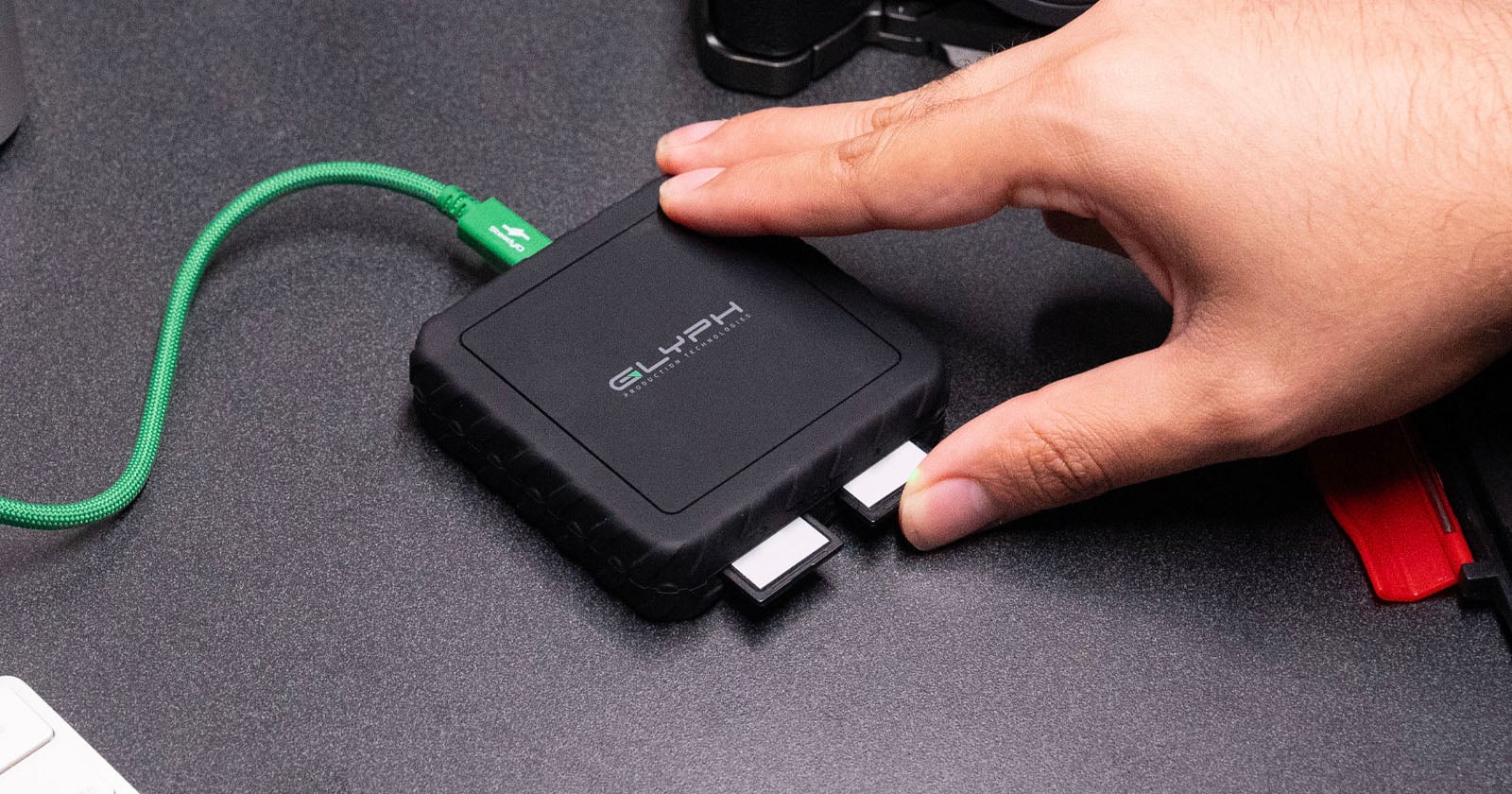
Glyph has always understood that a creator's workflow is only as strong as its weakest link, and with these new card readers, the company is quietly solving a problem many of us didn't realize we had. This isn't just another accessory drop; it's a deliberate move to close the gap between capture and post-production, ensuring that the speed of their CFexpress cards and SSDs isn't bottlenecked by a flimsy bridge. For anyone who has watched a transfer bar crawl while a client waits, this feels less like an incremental update and more like a necessary refinement of the creative pipeline.
The announcement follows a year of aggressive expansion into the creator space, one that began with the launch of new SSDs and a line of CFexpress memory cards. What Glyph seems to recognize is that curation, choosing the right tool for each stage of the process, matters as much as raw performance. It's a philosophy that resonates with the recent news about Nextorage's New SD Cards Bring Curated Speed to Demanding Video Workflows, where speed is matched to specific shooting scenarios rather than thrown at every problem. Meanwhile, Lomography gilds its cult-favorite film camera in a limited golden edition, reminding us that even in the digital age, the physical tools we use still carry an emotional weight. Glyph's approach sits somewhere in between: cold efficiency wrapped in a design language that feels intentional, not industrial.
For the working photographer or filmmaker, the practical takeaway is clear: your card reader is now a performance variable, not a passive accessory. If you've invested in Glyph's high-speed storage, pairing it with a reader that can actually saturate those transfer rates means less time tethered to a desk and more time shooting. This is the kind of ecosystem thinking that separates a professional rig from a hobbyist pile of gear. It's not about owning the fastest card in isolation; it's about ensuring every piece of the chain, from the moment you press record to the moment you drop the file into your edit, operates at the same level of intent.
The real question is whether this reader line will extend beyond the standard form factors to include something more specialized, like a multi-slot hub for hybrid shooters juggling CFexpress and SD cards simultaneously. Glyph has the engineering credibility to make that happen, and the creator community would welcome a single, elegant solution instead of a tangle of dongles. For now, we'll watch how deeply they layer this support, because in a market flooded with generic black boxes, curation is the differentiator that actually earns trust.