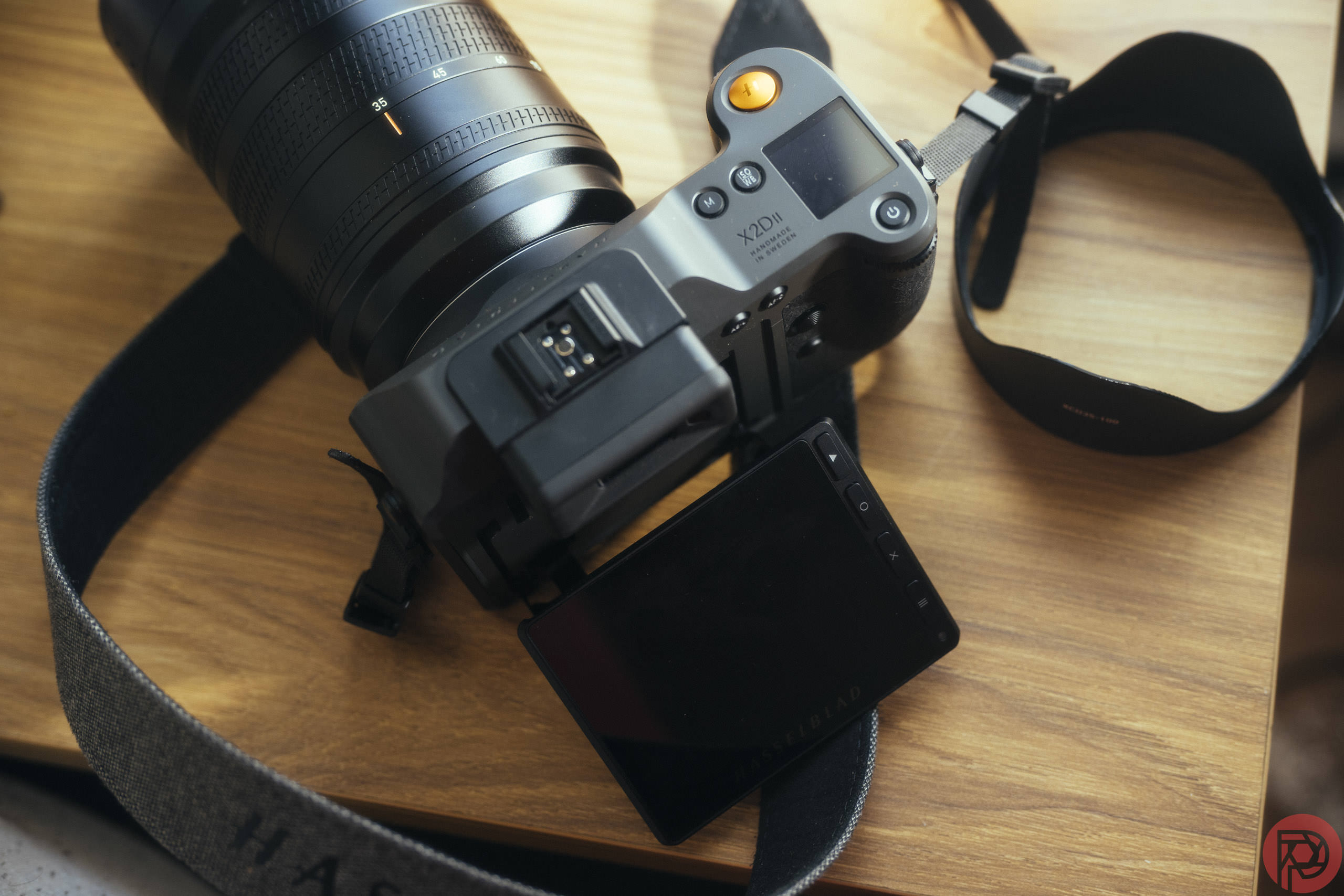
There's something quietly radical about a camera review that changes its verdict not because the hardware changed, but because the software finally caught up. That's exactly what happened with Hasselblad's X2D II 100C and its newly deepened Capture One integration. When we first handled this camera, the LiDAR autofocus already felt like a cheat code, locking onto eyes and subjects with a confidence that made other medium format bodies feel sluggish by comparison. But the raw capture workflow was always the asterisk, a slight friction in an otherwise dreamy shooting experience. Now that Capture One and Hasselblad have closed that loop, the camera's real personality emerges: not as a studio-only tool, but as a companion for the kind of spontaneous, sun-soaked documentary work our own Chris Gampat brought back from Pig Island 2025. It's a reminder that sometimes the best upgrade isn't a new lens, but a new relationship between the tools you already trust.
We've spent a lot of time in these pages celebrating the joy of revisiting older gear, whether it's the Finding Joy on the Streets, One Frame After Fashion energy of street photography or the nostalgic pull of The Curated Archive: Revisiting the Olympus E-M5, the Original Icon. But this update is different. It's not about nostalgia; it's about relevance. The X2D II 100C was already a gorgeous piece of engineering, but its autofocus, while impressive, sometimes felt like it was performing a magic trick that the software didn't fully appreciate. Now, with Capture One speaking the camera's native language, the entire capture-to-edit pipeline feels like a curated flow rather than a technical hurdle. For photographers shooting commissioned work in unpredictable environments, like a festival on an island, that's not a small thing. It's the difference between chasing the moment and being present for it.
What strikes us most, though, is what this says about the philosophy of tool-making in the digital age. Hasselblad didn't need to release a new camera to stay relevant; they chose to honor the one they already had. That's a rare and admirable move, especially in an industry that thrives on planned obsolescence. We'd tell anyone considering this camera for event or lifestyle work to stop hesitating, because the autofocus is no longer the bottleneck. The images we're seeing from Pig Island have a warmth and immediacy that medium format rarely gets credit for, and the Capture One integration means you're not sacrificing color fidelity for speed. It feels less like a firmware update and more like a promise kept. For those of us who've shot with Hasselblads that demanded patience, this version of the X2D II 100C is the one that finally gets out of your way and lets the art lead.
The practical takeaway for our readers is simple: if you own this camera, update your software today and give it another chance in the field. If you're on the fence, this is the moment to jump in, because the camera you've been reading about is now the camera it was always meant to be. We'll be watching to see if Hasselblad extends this same courtesy to its other bodies, but for now, the X2D II 100C stands as proof that sometimes the most luxurious feature is a seamless workflow. And in a world full of noisy launches and half-baked promises, that's a detail worth holding onto.