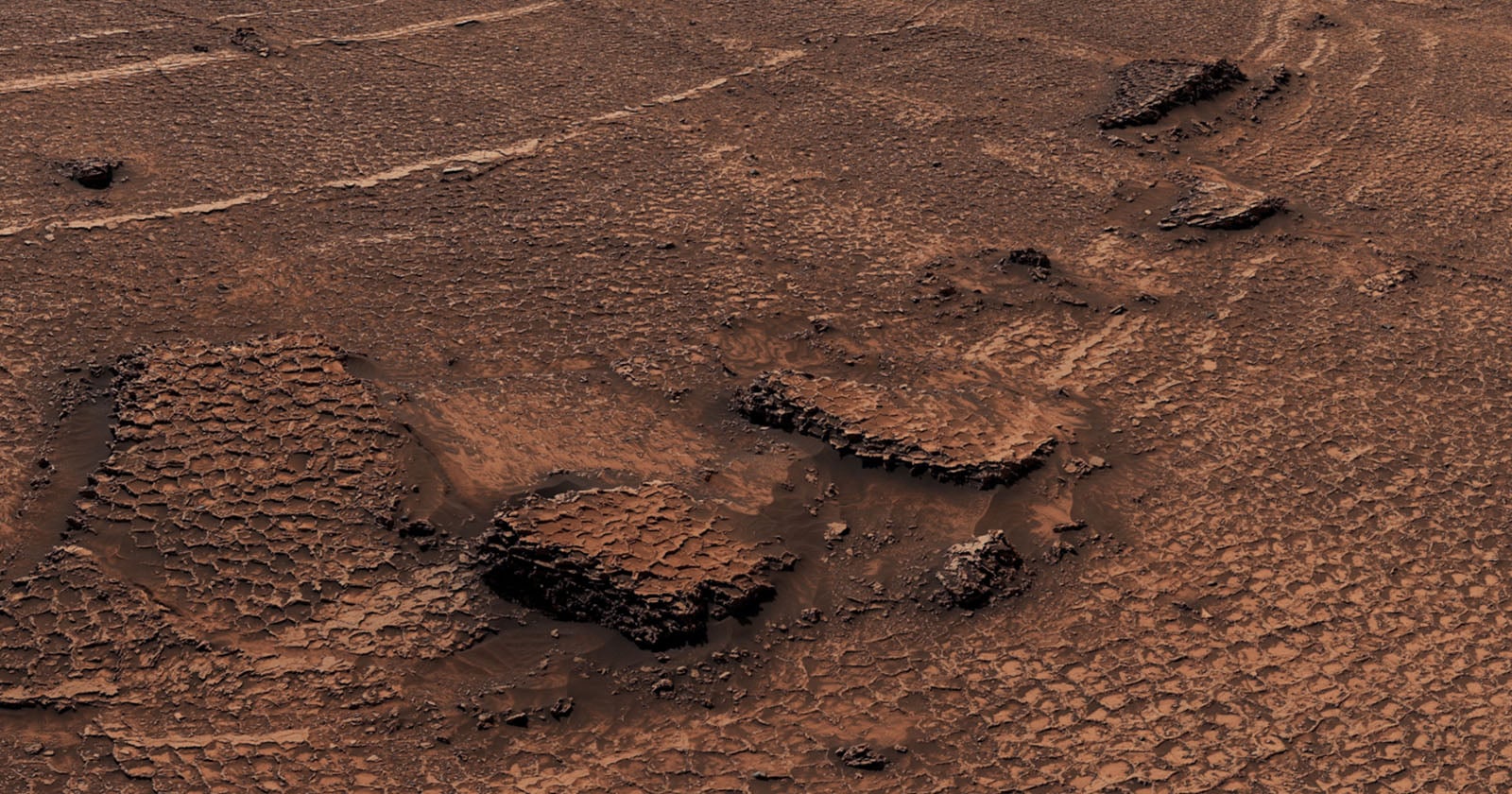
The honeycomb-like rocks NASA's Curiosity rover just photographed in Valle Grande are not a novelty act. They are a quiet invitation to rethink how we read landscapes, both on Mars and in our own daily rhythms. For months, Curiosity has been sending back images that blur the line between geological fact and abstract art, from dragon-scale textures to this new field of polygons stretching toward the horizon. What makes this discovery different is scale. We have seen patterned ground before, but never like this, a sea of interlocking shapes that looks less like a rock formation and more like a curated installation meant to be observed slowly. Read More
For our audience, who understands that beauty and function are never opposites, this is a reminder that the most compelling design often emerges from constraint. Those polygons are not painted on; they are the result of freeze-thaw cycles and sediment shifts, a slow choreography of physics and time. We would tell a reader who asks, "Why should I care?" that this is not about Mars as a distant curiosity. It is about paying attention to the way patterns form under pressure, whether in a desert valley 140 million miles away or in a morning routine that has become too routine. Curiosity is not just looking for water or life signs; it is documenting a visual language of resilience. And that language translates directly into how we approach our own creative and physical practices: consistency, repeated over eons, leaves a mark that is both structural and beautiful. Why We Can’t Look Away From Mars and The Art of Seeing the Unseen are worth revisiting here, because they frame why these images resonate beyond the science desk.
What strikes us is how this discovery avoids the trap of becoming another "wow" headline. It does not promise alien life or a future colony. It simply shows a field of shapes that look familiar, almost domestic, like a honeycomb left to the elements. That familiarity is the point. It pulls the cosmos closer without pretending we have solved it. The practical takeaway for our readers is this: observation is a discipline. Curiosity has been driving through the same crater for years, and it still finds moments that stop us. We can borrow that patience. Whether you are curating a wardrobe, building a fitness habit, or just walking the same block each morning, the extraordinary does not always announce itself. It shows up as a pattern you finally notice.
The open question we are left with is not about the rocks themselves but about what we do with the images. As these visuals circulate, they will inevitably become memes, backdrops, and design inspiration. That is fine, but we would urge a slower look. The concrete detail to watch is the next set of images from this region, because Curiosity is not done with this field. If the polygons show signs of variation, of cracks that suggest moisture or movement, then this becomes more than a pretty frame. It becomes a chapter in a story we are still learning to read. And that is the kind of story we want to follow, one polygon at a time.