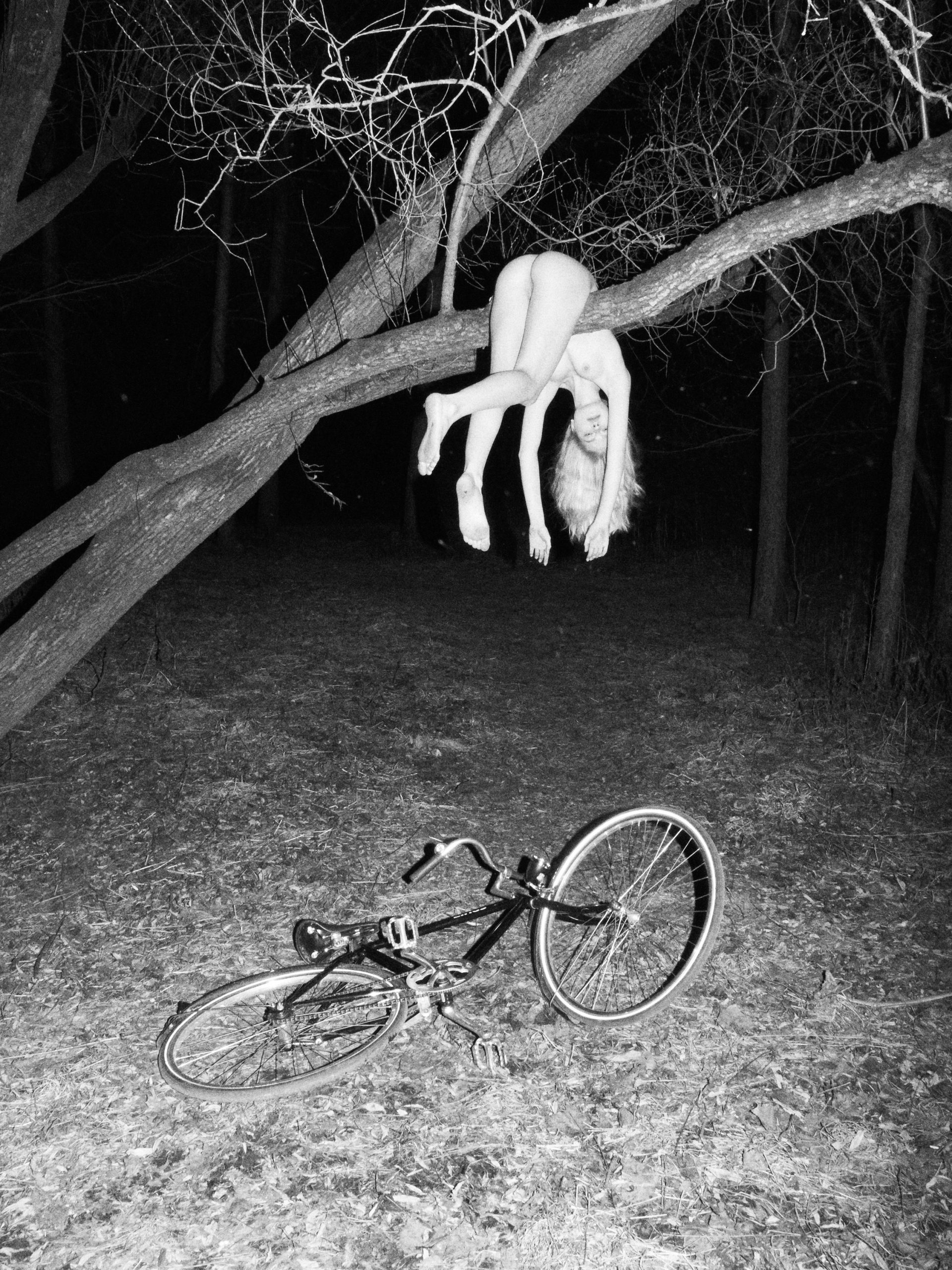
There is something deeply unsettling about Igor Brekhov's *NOCTURNE* series, and that is precisely why it matters. The photographer describes his signature as "conflict in the frame": an image that appears peaceful until you notice what is wrong. At first glance, a misty field at dusk reads as serene. Then you catch the figure half-submerged in the reeds, or the unnatural tilt of a tree against a moonless sky. The effect is not horror in the traditional sense, no gore, no jump scares. It is a quieter dread, the kind that lingers after you look away. In an era where generative AI floods our feeds with polished, soulless imagery, Brekhov's work reminds us that true artistry lives in the flawed, the human, the deliberately disquieting.
For our readers, those who seek authenticity in fitness, fashion, and creative expression, this tension between the curated and the raw is a familiar conversation. We talk often about the art of finding beauty in imperfection and the value of human touch in a digital world. Brekhov's photographs are a visual manifesto for that ethos. His images do not try to sell you a perfect life; they invite you to sit with discomfort. That is a radical act in a culture that wants everything smoothed over by algorithms and filters. When we asked ourselves what this means for our community, the answer was clear: stop chasing the frictionless. The most compelling moments, in a workout, a wardrobe, a photograph, come from the edges where something feels slightly off.
If a reader asked us whether this series is worth their time, we would say: only if you are ready to be unsettled. And that is a compliment. Brekhov's *NOCTURNE* does not offer easy beauty or quick inspiration. It asks you to slow down, to look twice, to notice the shadow that does not belong. There is a practical takeaway here for anyone curating their own creative or lifestyle practice: leave room for the unexpected. The best outfits have one element that breaks the palette. The best fitness routines include a movement that feels awkward at first. The best photographs hold a mystery that the camera cannot explain. Brekhov's work is a case study in that principle, a reminder that what feels wrong can be exactly what makes something unforgettable.
The specific detail we keep returning to is the Blair Witch comparison mentioned in the article. Not because the photographs mimic found-footage horror, but because that reference captures the intimacy of Brekhov's method. His images feel like someone was actually there, breathing in the cold air, stepping on wet leaves, holding the camera with trembling hands. That is the texture generative AI cannot replicate. So here is our concrete point: the next time you scroll past a perfectly constructed image, whether it is a fashion campaign or a fitness brand's feed, ask yourself if it has a conflict in the frame. If it does not, it may be beautiful, but it is probably not art. Igor Brekhov's lens proves that the most powerful images leave you a little bit lost.