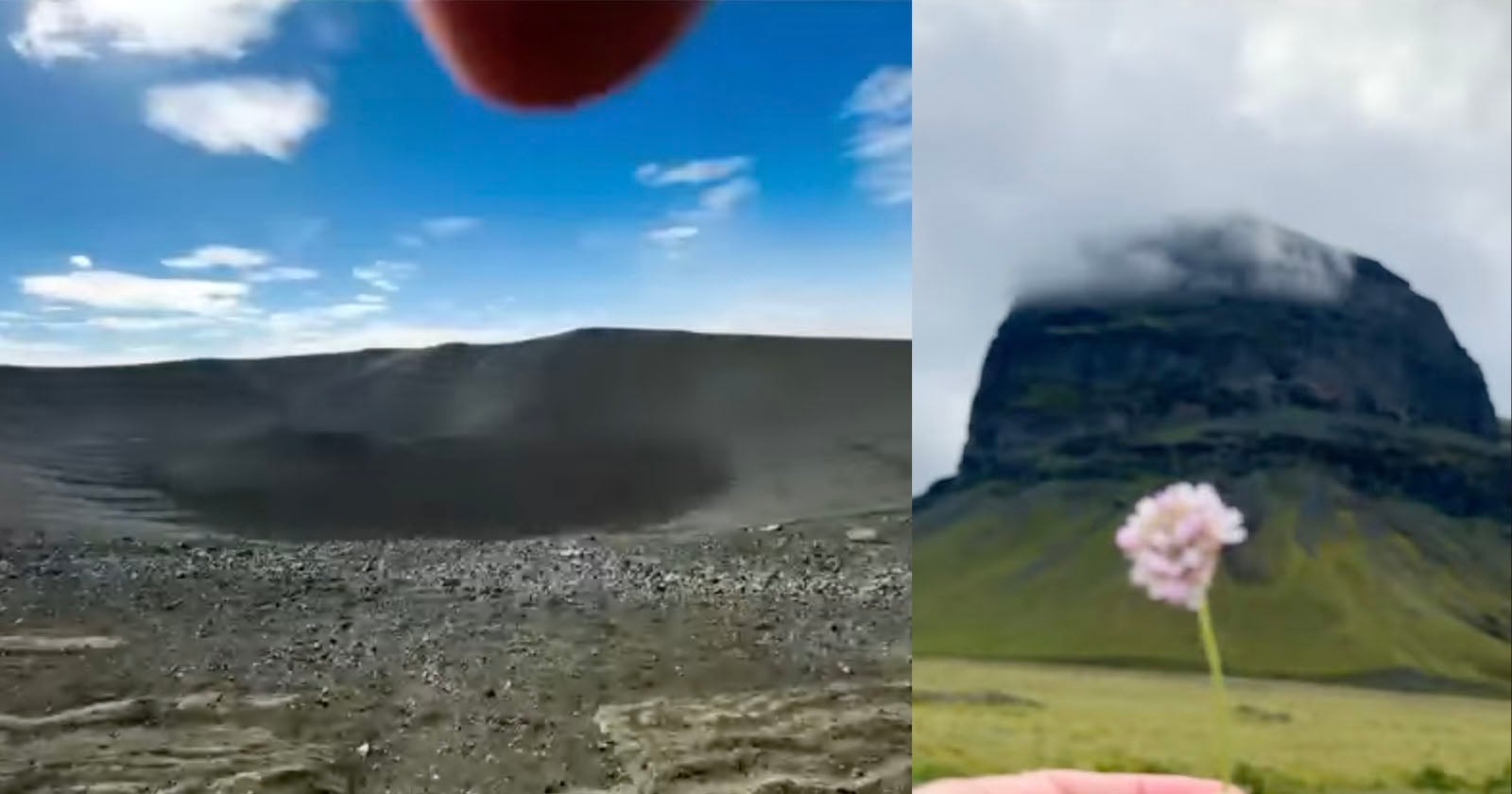
There is something quietly radical about a woman who wins a $50,000 prize for being a "really bad photographer" and then turns in a portfolio of Iceland that looks, well, like she meant it. The images show a barren volcanic crater next to a green, cloud-capped mountain, with a single pink flower stealing the foreground. They are not technically perfect. They are not even trying to be. And that is precisely why they work. In a world where every frame is over-processed and over-thought, her work feels like a breath of cold air. She reminds us that photography, at its core, is not about rules or sharpness. It is about showing up with honest eyes, even if those eyes are admittedly clumsy.
This story lands with particular resonance when we consider how we treat other visual documentation of the natural world. A recent A Quiet Count: South Africa's Cheetah Population Reveals a Stark Reality showed us that even the most careful, technically advanced camera traps can only reveal hard truths about how few of these animals remain. There, the images are stark not because they are poorly composed, but because they are brutally factual. And in Capturing Cosmic Beauty: An Astrophotography Journey with Nikon, we are reminded that even the stars demand patience and precision over spontaneity. What sets our accidental heroine apart is that she has no pretension. She is not trying to capture the sublime or the scientific. She is simply documenting what she sees, and in doing so, she stumbles into something far more authentic than most curated feeds will ever achieve.
Our honest take is this: most of us are paralyzed by the idea of being good enough. We scroll through Experience Photography's Artistry: The 5 Boro Foto Fest Returns and feel the pressure to produce gallery-worthy shots just to justify picking up a camera. But this woman's journey flips that anxiety on its head. She was rewarded not despite her limitations, but because her limitations made her approach feel human. The practical takeaway here is not that you should throw away your skill or ignore composition. It is that perfection is a terrible gatekeeper. If you wait to feel ready, you will never press the shutter. Her images work because they are alive, not because they are flawless.
What we would tell a reader who asked us about this is simple: go out and shoot badly. Give yourself permission to take the photo that is slightly crooked, slightly overexposed, or slightly awkward. The value is not in the technical merit. The value is in the memory being real, and the moment being yours. She won the prize because she was willing to show us her imperfection. The question we are left with is whether we are brave enough to do the same, or whether we will keep hiding behind filters while the world waits for us to look up and see it clearly. Watch what she does next. Because if this trip proved anything, it is that her worst photos might just be the most interesting ones she ever takes.