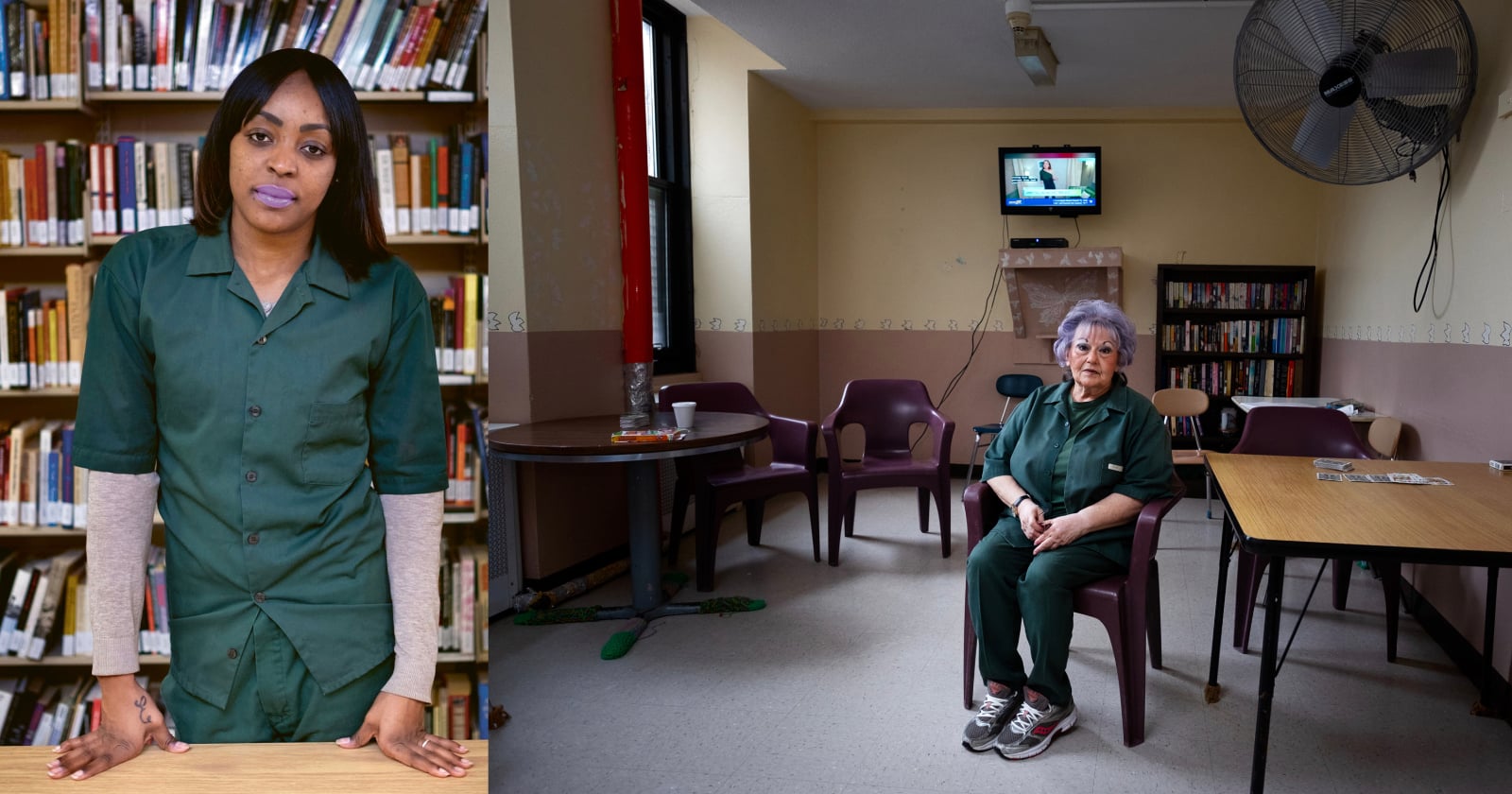
Ten years is a long time to hold still. Yet that is precisely what this photographer has done, returning again and again to women serving life sentences for homicide, building a body of work that refuses to flinch. The images are quiet, almost domestic: a woman standing before bookshelves, another alone in a common room with a television and a fan. There is no melodrama, no plea for pity. Just presence. And in that sustained gaze, the photographer does something more radical than forgiveness: she insists that a human being cannot be reduced to the worst day of her life.
We have written here before about the art of waiting, of finding the extraordinary in the ordinary frame. Finding Joy on the Streets, One Frame After Fashion explored how street photographers capture fleeting moments of grace amid chaos. This project shares that patience, but turns it inward. The subjects are not moving through a city; they are suspended in a system designed to mark time. What emerges is not a statement about guilt or innocence, but about the stubborn multiplicity of identity. A woman who committed an act is not only that act. It sounds simple, but our culture resists it daily, especially for women, who are so often flattened into archetypes: the victim, the monster, the redeemed.
For our readers, the takeaway is practical, not just philosophical. If you are a portrait photographer, this is a masterclass in ethical storytelling. The photographer did not parachute in for a dramatic series; she committed to a decade. That changes the power dynamic. The women are not objects of pity but collaborators in their own representation. We would tell anyone considering a long-term documentary project to study this approach: trust is not granted, it is built frame by frame, visit by visit. And if you are simply someone who loves visual narrative, this work asks you to sit with discomfort. It asks you to look longer than feels natural.
What lingers is the ordinariness of the setting. No dramatic lighting, no cinematic shadows. Just institutional green, shelves of worn books, the particular loneliness of a common room. It recalls the intimacy found in Capturing Cosmic Beauty: An Astrophotography Journey with Nikon, where vastness is made personal through a lens. Here, the vastness is internal: decades of a life reduced to a single act, and the photographer's refusal to let that be the final word. She has given these women back their complexity, one quiet portrait at a time.
The question we are left with is not whether these women deserve our sympathy. It is whether we can hold two truths at once: that an act can be unforgivable and a person still more than it. As Experience Photography's Artistry: The 5 Boro Foto Fest Returns reminds us, photography is not just about seeing; it is about framing what we choose to acknowledge. This project frames a hard truth with tenderness. That is not sentimentality. That is discipline. And in a world eager for easy judgments, it is the rarest kind of art.