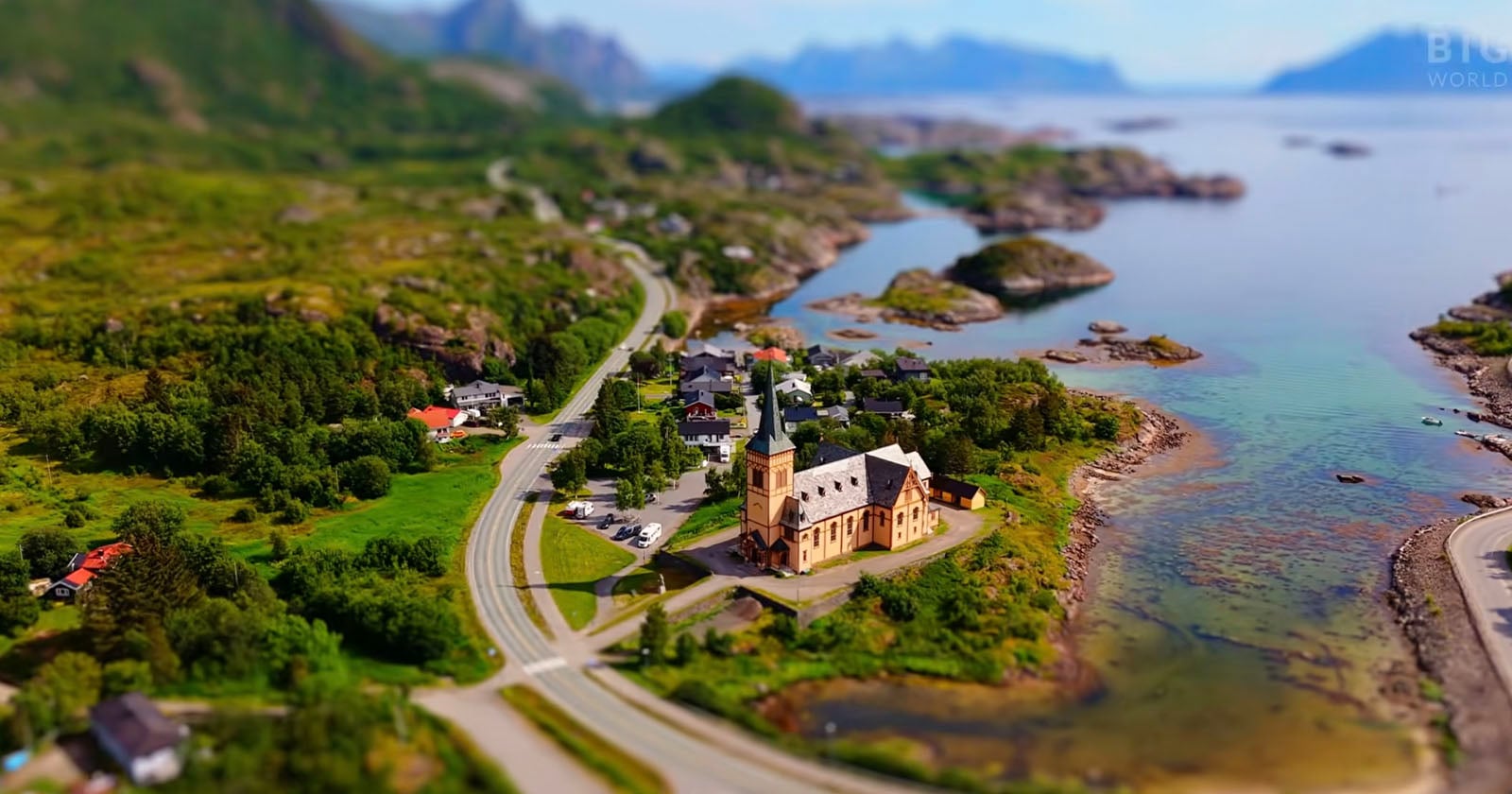
There is a particular kind of magic in watching a landscape you know become unfamiliar. Joerg Daiber's tilt-shift study of Lofoten does exactly that, turning the archipelago's jagged peaks and calm fjords into something that feels both miniature and monumental. The featured image, a pale church standing sentinel by a blue bay, reads like a handcrafted diorama. It is a curated escape, a reminder that the way we see is as important as what we see. This approach resonates deeply with our ongoing conversation about perspective, much like the quiet observations found in Finding Joy on the Streets, One Frame After Fashion, where the ordinary becomes a stage for narrative.
Our take is simple: this is not about the gear or the technique, though both are masterful. It is about the invitation to step back, literally and figuratively. For our readers, the ones who chase both aesthetic and authenticity, Daiber's work offers a practical lesson. You do not need a remote Arctic outpost to find this wonder. You need to alter your relationship with scale and detail. The tilt-shift effect compresses distance, making the mountains feel like a tabletop model, but it also expands our emotional range. It is a reminder that the sublime can be playful, that the vast and the intimate are not opposites. We would tell a reader who asks about this: study how the light moves, not just where it falls. Then, apply that to your own frame, whether you are photographing a city street or a quiet shoreline.
This piece also sits in a broader lineage of photographic artistry that we champion. It is a deliberate counterpoint to the documentary realism of street photography and the technical patience of astrophotography. Where Capturing Cosmic Beauty: An Astrophotography Journey with Nikon asks us to look up and out into the infinite, Daiber asks us to look at the finite with a fresh sense of play. And while Experience Photography's Artistry: The 5 Boro Foto Fest Returns celebrates the communal and the urban, this video is a solitary, quiet meditation. The contrast is instructive: art thrives in both the crowded and the empty, the noisy and the still.
What we find most compelling is the tension Daiber creates. He is showing us a real place, yet the presentation feels like a lucid dream. This is not a travelogue promising you the perfect itinerary; it is an emotional landscape. The practical takeaway, the one worth quoting, is this: *Perspective is a tool for tenderness.* It softens the harshness of the world without diminishing its grandeur. The question his video leaves us with is not where to go next, but how we will choose to see what is already in front of us. Watch for how he uses the movement of the sea or the drift of clouds; those tiny motions within a stilled world are where the true heartbeat of the piece lives.