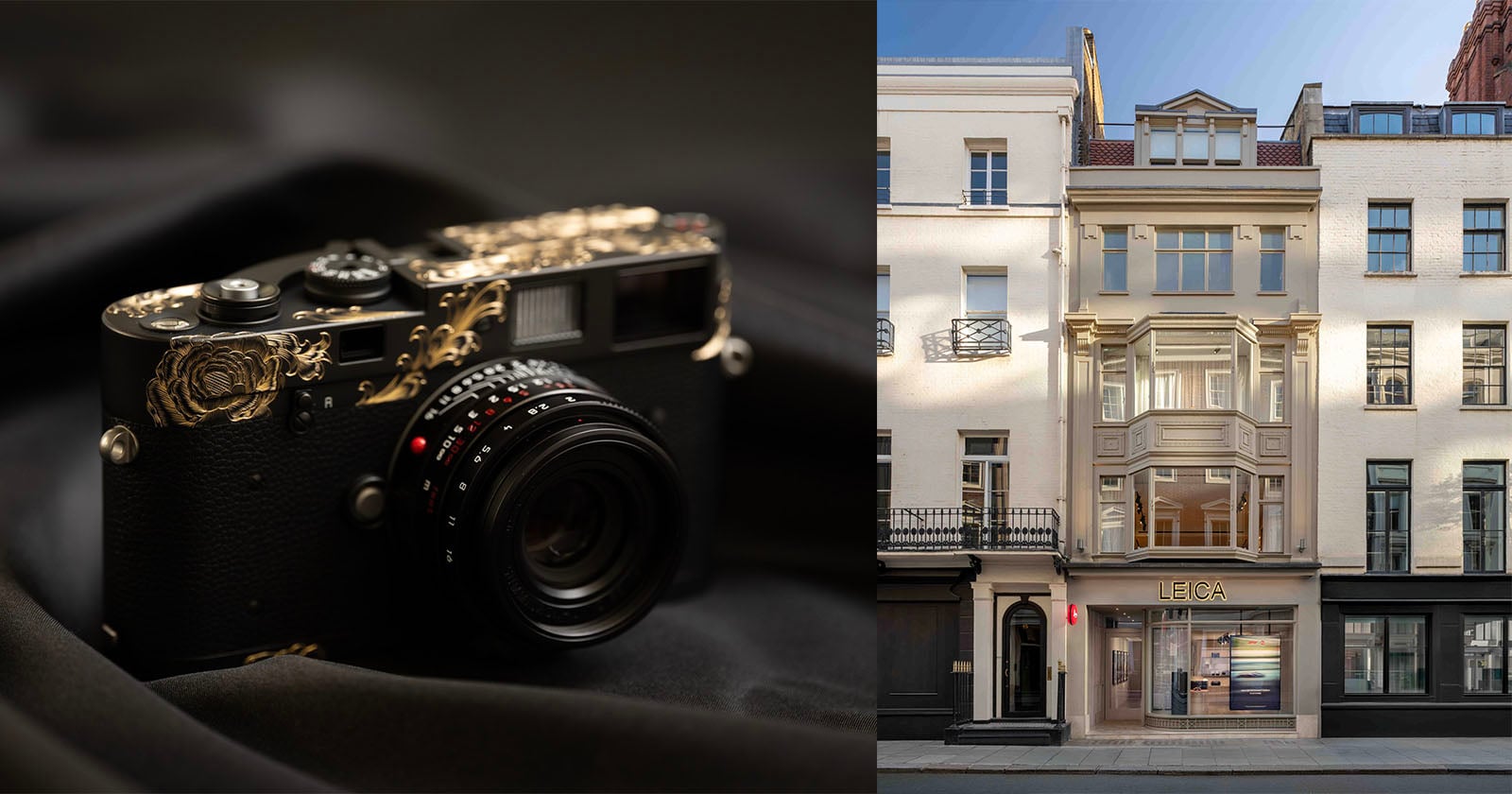
There is a quiet tension in the way Leica opens a new sanctuary in Central London: 14 limited-edition M-A cameras, each one a relic of analog precision, placed in a space designed to feel like a gallery rather than a store. It is not a launch aimed at volume. It is a statement about attention in an age of interruption. We think that matters, especially when you hold it against the chaos of the moment captured in When Art Meets Interruption: A Photographer's Ballon d'Or Moment, where a photographer is physically removed during a live broadcast simply for trying to do his job.
That contrast is the point. Leica is betting that the act of making a photograph can still be a ceremony, not a reflex. The new flagship is not simply a shop; it is a curated environment that asks you to slow down, to handle a camera built around a manual winding lever and a mechanical shutter. Fourteen units is an impossibly small number for a global audience, and that scarcity is intentional. It creates a kind of exclusivity that has little to do with price and everything to do with reverence for the process. This aligns with how we think about the craft in The Art of Seeing America with Stephen Wilkes on Our Podcast, where an artist dedicates decades to single vantage points, proving that seeing deeply is a discipline, not a novelty.
For our readers, the practical takeaway is not about whether you can get one of these cameras. Chances are, you cannot. The real insight is that Leica is doubling down on a philosophy that values deliberate creation over casual capture. In an ecosystem where the smartphone has democratized photography to the point of ubiquity, a topic we explored in The Art of Phone Photography Meets the Latest Godox Innovation, this store is a deliberate counterpoint. It says that some images demand a slower approach, a heavier tool, a ritual.
What we are watching is the bet that the appetite for that ritual is growing, not shrinking. The specific consequence for anyone who cares about photography is this: if a luxury brand can open a physical sanctuary in central London anchored by 14 film cameras, then the market for intentional, unhurried image-making is more robust than many assumed. The question left open is whether the rest of the industry will follow, or whether Leica will remain the solitary temple for those who refuse to fire from the hip.