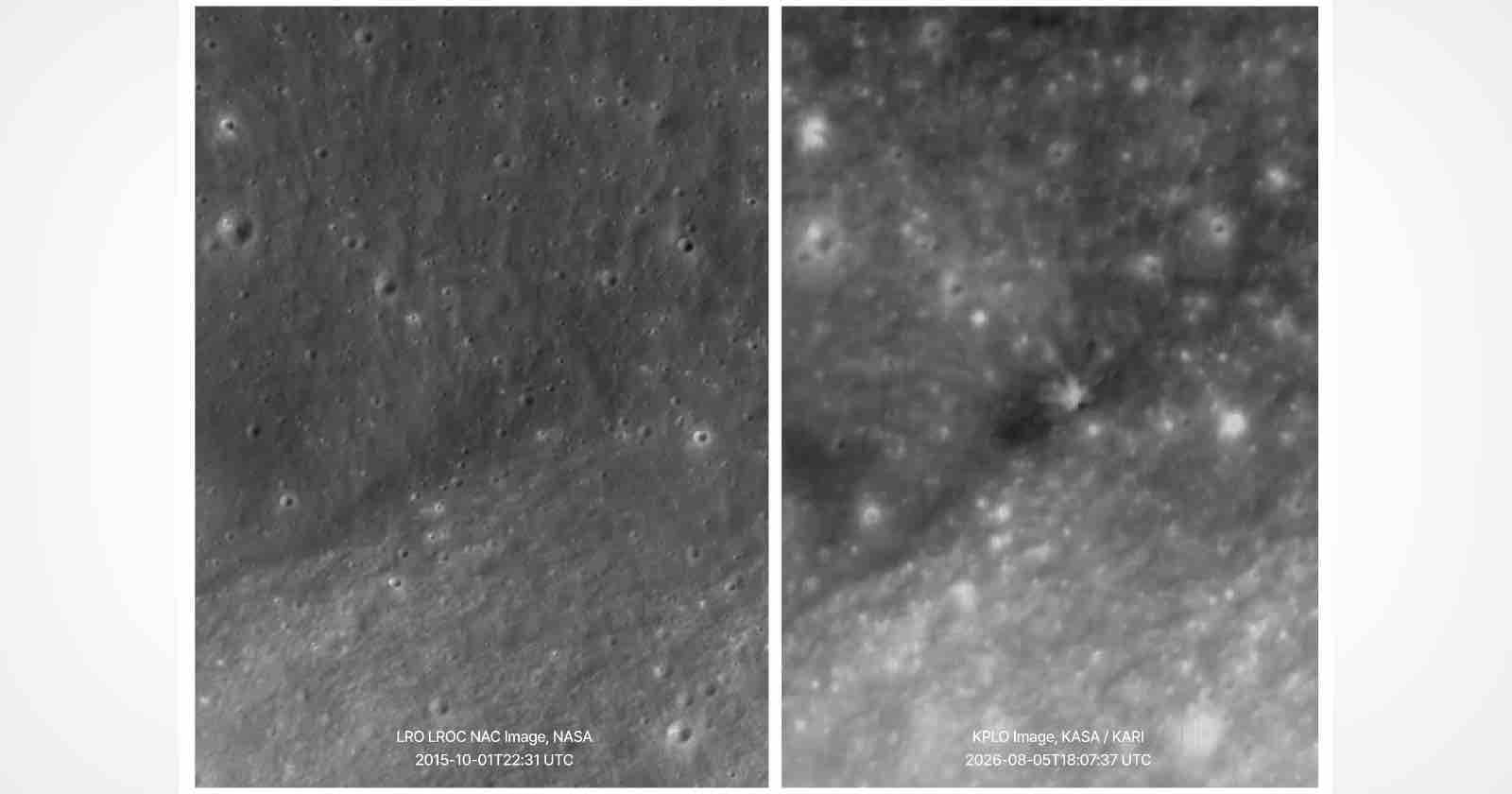
There is something almost poetic about destruction when it happens on a scale so vast it becomes art. The first before-and-after images of the lunar surface, showing the fresh scar left by SpaceX's out-of-control spacecraft, are exactly that kind of poetry. We are watching a machine meet its end not with a whimper, but with a lasting impression carved into a world that has no atmosphere to soften the blow. The contrast between the 2015 frame and the 2026 frame is stark: a quiet, ancient terrain suddenly wearing a new mark, a signature of human ambition that missed its mark in the most literal sense.
Our honest take? This is not a failure to mourn, but a moment to study. For our readers who look at the stars with a mix of wonder and practicality, this crash is a reminder that space exploration is still a messy, physical endeavor. It is easy to romanticize the idea of landing on the Moon, but these photos ground us in the reality that the cosmos does not care about our intentions. The spacecraft was out of control, and the Moon was the unwilling canvas. Yet, even in this accident, there is a certain curated beauty. It is the kind of image that belongs in a gallery as much as a science journal, speaking to the artistic sensibility we champion. We see the mark, and we are invited to consider the story behind it, the trajectory, the miscalculation, and the sheer power of a falling object in a gravity well.
Practically speaking, what does this mean for you, our reader? It means that the conversation around space debris and planetary protection is no longer abstract. This is a concrete example of how our reach extends beyond our grasp, and it opens a question that feels both urgent and intimate: what do we owe to the places we touch, even by accident? We would tell you to watch how this story evolves, not because the crash itself is the headline, but because it will shape the protocols for future missions. Every crater, intentional or not, becomes a data point. The next time a rocket is sent toward the Moon, engineers will study these images with a reverence that borders on obsession. For those of us who appreciate the intersection of form and function, this is where the real beauty lies: in the refinement that follows a public misstep.
The takeaway here is simple and specific: the Moon is now a permanent archive of our attempts, and this scar will outlast every person reading this. So, when you look at these images, do not just see a crash. See the beginning of a new chapter in how we navigate the space between aspiration and control. The question we are left with is not whether we will return, but what we will choose to leave behind next time. That is the detail to watch, and it is worth every bit of your attention.