NASA’s New 300-Megapixel Nancy Grace Roman Space Telescope Launches Into Space
Our take
## Our Take: A New Lens on the Universe – NASA’s Roman Telescope and the Quest for Cosmic Understanding
The launch of NASA’s Nancy Grace Roman Space Telescope, a marvel of engineering boasting a staggering 300-megapixel camera, marks a pivotal moment in our exploration of the cosmos. Departing Earth aboard a SpaceX Falcon Heavy, this telescope isn’t merely an upgrade; it represents a paradigm shift in how we observe and understand the universe. Its primary mission – to investigate dark energy and map the large-scale structure of the cosmos – tackles some of the most profound and enduring mysteries in modern astrophysics. This endeavor builds upon the legacy of the Hubble Space Telescope, but with a fundamentally different approach, sacrificing detailed, high-resolution imaging for a wider field of view and the ability to survey vast swathes of the sky. For those interested in the broader context of space exploration and the technological advancements driving it, consider exploring The Future of Space Telescopes and A Deep Dive into Dark Energy for a more comprehensive understanding of these topics. The sheer scale of the Roman telescope’s camera – nearly 100 times larger than Hubble’s – allows it to gather unprecedented amounts of data, opening up new avenues for scientific discovery.
The significance of the Roman Telescope extends far beyond simply observing more stars. Dark energy, a force currently believed to comprise approximately 68% of the universe, is responsible for its accelerating expansion. We know remarkably little about it. The Roman Telescope’s Wide Field Instrument (WFI) will systematically map hundreds of millions of galaxies, measuring their distances and redshifts to precisely track the expansion history of the universe. This data will allow scientists to refine our understanding of dark energy’s properties and potentially uncover new physics beyond the Standard Model. Moreover, the telescope will conduct a microlensing survey to search for exoplanets, including those that might be Earth-like, offering tantalizing possibilities in the ongoing quest to find life beyond our planet. The telescope’s ability to observe faint, distant objects will also allow astronomers to study the evolution of galaxies over cosmic time, providing valuable insights into the formation and development of the structures we observe today.
Beyond its scientific goals, the Roman Telescope’s launch highlights the increasingly collaborative nature of space exploration. The partnership between NASA and SpaceX underscores the growing role of private companies in advancing space technology. SpaceX’s Falcon Heavy, a powerful and reusable launch vehicle, provided a reliable and cost-effective means of delivering the telescope to its designated orbit, demonstrating the benefits of commercial space partnerships. This collaborative approach, combined with the telescope's innovative design, represents a new era of ambitious scientific endeavors, pushing the boundaries of our knowledge and inspiring future generations of scientists and engineers. The data generated by the Roman Telescope will be publicly available, fostering collaboration among researchers worldwide and accelerating the pace of discovery.
Looking ahead, the data stream from the Roman Space Telescope promises a revolution in our understanding of the universe. The sheer volume and quality of the information it will provide will undoubtedly lead to unexpected discoveries and challenge existing theories. A particularly intriguing question to watch is whether the telescope’s observations will confirm or refute the current Lambda-CDM model of cosmology, our best current explanation for the universe's composition and evolution. Will the Roman Telescope reveal subtle deviations from the predicted expansion rate, hinting at new physics at play? The next decade promises a deluge of groundbreaking insights, reshaping our perspective on our place in the vast cosmic landscape and prompting us to reconsider the fundamental laws that govern the universe.
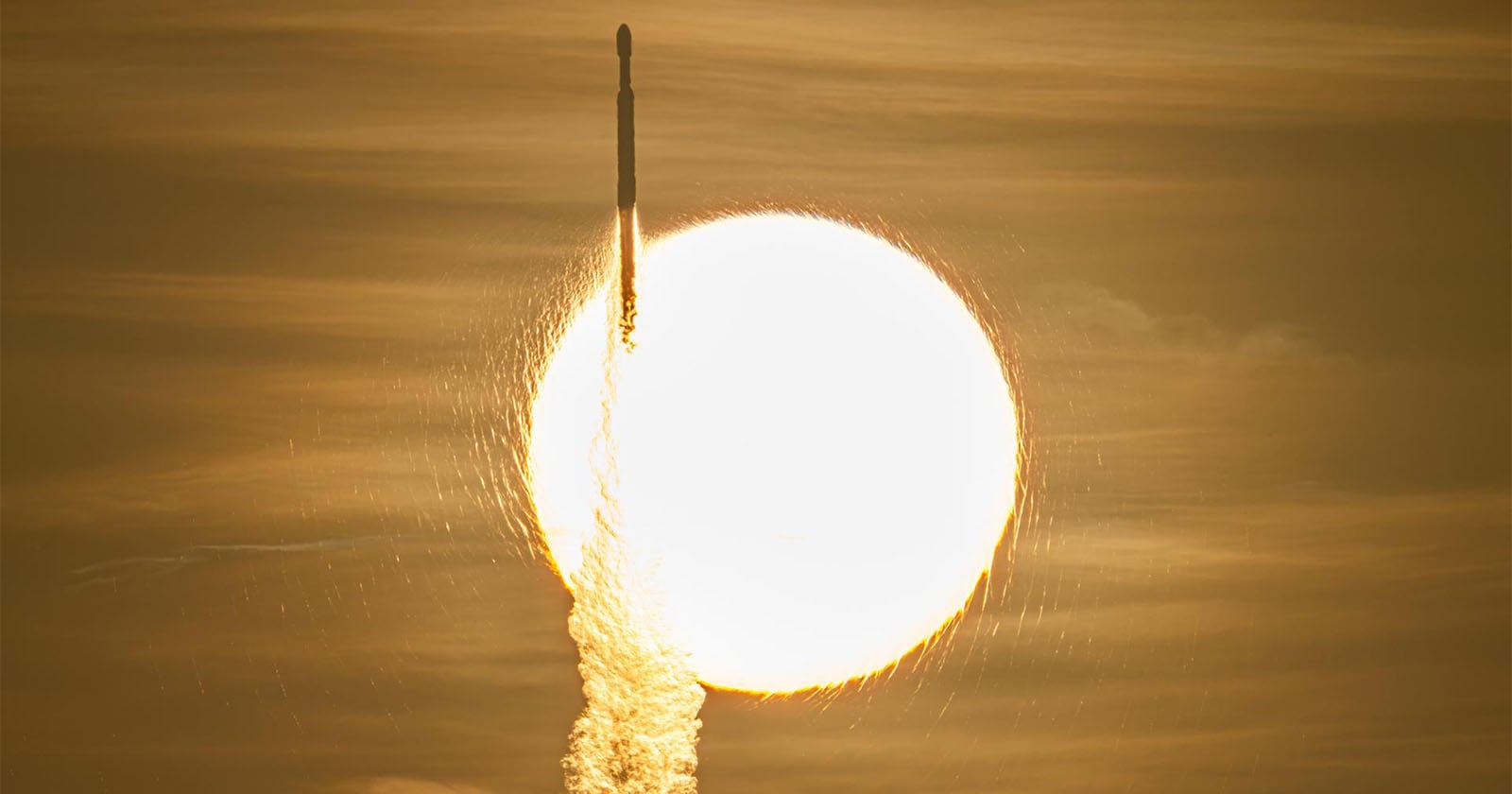
NASA's cutting-edge Nancy Grace Roman Space Telescope launched this morning aboard a SpaceX Falcon Heavy rocket from Kennedy Space Center in Florida, beginning a million-mile journey with the goal of solving some of the many mysteries of dark energy and the origins of the Universe itself.
Read on the original site
Open the publisher's page for the full experience