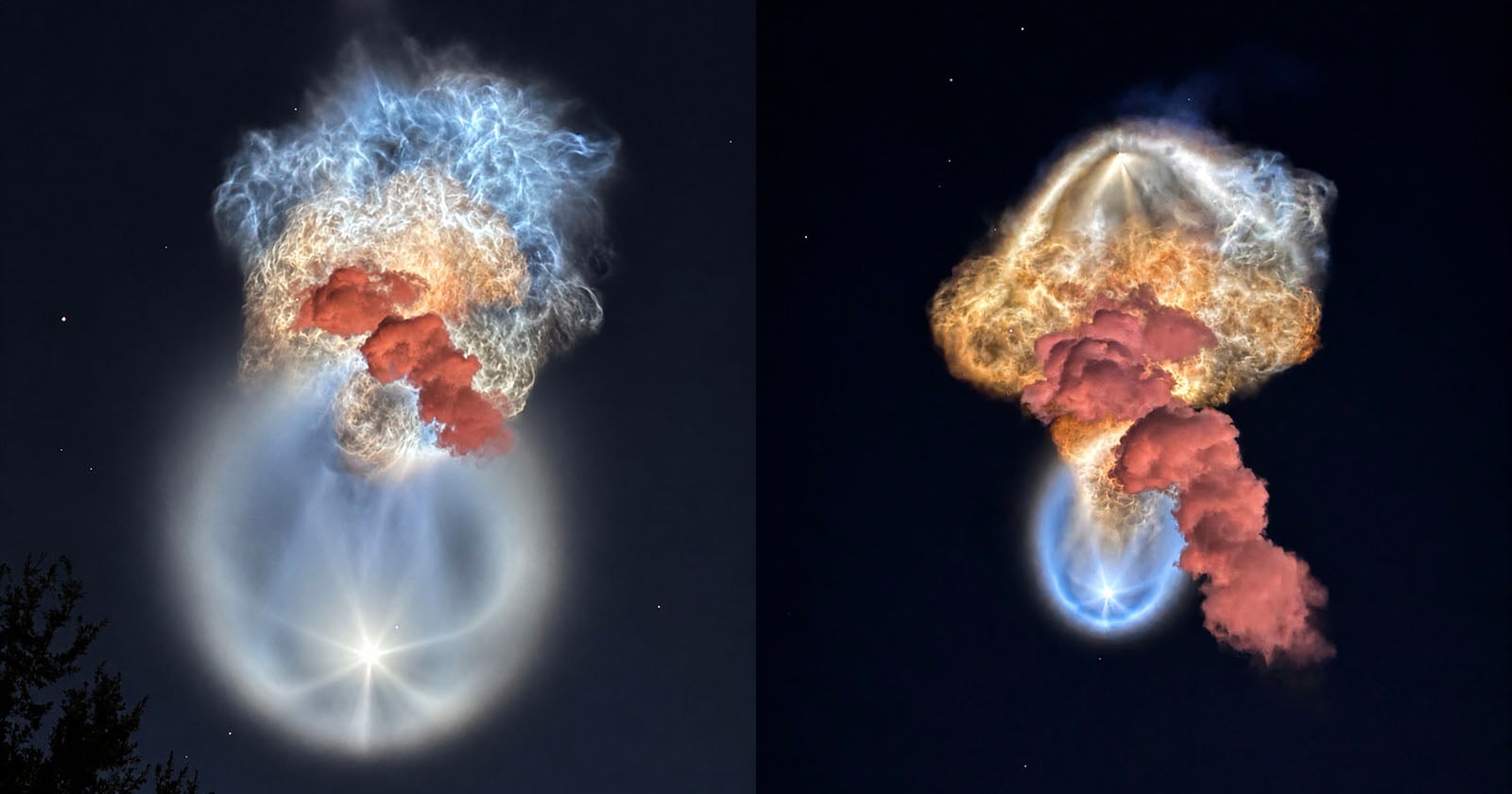
There is something quietly radical about a rocket plume that refuses to be just a rocket plume. When NASA released its images of the "space jellyfish" suspended over Cape Canaveral, a luminous, trailing bloom of exhaust catching the low sun against a dark sky, it reminded us that even the most engineered moments can yield pure, unplanned poetry. Our take is simple: this is not a photograph of a launch. It is a photograph of wonder, and we should treat it as a masterclass in seeing the extraordinary in the functional.
That glow, that improbable jellyfish shape, exists because of a specific alignment of time, atmosphere, and angle. The rocket did not set out to make art. It set out to deliver payload. But the camera caught what the mission brief never promised: a fleeting celestial creature that looks more like a deep-sea apparition than a combustion event. This is the same impulse that drives a photographer to chase a narrow beam of low sunlight finding the top step of a dugout, as captured in The Light That Found Pete Crow-Armstrong at Wrigley. In both cases, the subject is incidental. The real story is the light, and our willingness to pause for it.
For our readers, who move between fitness, fashion, beauty, and the spaces where those worlds overlap, the space jellyfish offers a tangible lesson. Curation is not about adding more. It is about noticing what is already there. The rocket plume did not need retouching. The light at Wrigley did not need staging. And when we talk about an aspirational lifestyle, we mean the ability to recognize those moments rather than manufacture them. This is also why we remain deeply skeptical of products that promise an effect rather than an experience. Consider How Pergear's 50mm f1.4 Surrenders to Its Own Bokeh Myth: a lens that tried to engineer a visual signature, fish-scale bokeh, and ended up delivering a gimmick. The jellyfish plume did not try to be a jellyfish. That is why it is beautiful.
The practical takeaway here is direct: stop waiting for permission to find the sublime in the utilitarian. Whether you are composing a shot, designing a space, or choosing how to move your body in a workout, ask yourself what is already present that you have been trained to ignore. The rocket plume was exhaust. The dugout light was a technicality. Both became iconic because someone looked twice. The next time you see a launch, a shadow, a reflection, or a spill of light across a studio floor, resist the urge to move on. That is where the jellyfish lives.