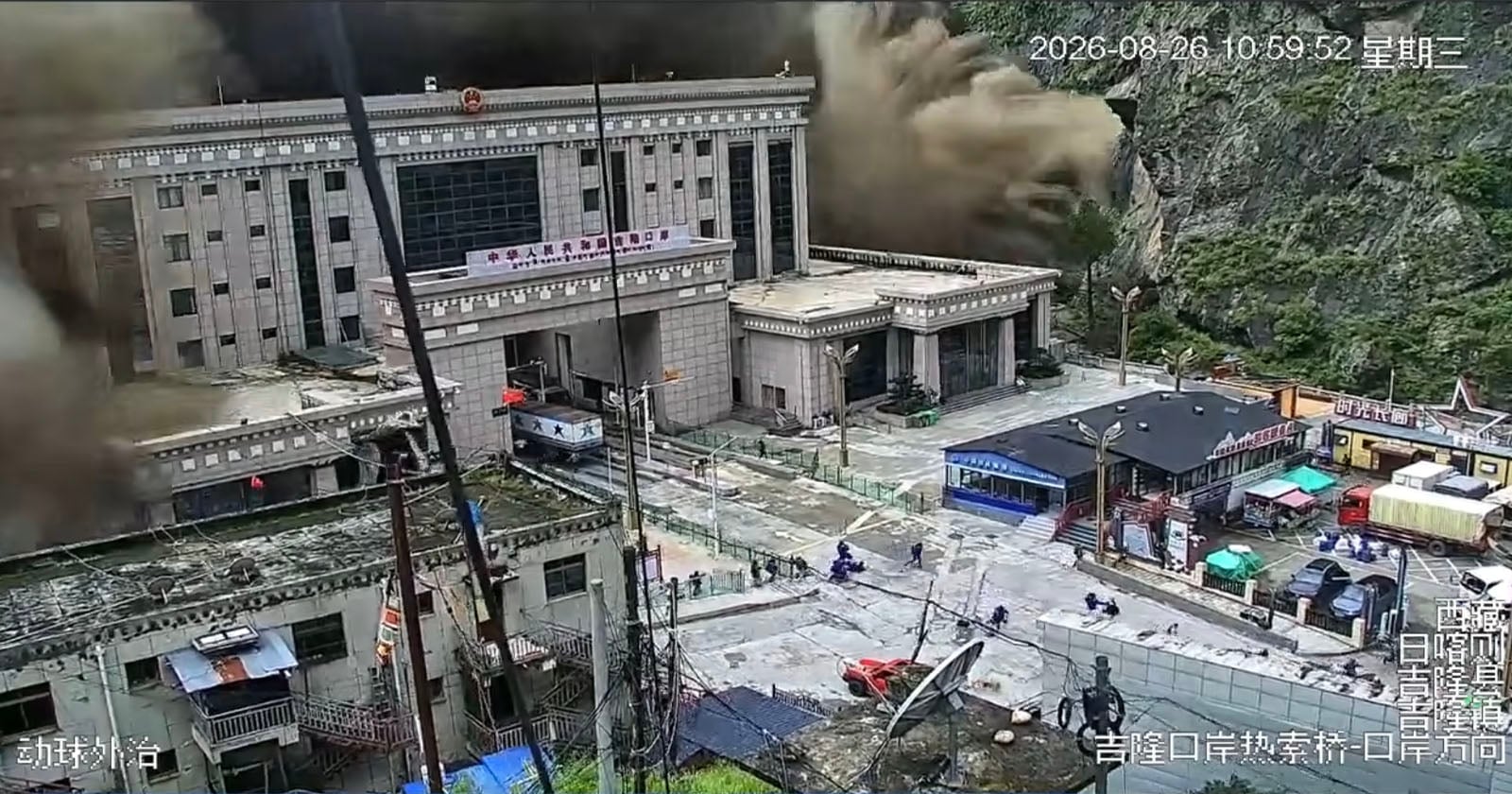
The security footage is blunt in a way words rarely are. One moment, the border crossing between Nepal and China is a solid, multi-story government building, an anchor of bureaucratic permanence. The next, a mountain slope exhales a cloud of dust and debris, and the structure is gone, swept away by a mudslide as if it were made of sand. It is a startling reminder that the maps we rely on are just agreements, and the ground itself is not party to them. For anyone who watches this, the takeaway is not about geopolitics or infrastructure. It is about the illusion of control we all maintain, especially when we travel.
For our readers, the ones who see the world as a place to be explored and curated, this is more than a news item. It is a practical lesson in the fragility of the very routes we depend on. The border crossing was not a remote trail; it was a functioning checkpoint, a symbol of connection between two nations. Its sudden erasure is a stark illustration that the "immersive" experiences we seek often come with a layer of unpredictability that no itinerary can account for. We talk about authentic travel, but authenticity rarely includes watching the road you planned to take literally cease to exist. This footage is a powerful argument for building flexibility into every journey, for having a Plan B that does not rely on a specific pass or a particular bridge. The ground can change, and it does not ask for our permission.
What would we tell a friend who asked about this? We would say this: let the image settle in, but do not let it paralyze you. The world is still vibrant, still full of beauty, but it is also a force that demands respect. This is not a reason to stay home, but it is a reason to stay aware. The same artistic sensibility that draws us to dramatic landscapes should also remind us that those landscapes are alive, active, and utterly indifferent to our schedules. We would advise checking current conditions, yes, but more importantly, to mentally prepare for the possibility that the "curated" path might be rearranged. The journey is not a product to be delivered; it is a negotiation with the elements.
The specific detail to watch here is not the mudslide itself, but the response. How quickly will the crossing be rebuilt, and more importantly, what does this say about the long-term viability of such infrastructure in a region defined by its tectonic restlessness? As climate change intensifies weather patterns, these events will not be rare anomalies; they will be part of the rhythm. The question for us is not if we will encounter disruption, but how we will adapt. The concrete point is this: the next time you look at a map, remember that it is a snapshot of a moment, not a promise. The border may vanish, but your ability to navigate what comes next is the only real asset you carry.