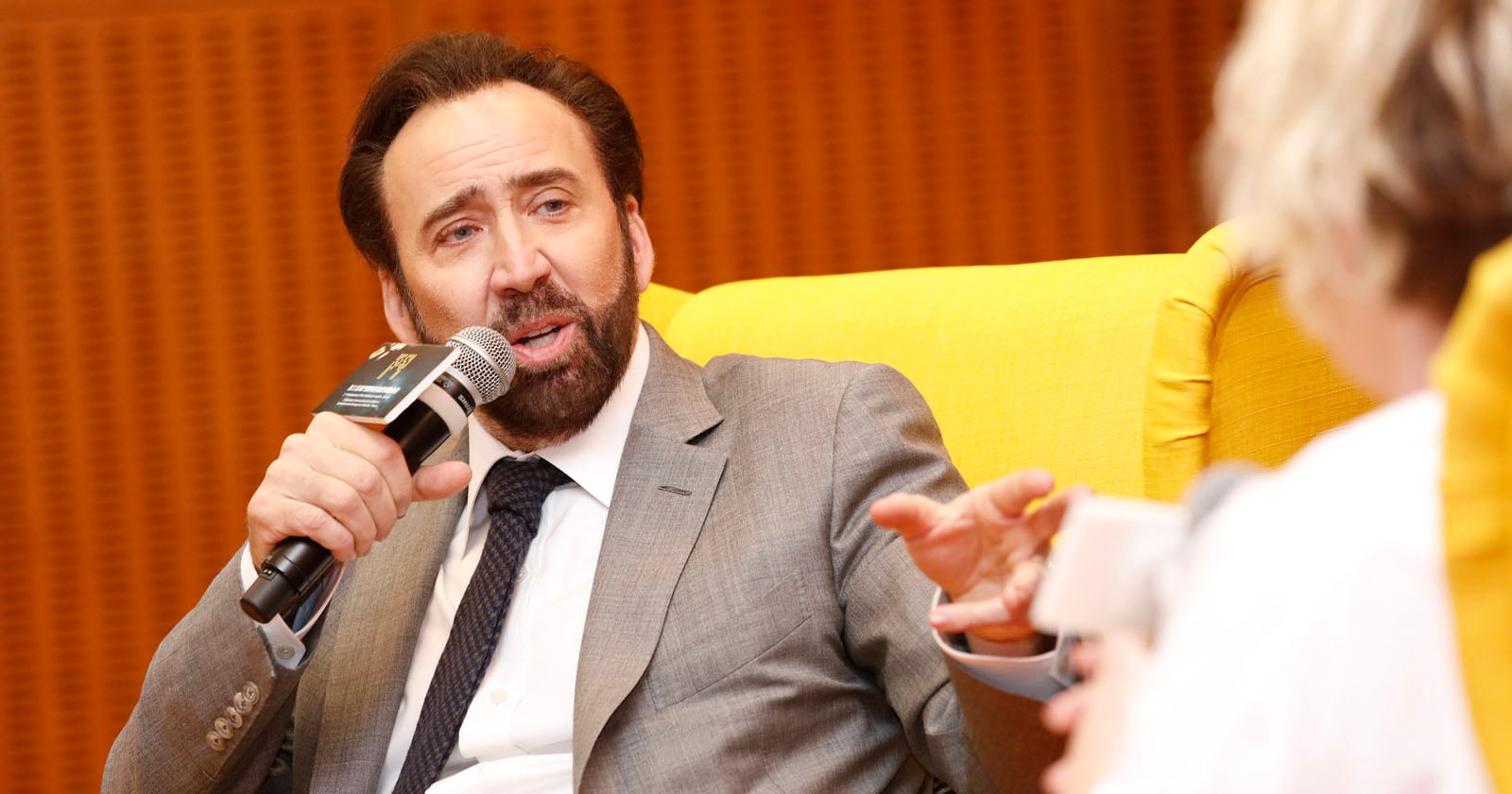
Nicolas Cage just drew a line in the sand, and it's a line every artist should study closely. By declining to sign an AI waiver on the Prime Video series *Spider-Noir*, Cage has made his position unmistakable: his performances are his own, not raw material for a machine to remix. This isn't a Luddite's tantrum or a celebrity's contractual posturing. It's a working actor asserting that the sweat, instinct, and strange alchemy of a human body in front of a camera cannot be reduced to a data set. For anyone who creates, that stance is both a relief and a reminder.
The timing feels deliberate, almost fated. Just weeks ago, Nikon pulled the prize from the winner of its Small World in Motion competition after determining AI had broken the rules, a decision we covered in Artistry's New Frontier: Nikon Pulls the Prize When AI Breaks the Frame. Nikon's move was about honoring the craft of microscopy, where a human eye and hand capture what a machine might flatten. Cage's refusal is the same principle applied to performance. Both actions say the same thing: authenticity still has a price, and it's worth paying. Meanwhile, in Josh Hartnett Dives Into the Deep End With Netflix's Below, we see another actor embracing the physical and emotional risks of a demanding role, the kind of commitment that assumes a body matters more than an algorithm. Cage's stand is the logical extension of that ethos.
What does this mean for you, the viewer? Practically, it means the performances you love, the ones that make you forget you're watching a screen, are still being fought for behind the scenes. When Cage refuses to sign, he's protecting the integrity of the work you consume. He's saying that when he plays a character, he wants you to see him, not a composite of his past takes stitched together by software. That's not nostalgia; it's a quality bar. If studios can't replicate a star's presence without their consent, they'll have to hire humans, pay them fairly, and respect their choices. That's a win for every artist negotiating a contract today, and for every audience member who can tell the difference between a performance and a simulation.
The open question is whether this becomes a precedent or an exception. Cage has the leverage to refuse; he's a singular talent with decades of iconic work. But what about the actor on their third credit, or the voice artist whose likeness is cheaper to clone than to cast? Their fight is harder, and Cage's stance doesn't solve it. What it does is normalize the refusal, making it a legitimate career move rather than a career ender. Watch for the next high-profile actor to follow his lead, and watch how studios respond. The specific detail to track is whether *Spider-Noir* proceeds without Cage's digital twin, and if so, whether that becomes the new standard. That's the real test: not whether AI can act, but whether we still want humans to.