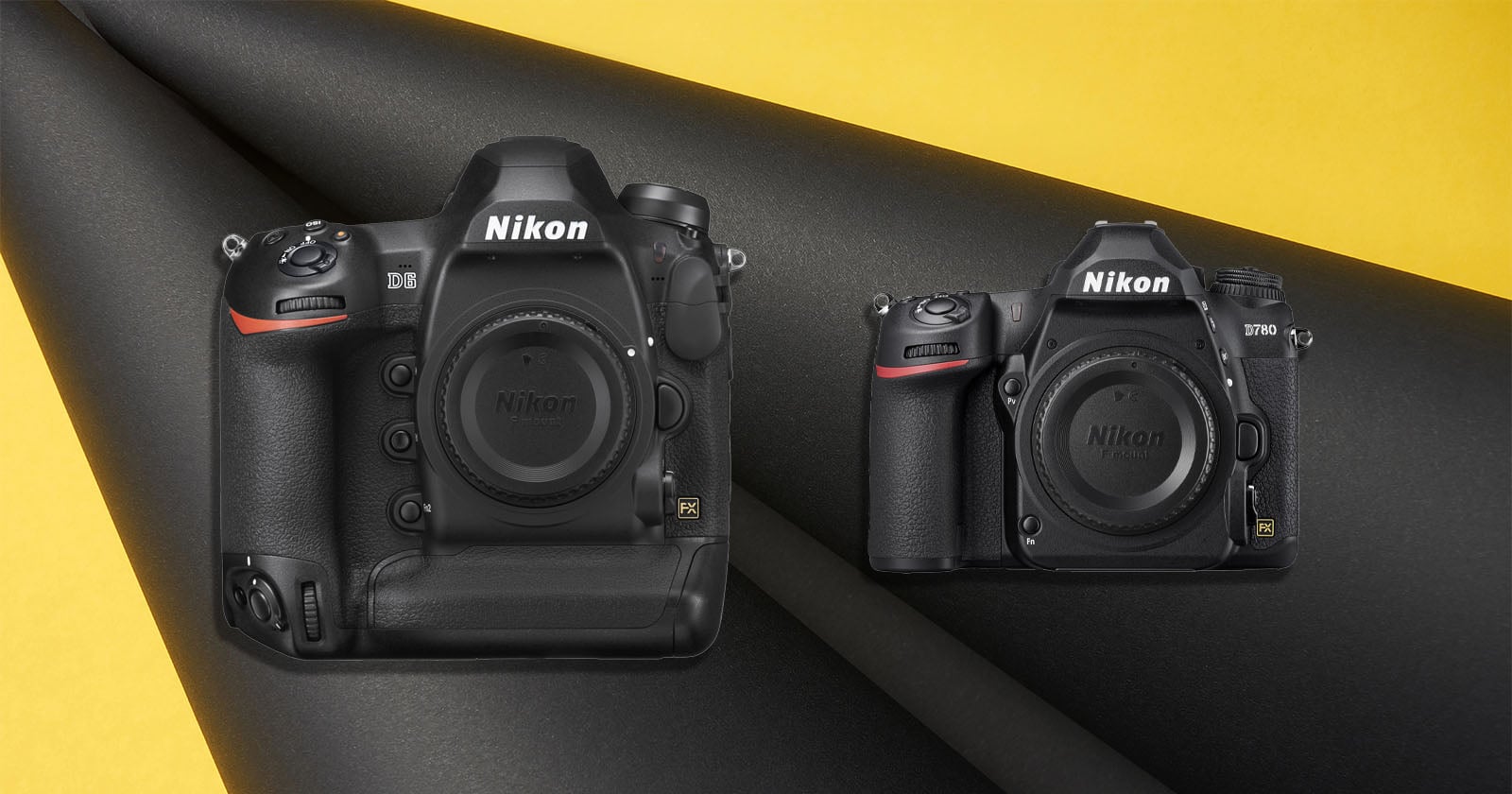
In a world where the industry's gaze has long since drifted to the sleek, silent promise of mirrorless, Nikon's decision to breathe new life into its final two DSLRs feels like a quiet act of rebellion. While the Z8 and Z9 have rightly soaked up the spotlight with their firmware spectacles, this latest gesture is aimed at the D6 and D780, cameras many had mentally consigned to the history books. It is a move that speaks to something deeper than simple software support; it is a nod to the enduring relationship between the maker and the photographer who refused to let go. For those of us who appreciate the tactility of a mirror slap or the heft of a body that has seen a decade of weddings, this is not just maintenance, it is a curated farewell that feels remarkably like loyalty.
We have to be honest: this is not about adding a groundbreaking feature that will change the way you shoot. It is about respect. In an era where planned obsolescence is the unspoken rule, Nikon is flipping the script, suggesting that a tool's value is not solely defined by its release date but by the craft it enables. For our readers who are still earning their keep with a D780, this update is a practical reassurance that your investment is not a dead end. It means your autofocus might get a subtle refinement, or your connectivity will play nicer with modern software, but more importantly, it means the ecosystem you bought into is still being tended to. We would tell you this: if you have been eyeing the mirrorless path out of fear rather than desire, this is your permission slip to wait, to hold that camera a little tighter, and to let Nikon prove that "legacy" does not have to be a synonym for "abandoned."
The broader implication here is a philosophical one, wrapped in a plastic body and a lithium-ion battery. By maintaining these DSLRs, Nikon is acknowledging that the artistry of photography is not a linear progression but a spectrum of choices. We see this as a counterweight to the industry's relentless push toward the new, a reminder that the fundamentals of a great image have little to do with the mount on the lens. When a reader asks us whether they should feel pressured to switch, our answer is a resounding no, not because the Z system is lacking, but because the best camera is still the one that feels like an extension of your eye. This update is a validation that the gap between the two systems is closing, not because the DSLR is becoming mirrorless, but because Nikon is willing to blur the line of support.
The specific detail we are watching is the longevity of this commitment. Nikon has set a precedent here, and the question now hangs in the air: will this become a standard for other aging models, or is this a final, gracious bow for the D6 and D780 alone? We would argue that the true measure of this move is not found in the changelog, but in the signal it sends to every photographer who has ever been told their gear is "old." It tells us that the company understands its history is not a weight to be shed, but a foundation to build upon. Our concrete takeaway, the one you can quote at your next shoot, is this: Nikon just proved that a camera does not need to be new to be current, and that is a philosophy we can get behind.