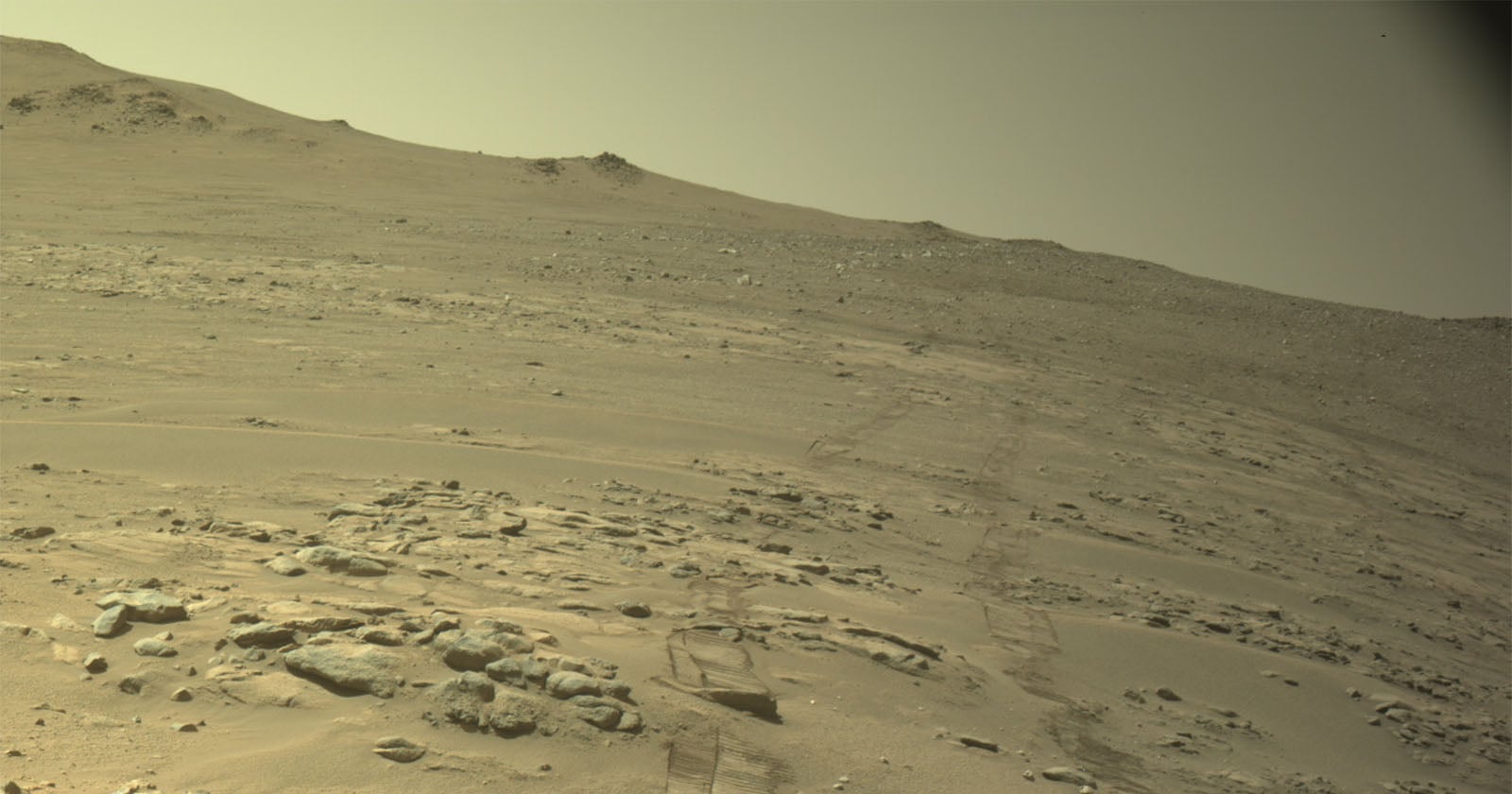
Mars has a new record holder, and it is not a sprinter, it is a scientist with six wheels and a titanium backbone. NASA's Perseverance rover has officially driven farther than any vehicle ever has on another world, a milestone that quietly rewrites what we consider possible in exploration. For those of us who follow the intersection of human ingenuity and raw, alien beauty, this is not just a number. It is a reminder that the most profound achievements often unfold in silence, dust, and extreme cold, far from the glow of a launch pad.
This rover's odometer now reads higher than any off-world odometer in history, but the real story is not the distance itself. It is the deliberate, curated nature of every meter traveled. Perseverance does not race for the sake of speed; it chooses each turn based on geology, habitability, and the faint hope of finding signs of ancient life. That intentionality echoes the work of its predecessor, Curiosity, whose recent panorama from a wind-sculpted ridge reminds us that Curated by Time Itself: Mars' Wind-Sculpted Cliffs, Framed at Dawn is a phrase that applies equally to the planet's landscapes and to the missions that frame them. Where Curiosity has spent over 5,000 Martian days climbing a single mountain, Perseverance is now carving a new path across Jezero Crater, chasing a delta that once held water. Both rovers are artists of a kind, composing their masterpieces one wheel rotation at a time.
For the creative and health-conscious reader, someone who values form and function in equal measure, this record holds a practical lesson. Perseverance operates on a planet where a single day is forty minutes longer than ours, where dust storms can blot out the sun for weeks, and where every command takes up to twenty-four minutes to arrive. Yet it keeps moving. It adapts. It does not wait for perfect conditions. That is the same discipline required to maintain a consistent fitness practice, to refine a craft, or to build a brand that feels authentic rather than manufactured. The rover's success is not about raw speed; it is about persistent, intentional motion toward a goal that matters. We can take that same ethos and apply it to our own routines, whether we are chasing a personal best or curating a new collection.
What comes next is what we are watching most closely. Perseverance is now heading toward the ancient river delta, a site that could contain the first signs of extraterrestrial life ever discovered. The samples it collects there will eventually be returned to Earth, a logistical ballet that makes a marathon look like a short jog. If those samples contain organic molecules, the conversation about life in the universe changes forever. If they do not, the conversation shifts to what else we should be looking for. Either way, the rover's record is not a finish line. It is a waypoint. And the next one, carved into the rust-hued cliffs of a distant world, is already waiting.