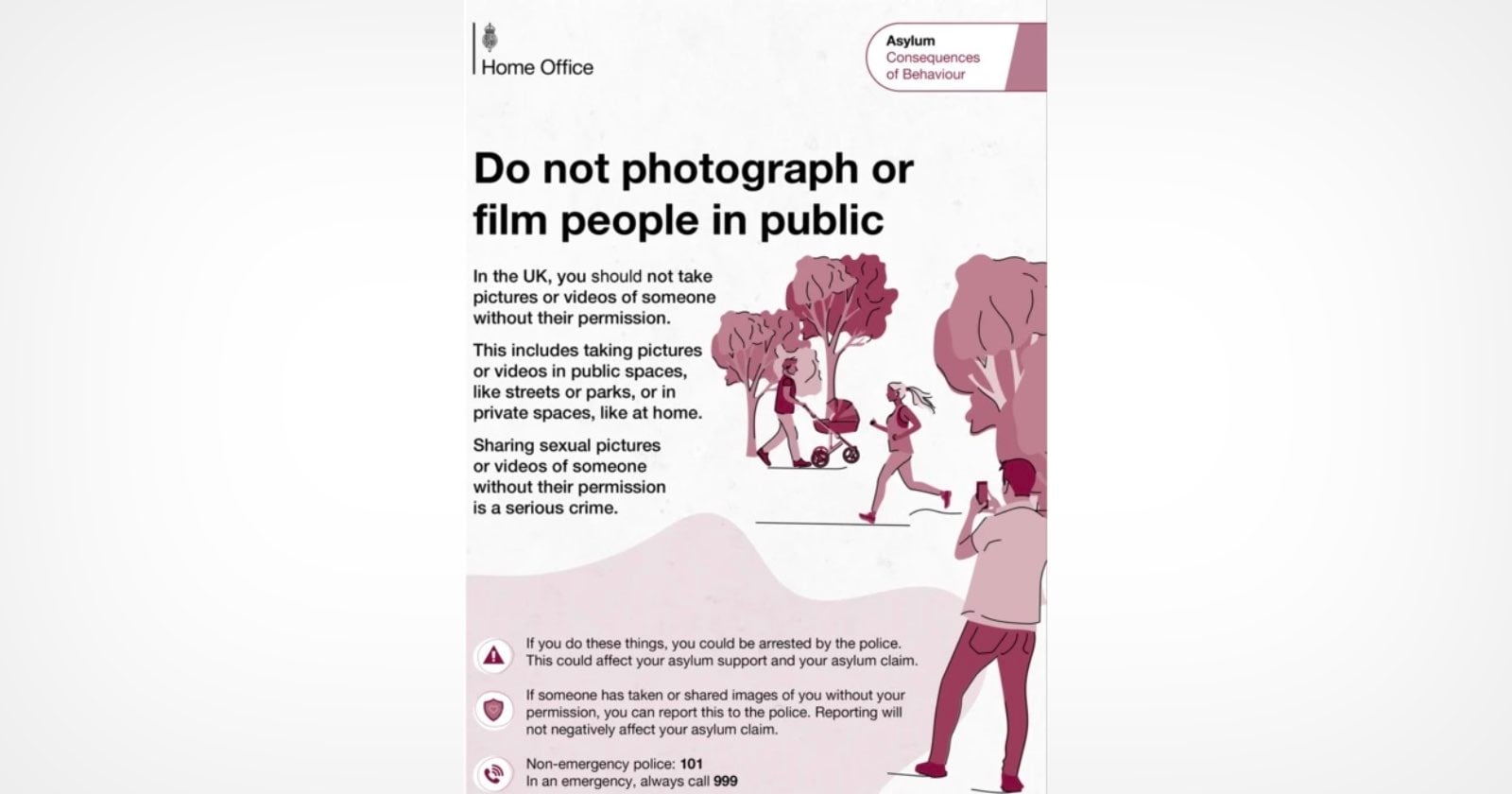
The U.K. government's recent publication of a booklet suggesting that photographers "could be arrested" for taking pictures of people in public is more than a bureaucratic misstep; it's a quiet erosion of a right we often take for granted. The document, widely criticized as misleading, frames a routine act, pointing a lens in a shared space, as a potential crime. For anyone who has ever raised a camera to their eye in a park or on a city street, this feels like a direct challenge to the very essence of visual storytelling. We're not lawyers here, but we know that the law has long favored the photographer's right to capture public life, and this guidance muddies those waters with unnecessary fear.
This is where our world of curated aesthetics and artistic expression collides with hard legal reality. We spend our days celebrating the craft of image-making, whether it's the deliberate grain of ultra-low ISO film or the patience required for astrophotography, and we know that the magic often lies in the unscripted, candid moments. A blanket warning that turns a casual street portrait into a potential arrest is not just wrong; it's antithetical to the spirit of discovery that draws so many of us to this art form in the first place. The government's job is to clarify rights, not to chill them with vague threats, and this booklet fails that test spectacularly.
For our readers, the practical takeaway is not to stop shooting, but to shoot with informed confidence. Knowing your rights is the first step, and the second is understanding that this guidance, while official, does not carry the weight of law. We would tell a reader who asks, "Should I be worried?" this: be aware of your surroundings, be respectful of people's privacy in sensitive situations, but do not let a poorly worded pamphlet dictate your creative practice. The very idea that a public park becomes a legal minefield for a photographer is absurd, and we should treat it with the skepticism it deserves. This is a moment to support organizations that defend visual expression, not to retreat indoors.
What we'll be watching closely is whether this guidance gets quietly revised or if it stands as a test of public pushback. The fact that it's already been labeled "misleading" by critics suggests the pressure is working. For now, our advice is simple: keep creating, keep capturing the world as you see it, and let your work speak to the beauty of public life. The next time you're out with your camera, remember that the lens is a tool for connection, not a weapon, and that no poorly written government pamphlet should ever convince you otherwise. If anything, let this be a reminder to support the vibrant festival culture that celebrates exactly this kind of unposed, authentic expression, because that's where the real story lives.