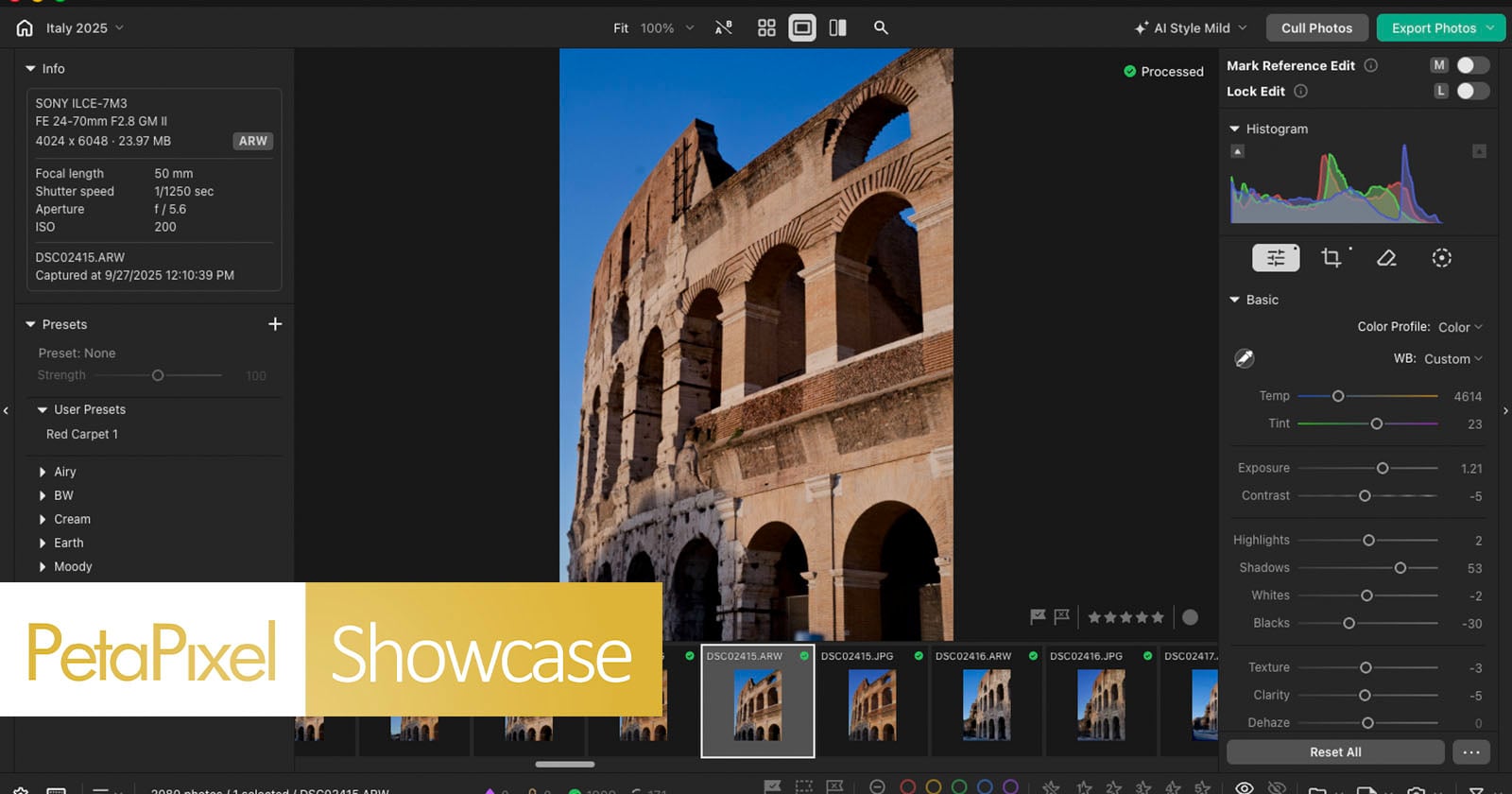
There is something quietly revolutionary about a tool that asks to stay, rather than insisting you leave. Pixieset's new Photo Editor, which weaves culling and batch-editing into a single on-device AI flow, is more than a feature update, it is a statement about creative continuity. For years, photographers have accepted the ritual of exporting, importing, and reconciling disparate software as an unavoidable tax on their craft. Pixieset is finally saying that tax is optional.
By bringing the editing process directly into its existing ecosystem of galleries, websites, and studio management, the company has closed the last obvious gap in its workflow. The practical consequence for photographers is immediate: no more shuttling between Capture One and a Pixieset gallery, no more guessing which edits survived the export, no more context-switching that fractures the creative spell. This is not about raw processing power; it is about preserving the photographer's attention. When the AI operates entirely on-device, the trade-off is privacy and speed versus cloud dependency, a smart bet for anyone who has ever watched a wedding gallery buffer under a bad hotel Wi-Fi.
This move arrives in a season of deliberate curation across the creative industry. The recent Hipstamatic Curates a New Camera Club and Four Analog Apps for Winter suggests a parallel appetite: artists want tools that honor intention over volume. Pixieset is solving the opposite problem, volume control, but the philosophy echoes. Meanwhile, the Inside the AI Rebuild That Redesigned Adobe Creative Cloud conversation reminds us that AI in creative software is rarely a simple lift. Pixieset has chosen local processing and a narrow, focused function rather than a sprawling suite of features. That restraint is its strength. It suggests the company understands something vital: the best tool is often the one that stays out of the way.
What remains to be seen is how deeply this editor integrates with the existing Pixieset experience. Will batch edits flow into gallery delivery with the same elegance as the culling? Can the on-device AI handle high-volume commercial shoots without feeling like a bottleneck? Pixieset has built a bridge between capture and client delivery. The question now is whether the bridge is as seamless to walk as it is to look at.