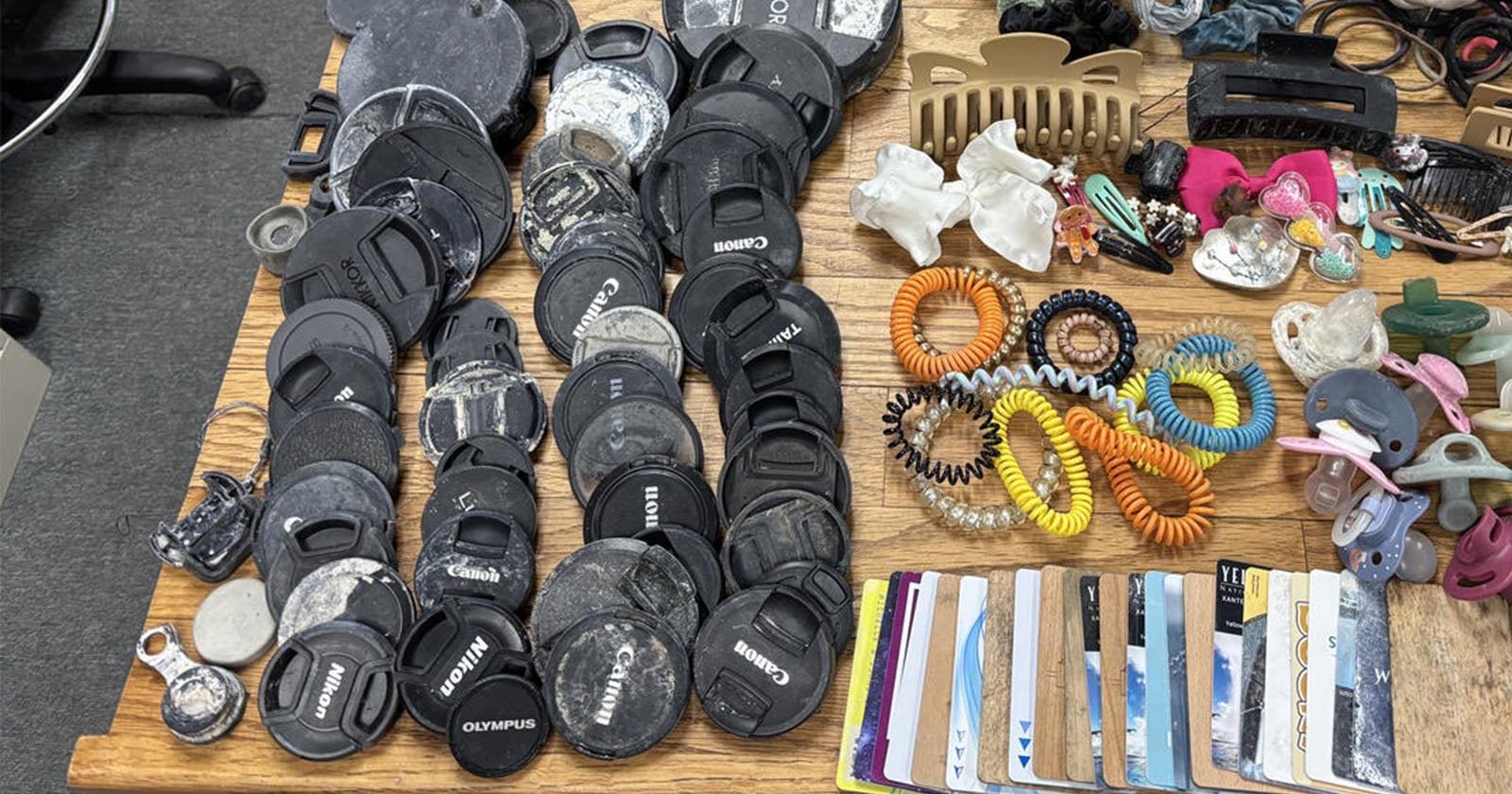
Fifty-four lens caps. That is the number of camera lens caps Yellowstone National Park staff have fished out of its hydrothermal areas so far this year, according to a report we came across. Alongside pacifiers and plastic cards, these small plastic discs have become an unexpected artifact of modern visitation. The park spans 2.2 million acres, and the fact that this is what we are recovering from places like Old Faithful and Morning Glory Pool says something quietly profound about how we move through sacred spaces. We do not always see our own litter as litter. A lens cap slips off while you are adjusting your shot, and suddenly it is not trash, it is an accident. But the park does not have the luxury of that distinction.
This story resonates far beyond the geyser basins. As photographers, we understand the reflexive urge to capture beauty, to preserve a moment that feels fleeting. But there is a tension here that deserves our attention. We are drawn to these wild places with our gear and our good intentions, and yet we leave behind small, stubborn pieces of ourselves. The lens cap is a perfect metaphor for our relationship with nature: we come looking for the perfect frame, and we forget that the frame is not the point. We found ourselves thinking about this while reading about Collaborate & Create: Boudoir Sessions Offered Across Florida's Coast, where the goal is intimate, artistic connection, and Leica Lux 2.0: Crafting iPhone Photography with Artistic Vision, which is about using tools to see more creatively. In both cases, the emphasis is on intentionality. You cannot create meaningfully if you are not present. And you cannot be present if you are fumbling with your gear and losing pieces of it in a hot spring.
Our honest take is this: we are not the villains here, but we are the visitors. Yellowstone is not asking us to stop taking pictures. It is asking us to be more careful, more deliberate, more aware of the ground beneath our feet. The practical takeaway for our readers is simple and specific: check your gear before you pack it, and check it again before you leave any viewpoint. A small cloth bag for lens caps costs a few dollars. A park ranger spending twenty minutes with a retrieval magnet costs far more. We would tell anyone who asks us about this story that the lens cap is not the problem. The problem is the habit of looking at nature as a backdrop rather than a shared home. When we treat these places as a studio, we owe them the same respect we would give a client's living room.
The quiet detail to watch here is the trend line. Fifty-four caps is this year's number, but what about next year? As camera gear gets smaller and more people carry phones with clip-on lenses, will the litter change shape? We suspect it will. And we hope the conversation around it does too. Because the real art is not in the image we capture. It is in the care we take not to disturb the thing we came to admire. That is the frame we should all be working within.