Rare Arctic Bobtail Squid Filmed in Its Natural Habitat for the First Time
Our take
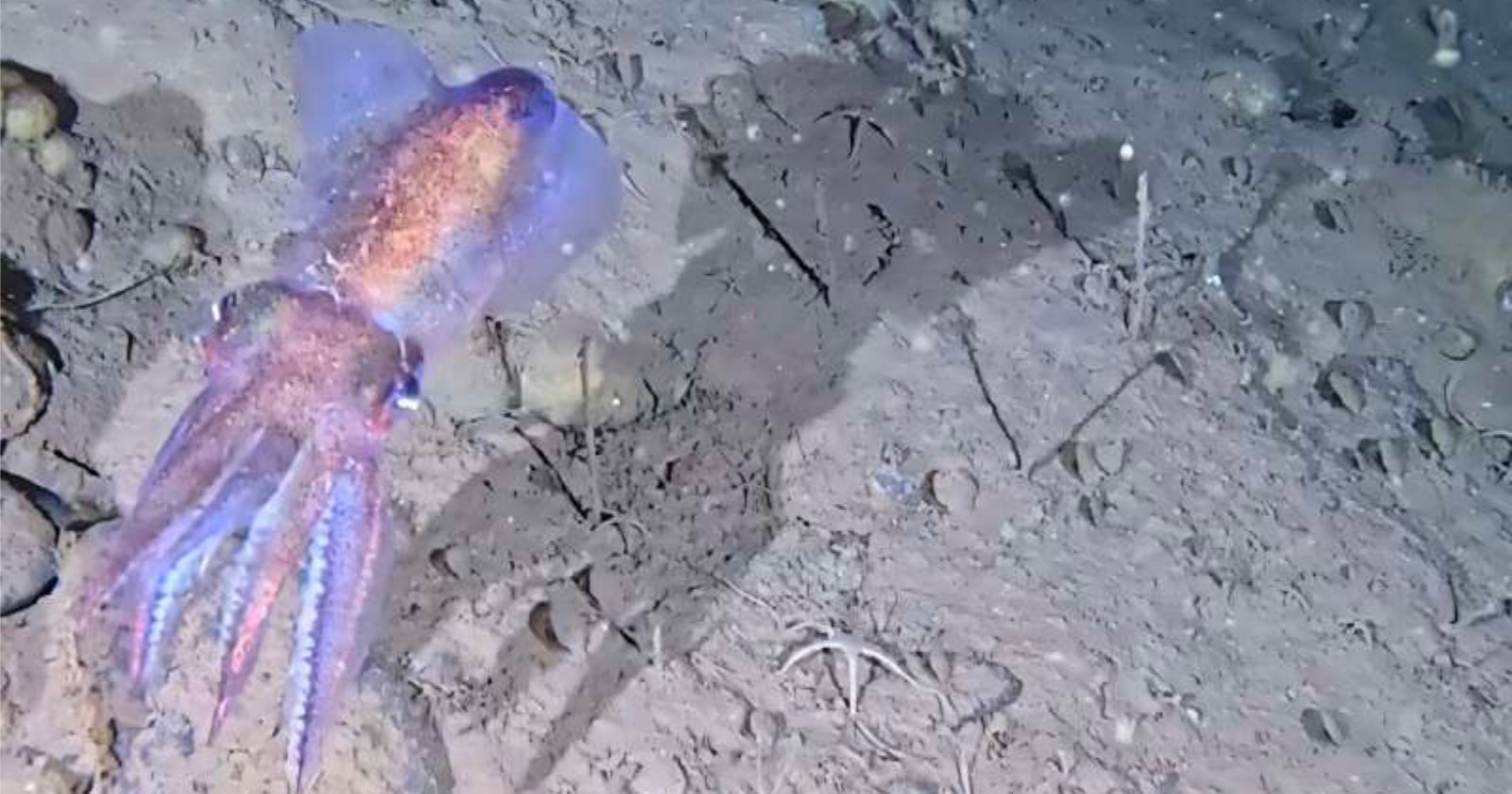
The recent footage of the Arctic bobtail squid in its natural habitat represents a remarkable achievement in marine biology, and a thrilling glimpse into a world previously shrouded in mystery. Scientists have, for the first time, documented these elusive creatures thriving in subzero conditions, a discovery that challenges our understanding of cephalopod adaptation and resilience. This isn’t merely a novelty sighting; it underscores the incredible biodiversity still hidden within our planet’s oceans, even in seemingly inhospitable environments. Observing a mature female tending to her eggs further elevates the significance of this finding, providing invaluable insight into the reproductive behavior of a species largely unknown to science. It’s easy to get caught up in the spectacle of the natural world – consider, for instance, the recent [Insane Video Shows Killer Whale Ramming a Sunfish to Smithereens], which highlights the raw power of marine ecosystems – but the Arctic bobtail squid discovery speaks to a subtler, quieter kind of wonder: the persistence of life in unexpected places. Furthermore, recent events underscore the importance of ongoing research and conservation efforts, particularly when considering incidents like [Tourist Filmed Taking Selfies Inches From Enormous Wild Bison], reminding us of the delicate balance between human interaction and the preservation of wildlife.
The implications of this discovery extend far beyond simply adding another species to the list of known Arctic fauna. Cephalopods, including squid, are incredibly intelligent invertebrates with complex nervous systems. Understanding how the Arctic bobtail squid has adapted to survive in such frigid waters could provide valuable clues for fields ranging from biomimicry to pharmaceutical research. Their physiological mechanisms for resisting freezing, for example, might hold secrets applicable to cryopreservation techniques or even inspire new materials science innovations. The fact that they’ve evolved in isolation—likely for a significant period—suggests the presence of unique genetic adaptations, a treasure trove for scientific exploration. Moreover, this underscores the need for greater investment in Arctic research, a region increasingly impacted by climate change. This finding acts as a poignant reminder of what we stand to lose if we fail to protect these fragile ecosystems. The ingenuity of engineering is also pushing boundaries, as demonstrated by [Researchers Design ‘Invisible’ Drone That Vanishes Before Your Eyes], showing how technology can enable us to observe and understand the natural world in increasingly sophisticated ways.
The challenge now lies in continuing to study these creatures without disrupting their delicate habitat. Long-term monitoring will be crucial to assess their population size, distribution, and vulnerability to environmental changes. The Arctic is undergoing rapid warming, and understanding how this impacts the Arctic bobtail squid – and the broader ecosystem it inhabits – is paramount. Advanced technologies, like remotely operated vehicles (ROVs) and sophisticated sonar systems, will undoubtedly play a critical role in these future investigations, allowing scientists to observe the squid without physically intruding on their environment. The initial footage, captured with remarkable precision, provides a baseline for future comparisons, enabling researchers to track changes over time and assess the effectiveness of conservation strategies. It’s a testament to the power of innovative observation and the enduring allure of the unknown.
Ultimately, the discovery of the Arctic bobtail squid serves as a potent reminder of the vastness of our planet’s biodiversity and the crucial role that scientific exploration plays in understanding and protecting it. As our understanding of marine ecosystems deepens, what other astonishing adaptations and species remain hidden in the icy depths, awaiting discovery, and what vital lessons can they offer us about resilience and survival in a rapidly changing world?
Scientists have filmed the Arctic bobtail squid in its natural subzero habitat for the first time, including the rare discovery of a mature female tending to its eggs.
Read on the original site
Open the publisher's page for the full experience