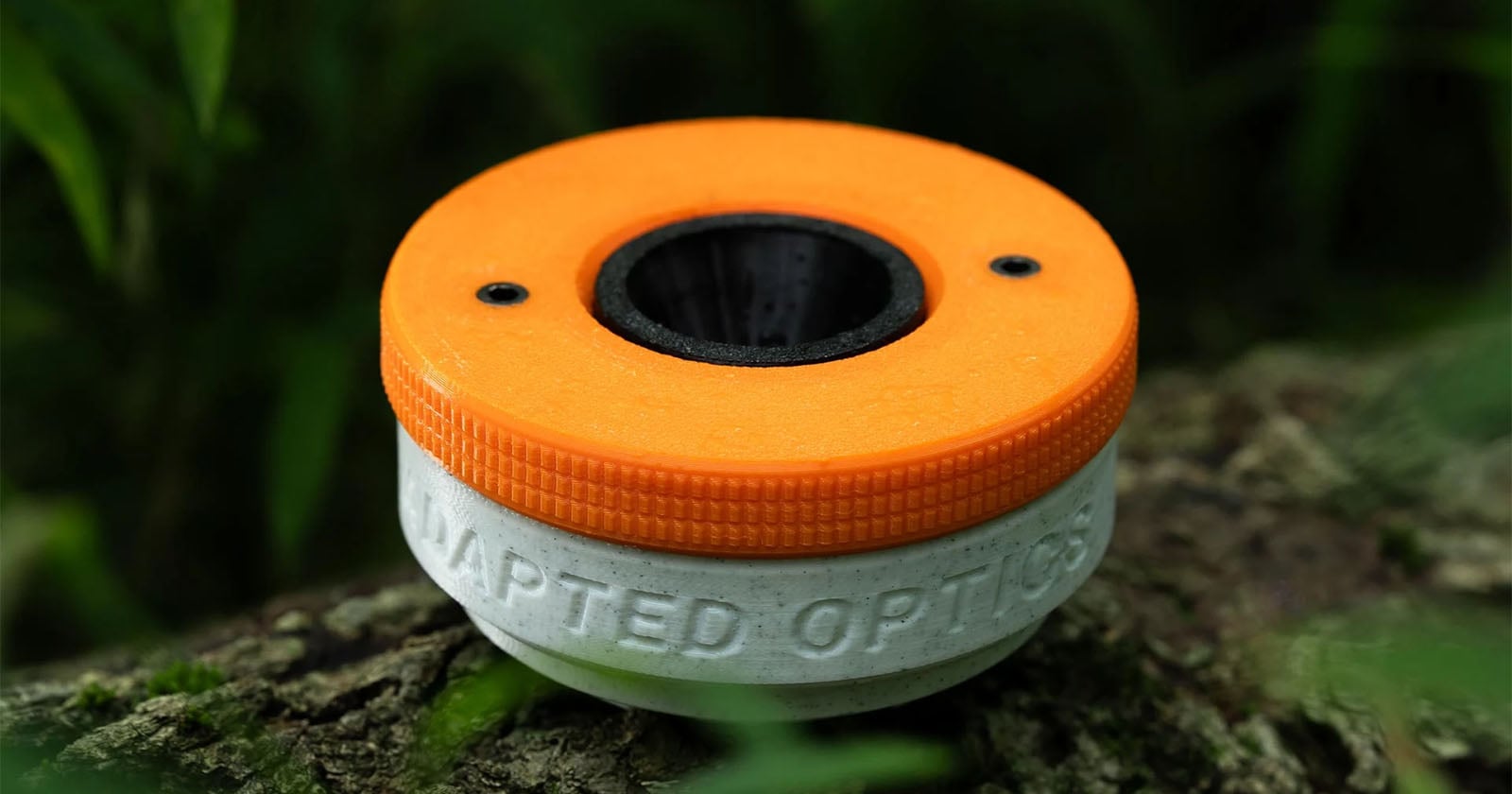
There is a particular kind of magic in the ordinary, and Thomas Spicher has managed to bottle it. By taking a simple plastic lens from a disposable camera and marrying it to a 3D-printed body, he has created what he calls the "Everyday Lens." It is a strange, wonderful object that sits at the intersection of throwaway culture and precision engineering. The result is not just a piece of glass; it is a statement about what we value in our images. In a world where every new lens promises sharper corners and clinical perfection, Spicher has chosen to champion the character of imperfection. That is a bold move, and one that feels refreshingly human.
For our readers, this is more than a novelty. The practical takeaway here is that the tools for creative rebellion have never been more accessible. You do not need a factory or a massive budget to build a piece of optics. You need a vision and a willingness to experiment. Spicher's journey from personal project to founding Adapted Optics is a reminder that the barriers to entry are crumbling. We would tell any photographer who has ever felt uninspired by their gear to look closely at this story. It is not about buying the next expensive thing; it is about asking what your current tools are missing. The fact that he has combined the soul of a disposable camera with the build quality of a modern product is a direct challenge to the industry's obsession with technical perfection over emotional resonance. It is a quiet rebellion, but it is a powerful one.
What strikes us most is the intentionality behind the design. This is not a hack or a rough prototype meant to be hidden away. It is a curated object, built to be used and appreciated. The 3D-printed body suggests a future where lenses can be personalized, repaired, and adapted to individual needs. It aligns with a growing desire among creators for authenticity over mass production. We see this as a natural evolution of the maker movement, applied to high-end optics. Spicher is not just selling a lens; he is advocating for a philosophy where the artist controls the tool, not the other way around. This is the kind of story that makes us want to pick up our cameras and see the world differently, to find the beauty in the scratches and the flares that we often try so hard to remove.
The open question, of course, is whether this level of character can translate beyond a niche audience. But that is precisely what makes this worth watching. As Spicher refines his design and potentially brings it to a wider market, we will be paying close attention to whether the rest of the industry takes notice. The specific detail we are watching is simple: if the "Everyday Lens" proves that a $5 plastic optic can hold its own against glass worth thousands of dollars, then the conversation about what makes a lens "good" is officially over. We will be asking ourselves whether we are chasing sharpness or chasing a feeling. For now, we are leaning toward the feeling.