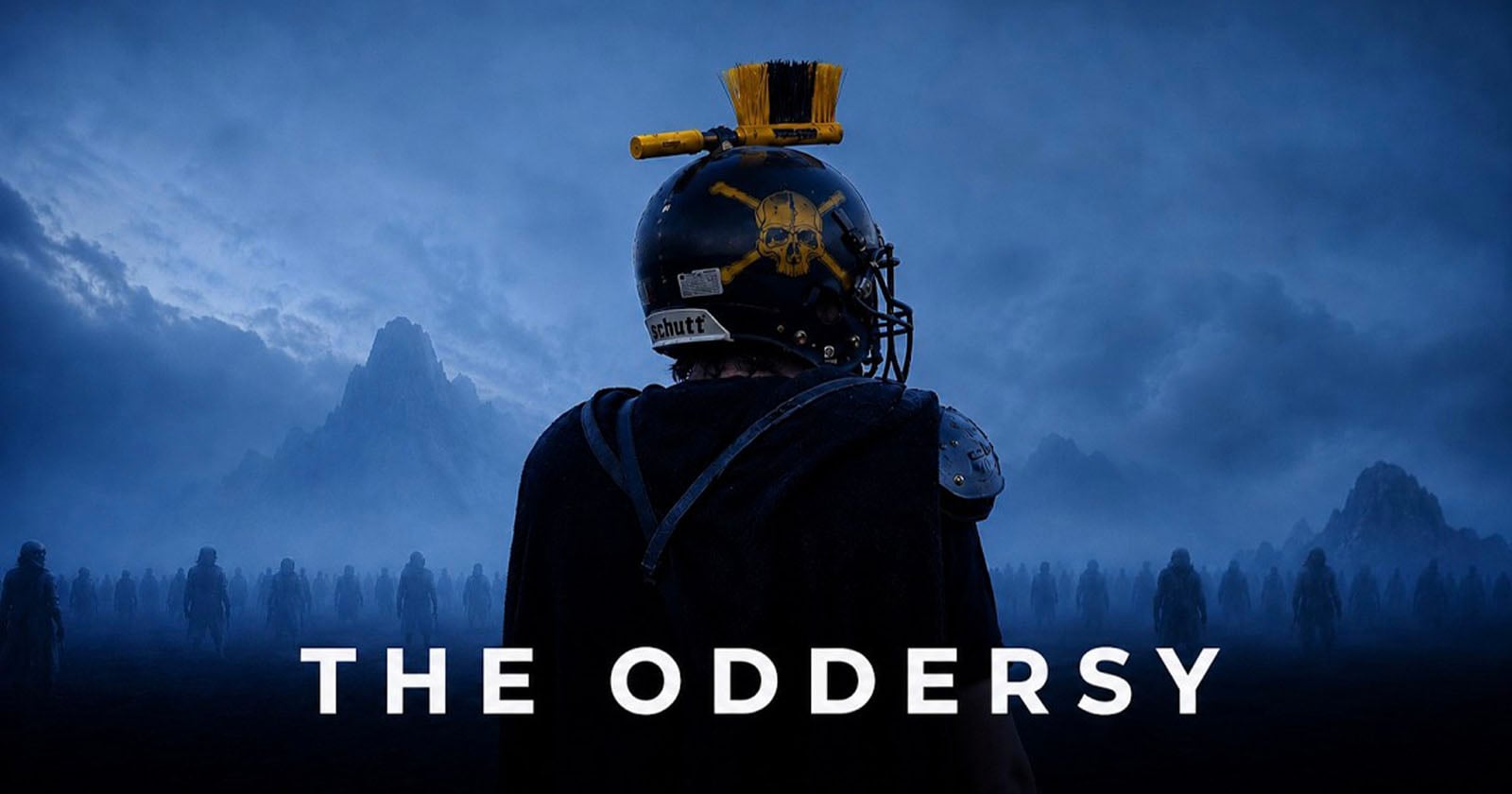
There is a particular joy in watching someone take the biggest, most serious tool in the room and replace it with something gloriously mundane. Will Norman, a director and comedian, has remade Christopher Nolan's summer blockbuster *The Odyssey* not on IMAX cameras, but entirely on iMacs. Where Nolan chased sweeping scale, Norman has found a different kind of ambition, one that swaps hundred-million-dollar spectacle for the quiet, stubborn charm of a desktop computer. It is a cheeky provocation, sure, but it is also a pointed question about what actually makes a story epic. Is it the sensor size, or is it the vision behind the lens?
This feels like a natural conversation starter for our community, especially when we consider how much of our craft is obsessed with gear. We spend hours debating the merits of full-frame sensors, as we did with the Refined and Accessible: The Nikon Z5 IIC—A Full-Frame Camera, Reimagined, which proves you can get exceptional quality without mortgaging your home. Norman's project takes that logic to a delightful extreme. He is not arguing that an iMac produces images that rival IMAX; he is arguing that the story, the performance, and the sheer audacity of the effort matter more than the equipment's pedigree. For the working photographer or the weekend filmmaker, this is a liberating reminder. Your camera is a tool; your eye is the real instrument. We would tell any reader feeling insecure about their kit to look at this project and feel the weight lift off their shoulders.
There is also something deeply modern about this act of creative recycling. We recently covered how Immersive Cinema Arrives: Meta’s VR Glasses Earn IMAX Certification, showing that the industry is constantly redefining what "premium" means. Norman's iMac experiment is a playful counterpoint to that arms race. Instead of chasing the next frontier of immersion, he is looking backward at a classic tale and forward at a tool many of us already own. It democratizes the blockbuster. It suggests that the barrier to entry for grand storytelling is not capital, but creativity. And in an era where we are all curating our own visual narratives, whether for clients or for our social feeds, that is an aspirational yet grounded philosophy. He is not waiting for permission to play; he is just playing.
The practical takeaway here is not that you should throw away your professional gear and shoot your next wedding on a laptop. Rather, it is a challenge to stop letting the tool dictate the story's ceiling. We would tell you to ask yourself: what are you avoiding because you feel under-equipped? The most compelling detail to watch is how Norman handles the film's more intimate moments, the quiet character beats that do not need a thousand extras. If he can make us feel the weight of an epic journey while sitting at a desk, he will have proven that the future of storytelling is not about the size of the camera, but the size of the imagination. That is a lesson worth framing.