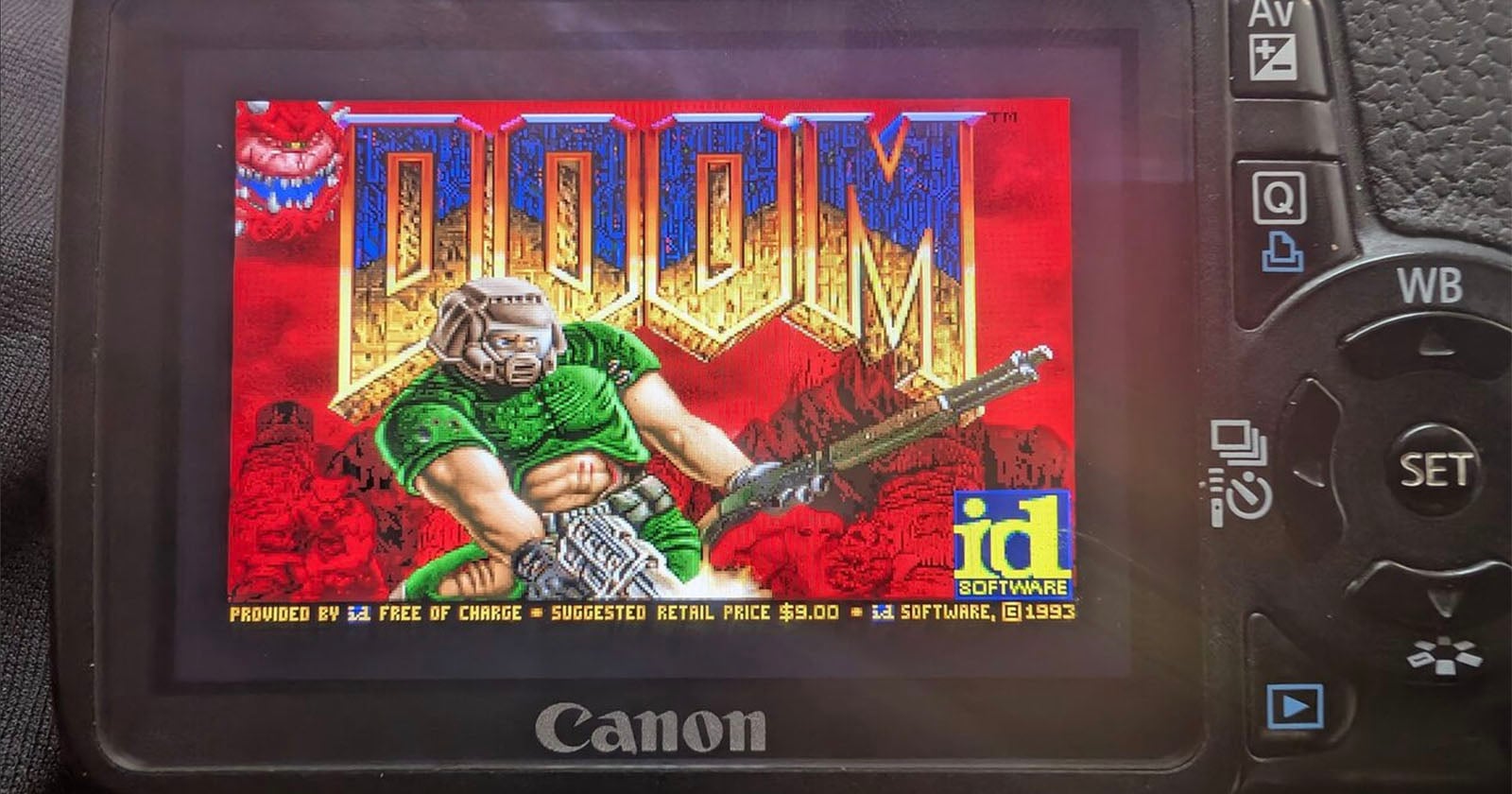
There is a particular kind of joy that arrives when a tool refuses to stay in its lane. The recent feat of running the 1993 classic *Doom* on a 16-year-old Canon EOS 550D, also known as the Rebel T2i, is not just a technical party trick. It is a quiet rebellion against the relentless march toward planned obsolescence. By leveraging the open-source Magic Lantern software, someone looked at a camera that most of us have relegated to the back of a closet and asked a wonderfully absurd question: what else can this thing do? That spirit of playful inquiry is the same energy that drives Leica Lux 2.0: Crafting iPhone Photography with Artistic Vision, where the focus shifts from hardware limits to the creative software layer. It reminds us that the magic was always about the vision, not just the sensor.
For the creative collaborators and health-conscious enthusiasts who make up our community, this story is less about gunning down pixelated demons and more about the philosophy of resourcefulness. We live in an era of constant upgrades, where the next camera body promises to unlock our potential. Yet here is a stark, charming contrast: a 2010 APS-C sensor running a game that defined a genre. It is a grounded, authentic reminder that the barrier to creativity is rarely the gear itself, but the willingness to explore the fringes of what that gear can do. This resonates with the approach seen in Capture the Unseen: High-Speed Imaging Redefines Detail, where pushing technical boundaries reveals new perspectives. The takeaway is not that you should be playing games on your camera, but that you should be asking what hidden potential lies dormant in your current setup, whether that is a custom firmware, a new lighting technique, or a different way of seeing.
Our honest take is that this is a call to play. In a world that often takes our craft so seriously, there is something deeply refreshing about a project that is purely for the joy of the hack. It strips away the pretension that often surrounds high-end photography and reminds us that the medium is also about experimentation. If we were sitting with a reader who asked about this, we would tell them this: look at your own practice. Are you using your tools to their absolute limits, or are you just using them to the limits of their presets? This story is a nudge to break the rules, to install the beta software, to try the shoot that seems technically impossible. The practical consequence is a mindset shift. The next time you pick up your camera, ask yourself what you are missing because you are too busy following the manual. The most curated detail in your artistic arsenal might just be the willingness to make the device do something it was never designed to do, proving that vibrancy is not a feature you buy, but a perspective you embrace.