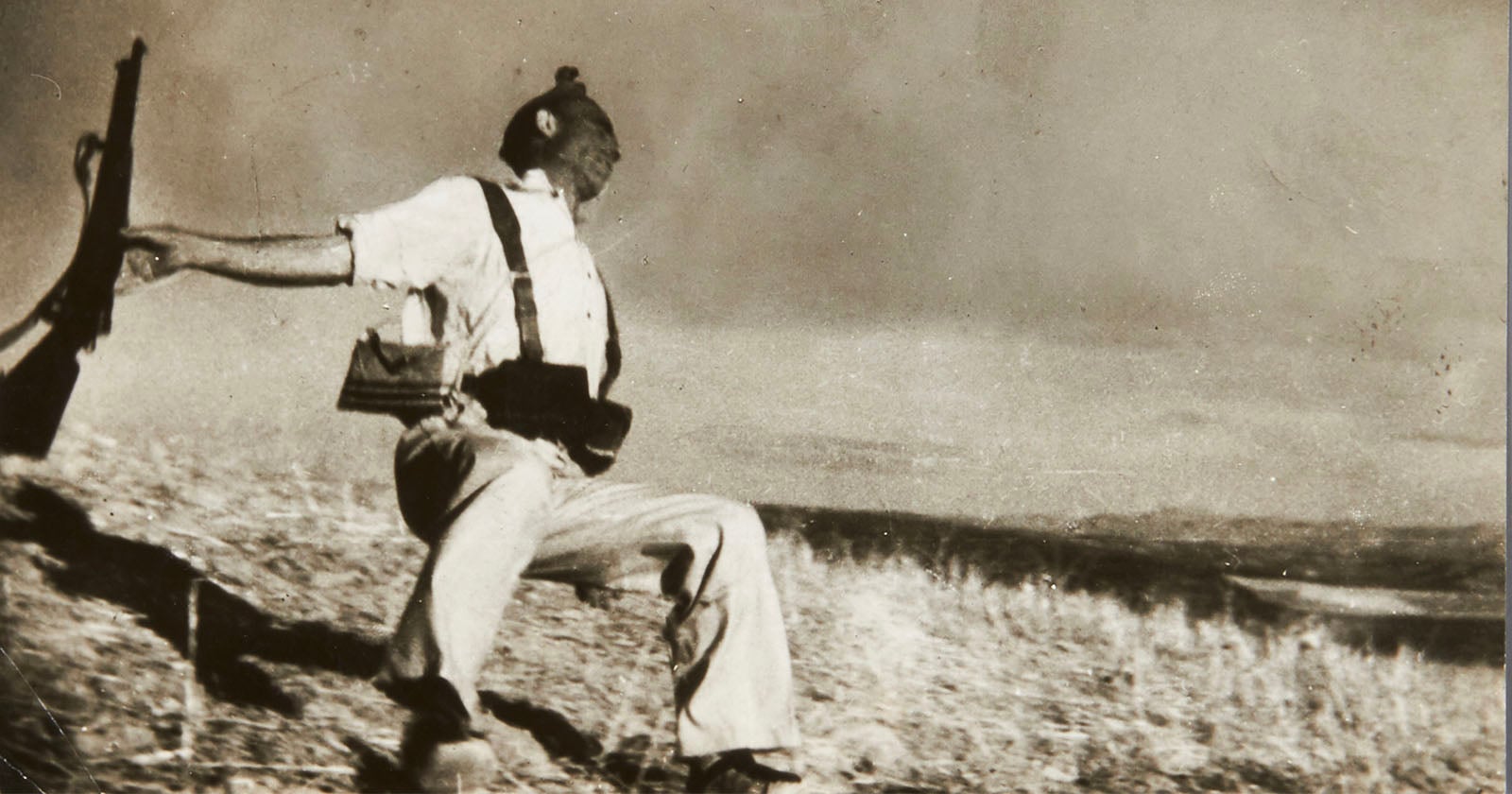
Some photographs arrive with a story already attached, and *The Falling Soldier* has carried its like a stone for decades. The latest claim, that Gerda Taro may have been the true author of the frame we have long credited to Robert Capa, does not erase the image's power. It complicates it. And that complication is where the real work begins. We are not asked to choose a hero and a villain. We are asked to sit with the possibility that history, even the history we hold most dear, is often a curated thing. For those of us who build our lives around visual storytelling, this is not a threat. It is an invitation to look closer.
The familiar tension persists: the photograph has been dogged by claims of staging and falsified captions, yet it remains iconic. We would tell our reader this: that tension is not a flaw to be resolved. It is the subject. Every time we pick up a camera, we are making choices about what to include, what to crop, what to caption. Taro's possible role in this particular frame does not diminish Capa's legacy so much as it asks us to expand our understanding of how collaborative and messy the creative process truly is. This is the same spirit that drives the work we feature elsewhere, whether it is a Celebrating Portraits: Photography Honoring the Spectrum of Skin Tones series or the handcrafted intimacy of Collaborate & Create: Boudoir Sessions Offered Across Florida's Coast. In each, the photographer's hand is visible. The question is never whether a photograph is made, but who stands behind it and what they want us to see.
What makes this story feel urgent is not the forensic detail of who pressed the shutter. It is what the debate reveals about our appetite for singular authorship. We want the myth. We want the name. But the reality, as any working photographer knows, is that a frame is often the result of trust, timing, and sometimes sheer luck shared between two people. Capa and Taro were partners. They worked the same battlefields. They developed a visual language together. To suggest that one must be the author and the other a footnote is to misunderstand how art is actually made. It is also to miss the more interesting question: why are we so invested in keeping the story clean? Perhaps because a clean story is easier to hold. But photography, at its best, has never been about easy answers. It is about the messy, human truth.
Our take, plain and simple: do not let the controversy push you away from the image. Let it pull you closer to the process. If you are a photographer, this is a reminder that your name is only part of the story. If you are an admirer, it is a chance to appreciate the layers beneath the surface. And if you are simply someone who loves a good image, hold on to this: the next time you see *The Falling Soldier*, you are not looking at a single moment. You are looking at a question. Who gets credit, and why does it matter? The answer may never be fully settled, but the asking is what keeps the work alive. That is the detail to watch. Not the verdict, but the conversation it continues to spark.