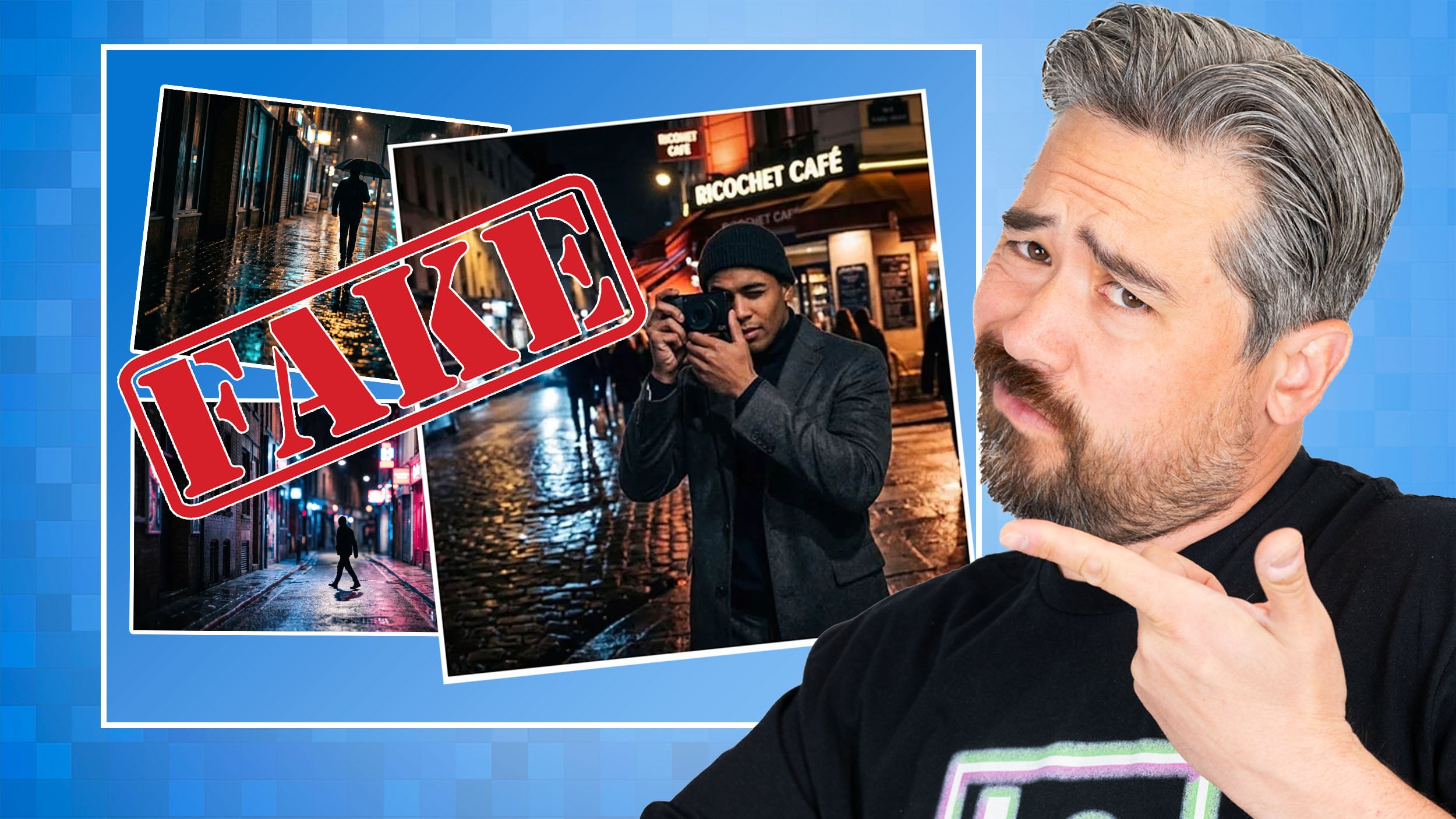
The PetaPixel Podcast's latest episode, recorded live at Sony Kando with Jeremy Gray filling in for Jordan Drake, delivered a familiar pang of letdown for anyone who tracks the camera industry. The headline centers on Ricoh's "very disappointing AI choice," a phrase that landed with the weight of a dropped prime lens. We weren't there for the full context, but the news alone paints a clear picture: Ricoh, a company long celebrated for its tactile, photographer-first designs, is now making a decision that feels performative rather than purposeful. And in a market already drowning in gimmicks, that stings.
Let's be honest about what this means for you, the working photographer or the devoted enthusiast. When a brand like Ricoh, which built its reputation on the GR line's simplicity and the Pentax's rugged charm, starts leaning into AI, it's not just a feature update. It's a philosophical shift. The practical concern isn't whether the AI works, it's whether it will fundamentally alter the shooting experience. Will it add a layer of computational guesswork to a process you've mastered through muscle memory? Will it prioritize automated convenience over the deliberate, manual control that drew you to the brand in the first place? For our readers, the question isn't "Is this innovative?" but rather "Is this necessary?" And right now, the answer feels like a reluctant no. We'd tell a reader who asked: don't panic, but do pay close attention to what Ricoh actually ships. If the AI is a background assist that you can switch off and forget, fine. If it starts making creative decisions for you, that's a line in the sand.
The episode also touches on Hover Air's last-minute change and new Macs, but the Ricoh news is the one that deserves our focused attention because it speaks to a broader tension we're seeing across the industry. Every brand is chasing the same algorithmic ghost, but the ones that succeed are those that treat AI as a tool, not a brand identity. For context, look at how Sony is handling computational imaging or how Apple's latest chips are changing editing workflows, both of which were discussed on this very episode. The difference is that those ecosystems are built to serve a broad range of creators, whereas Ricoh's appeal has always been its singularity. When you buy a GR, you're buying a specific vision. Introducing AI that feels tacked on or, worse, that overshadows the optical purity, risks alienating the very people who made that vision iconic.
Our take is straightforward: Ricoh, you're better than this. We're not against technology, we're against technology for its own sake. The concrete point to watch is whether this AI choice is optional and unobtrusive, or whether it becomes a mandatory part of the shooting pipeline. If it's the latter, we'd advise our readers to hold onto their current models a little longer. Because the moment a camera starts second-guessing its owner, it stops being a tool and becomes a liability. The takeaway you can quote: "If Ricoh's AI gets in the way of the photographer's eye, it's not a feature, it's a filter we never asked for." That's the standard we're holding them to.