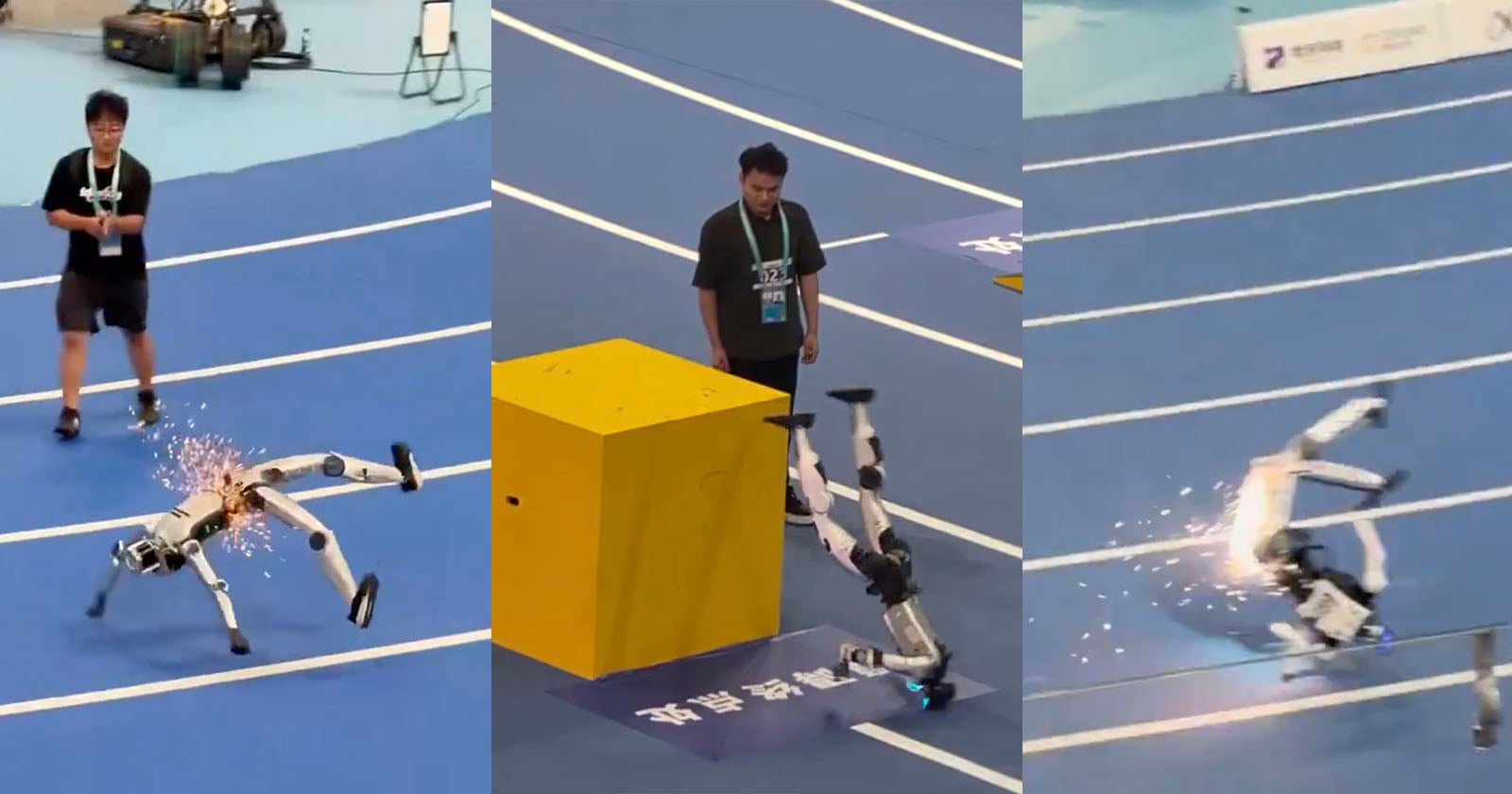
There is something quietly profound about watching a machine stumble. The 2026 World Humanoid Robot Games in Beijing have delivered their share of spectacle, but the images that linger are not the flawless sprints or the precise jumps. They are the bloopers: the sparks, the wobbles, the awkward collapses on a blue indoor track. We keep calling these moments failures, but they are anything but. They are the most human part of the entire enterprise.
We came for perfection, and instead we got honesty. The robots are not there yet, and that is precisely why we cannot look away. A robot that never falls is a robot we never truly see. But a robot that teeters, recovers, and then tumbles anyway? That is a story. It is the same reason we find ourselves drawn to the chaos outside the White House, where photographers from rival nations clashed in a moment of raw tension, as our own A Moment of Tension: Photographers Converge Outside the White House captured so vividly. Both scenes remind us that the unscripted moment, whether human or mechanical, carries a weight no polished performance can match.
For our readers, there is a practical lesson here that extends beyond the novelty of watching expensive machinery eat dirt. We spend so much of our creative and physical lives chasing a curated ideal, whether that is the perfect frame, the perfect physique, or the perfect product shot. We look at a camera like the Refined and Accessible: The Nikon Z5 IIC—A Full-Frame Camera, Reimagined and we believe the tool will erase our mistakes. But the robot games tell us otherwise. The tool is not the point. The attempt is. The stumble is not a bug in the system; it is the system learning what it means to move through the world.
What would we tell a reader who asked us if this event matters? We would say this: watch the bloopers, but do not laugh at them. Study them. The gap between intention and execution is where all the interesting art lives. It is where a photographer waits for the right light, where an athlete pushes through one more rep, where a designer obsesses over a single curve. The robots are not failing; they are revealing the complexity of what we take for granted every time we take a step. And if you are paying attention, they are also making us question whether our own pursuit of flawlessness has cost us the very authenticity we claim to admire. The question is not whether the robots will eventually get it right. The question is whether we will still be brave enough to be wrong when they do.