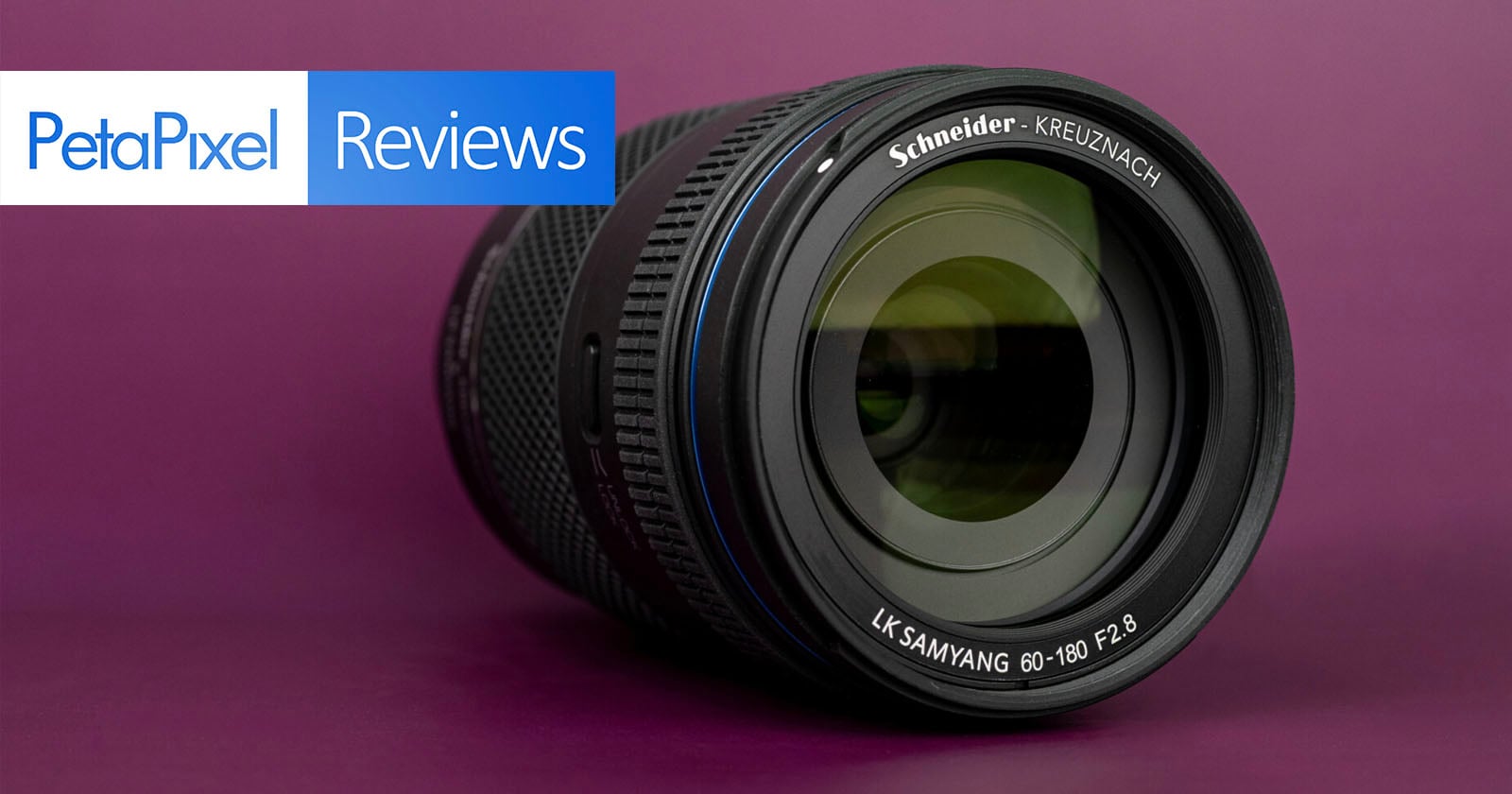
The race to complete a professional f/2.8 zoom trinity has always been a quiet benchmark of a lens maker's ambition, and Samyang has just crossed that finish line in a way that demands attention. With the release of the $1,099 Samyang X Schneider Kreuznach AF 60-180mm f/2.8, the Korean company now offers a full set of autofocusing constant-aperture zooms for full-frame mirrorless cameras. This is not merely a product announcement; it is a statement of arrival in a space long dominated by Sigma and Tamron, and it reshapes what photographers should expect from a third-party brand.
Samyang's path here has been unusually swift. While Sigma has enjoyed its complete trinity for years and Tamron refined its G2 series to a polished standard, Samyang has compressed its development timeline into a concentrated burst of engineering. The new 60-180mm f/2.8 joins the existing 14-24mm f/2.8 and 24-70mm f/2.8 to form a trio that covers the essential range for event, portrait, and landscape work. The collaboration with Schneider Kreuznach on this telephoto zoom adds a layer of optical heritage that feels intentional rather than performative, a nod to the kind of curated craftsmanship that resonates with photographers who care about both image quality and the story behind the glass. This mirrors the spirit we saw in Motorola's Signature 27 arrives as a curated fusion of speed and luxury, where a brand leaned into partnership to elevate its identity beyond the ordinary.
For our readers, the practical consequence is immediate: you now have a serious third option at the professional f/2.8 zoom level that costs significantly less than first-party equivalents and offers autofocus performance that was once a weakness for Samyang. The question is whether the optical quality and build consistency can match the aggressive pricing. Samyang has historically been a brand of bold ideas and occasional rough edges, but the Schneider Kreuznach badge on the 60-180mm suggests a new willingness to invest in collaboration rather than simply compete on price. This is a different approach from the silent corporate maneuvering we examined in Sony and Tamron's Silent Dance: An Acquisition Story Unfolds, where consolidation threatened to narrow the market. Samyang is proving that independence and speed can still disrupt a landscape many assumed was settled.
The specific detail to watch is how the 60-180mm performs in real-world autofocus tracking and corner sharpness at f/2.8. If Samyang has delivered a lens that handles the demands of wedding photographers and documentary shooters without compromise, the trinity becomes a genuinely compelling system rather than just a budget alternative. The price point is aggressive, but the real test is whether the lens earns its place in a bag that might have held a Canon or Sony native zoom. That is the concrete measure of success here, not the completion of a lineup, but the quiet confidence of a photographer choosing Samyang for the work that matters most.