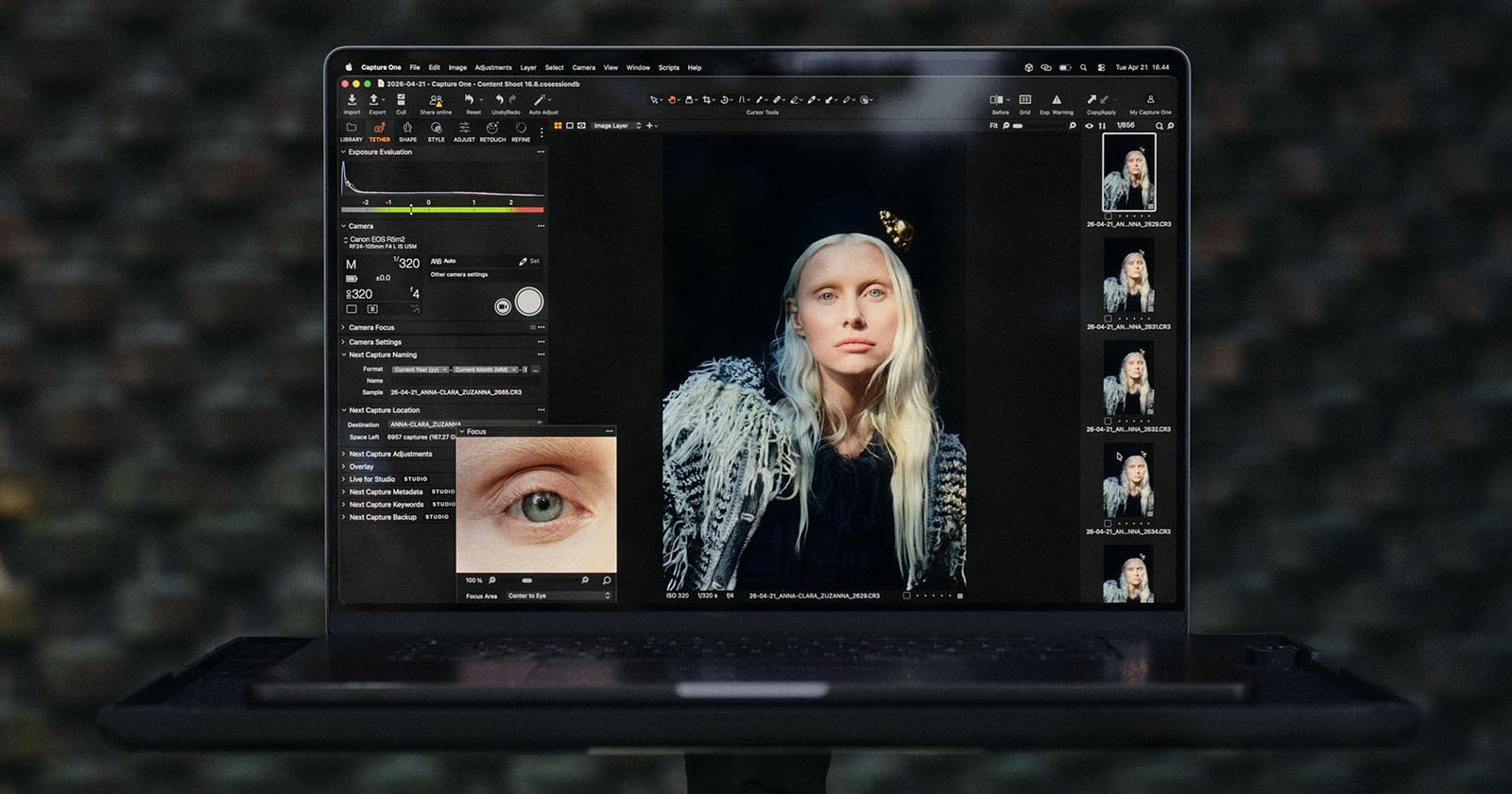
There is a particular kind of quiet thrill that comes when the tools of our craft finally catch up with the rhythm of our imagination. Capture One's latest update, version 16.8.6 for desktop and 4.1 for mobile, brings second-generation wireless tethering to the Canon EOS R3 and EOS R6 Mark III, alongside day-zero RAW support for the new Canon EOS R8 Mark III. For those of us who have spent years tethered to a desk, this feels less like a feature update and more like a gentle untethering of the creative spirit itself. It is the kind of release that whispers of freedom, of moving through a space while the camera remains the sole focus, and the laptop becomes a distant, willing companion rather than a chain.
We have long admired the artistry that emerges when technical barriers dissolve, and this update speaks directly to that pursuit. Wireless tethering is not merely about convenience; it is about presence. When you are shooting a boudoir session, for instance, the ability to move fluidly around your subject while still seeing your frames land on the screen in real time changes the entire energy of the room. It allows you to direct, to adjust, to breathe with the session rather than breaking its spell to check a cable. This is why our recent feature on Collaborate & Create: Boudoir Sessions Offered Across Florida's Coast resonated so deeply; the connection between photographer and subject thrives on uninterrupted flow, and this update feels like a quiet nod to that very intimacy.
But let us be clear about what this means in practical, everyday terms. For the working photographer, day-zero support is not a luxury; it is a signal of respect for your investment. There is nothing worse than unboxing a new piece of glass or body, eager to shoot, only to find your editing software is not ready to speak its language. Capture One's commitment to having the EOS R8 Mark III ready on day one tells us they understand the stakes. It tells us they see the photographer who is not just documenting a moment, but curating a visual story, much like the approach seen in A New Lens for Close-Ups: Canon's RF 90mm Macro Arrives, where the right tool becomes an extension of the artist's eye rather than a hurdle to overcome. This is not just about keeping up; it is about being in the flow, and that is where the magic lives.
Our honest take is that this is a quiet victory for the solo creator and the small team alike. We are not talking about a massive studio infrastructure or a fleet of assistants; we are talking about the essential, unbreakable bond between a photographer and their vision. This update strips away one more layer of friction, leaving you with the pure, immersive act of making. If a reader came to us asking whether this matters, we would say this: look at how you work, not just what you shoot. If you have ever hesitated to move the camera because it meant losing your connection to the screen, this changes the calculus. The second generation of wireless tethering is not just faster; it is more stable, more intuitive, and it invites you to trust the process.
The real detail to watch, though, is not the technical specs, but the behavior it encourages. As we saw with the artistic control offered in Leica Lux 2.0: Crafting iPhone Photography with Artistic Vision, the best tools are the ones that disappear into the background, allowing the creator's intent to take center stage. For Canon shooters, this is an invitation to move. To step back, to lean in, to reposition the camera without a second thought. The question this raises for us is not whether you will use wireless tethering, but rather which moments you have been missing while you were busy untangling a cable. That is the space where the authentic, aspirational work happens, and it is finally a little closer to reach.