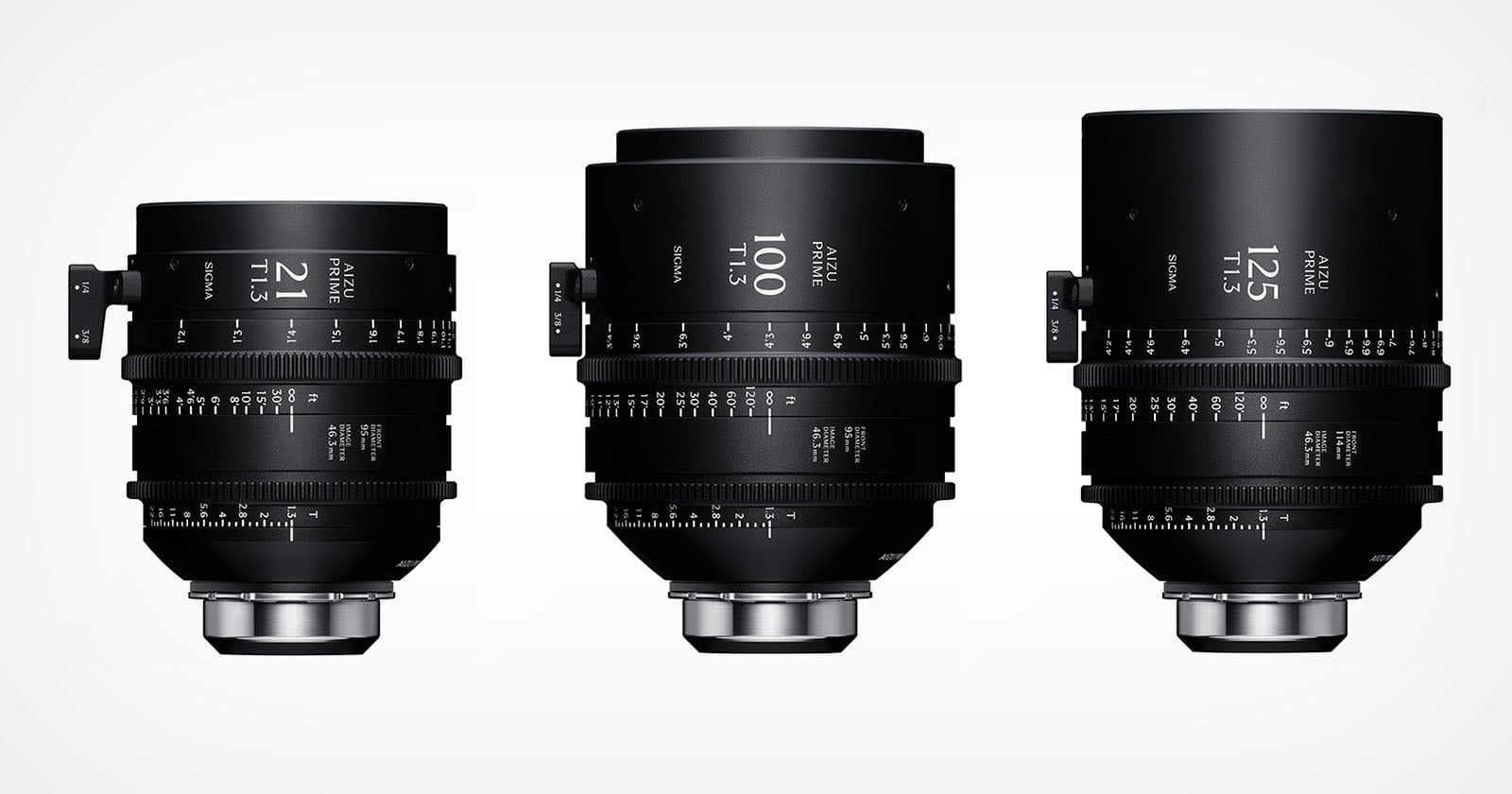
Sigma has quietly filled in the gaps of its Aizu Prime cinema lineup, and the new arrivals feel less like a product drop and more like a statement of intent. The 21mm T1.3 LF, 100mm T1.3 LF, and 125mm T1.3 LF join the existing eight lenses that previously stretched from 25mm to 75mm. That means the series now covers a far more compelling range, from a wide that breathes with context to telephotos that isolate with intention. For cinematographers who have been building a kit around this glass, the expansion is not just welcome; it is necessary.
Our honest take is that this is the moment the Aizu series becomes a complete system rather than a collection of excellent fragments. The original eight lenses were sharp, consistent, and beautifully made, but they lived in a comfortable middle ground. Wide angles are where visual stories often find their language, and the 21mm T1.3 LF brings that vocabulary to the table with the same T1.3 aperture that defines the series. On the other end, the 100mm and 125mm options give you compression and intimacy that were previously missing. If you are shooting a dialogue scene or a detailed product shot, having a 100mm that matches the character of your 35mm is not a luxury; it is a production shortcut. You no longer have to switch systems or compromise on look when the script calls for a tighter frame. That is practical, and it is the kind of cohesion that makes a lens family feel like a trusted collaborator rather than a set of compromises.
We would tell a reader who is on the fence about these additions to think about the stories they are trying to tell, not just the specs. The T1.3 aperture is fast, yes, but the real value here is consistency across the focal lengths. Skin tones, bokeh rendering, and contrast all match across the series, which means your color grade stays stable even if you swap lenses mid-scene. That is the quiet luxury of a well-designed system: the absence of surprises. For independent filmmakers and small crews, this is a practical advantage. You are not chasing a "look" from a single lens; you are building a visual language that holds together across every setup. And the 21mm, in particular, is a lens that invites you to get closer to your subject, to include the environment and let the frame breathe. That is a creative choice, not just a technical one.
The open question we are left with is what comes next. Sigma has now covered the wide, standard, and short-telephoto ranges. The obvious hole is a true macro or a longer telephoto, but that might be missing the point. The Aizu series was never about covering every possible focal length; it is about mastering the ones that matter most. The addition of these three lenses suggests Sigma is listening to what cinematographers actually need on set. The takeaway to quote: "The Aizu series just became a system you can build a career on, not just a set of lenses you rent for a weekend." That is the standard we are holding them to, and so far, they are meeting it. Watch for how the 21mm behaves in tight interiors or how the 125mm flatters a portrait; those are the moments that will tell you if this expansion is a true evolution or just more of the same.