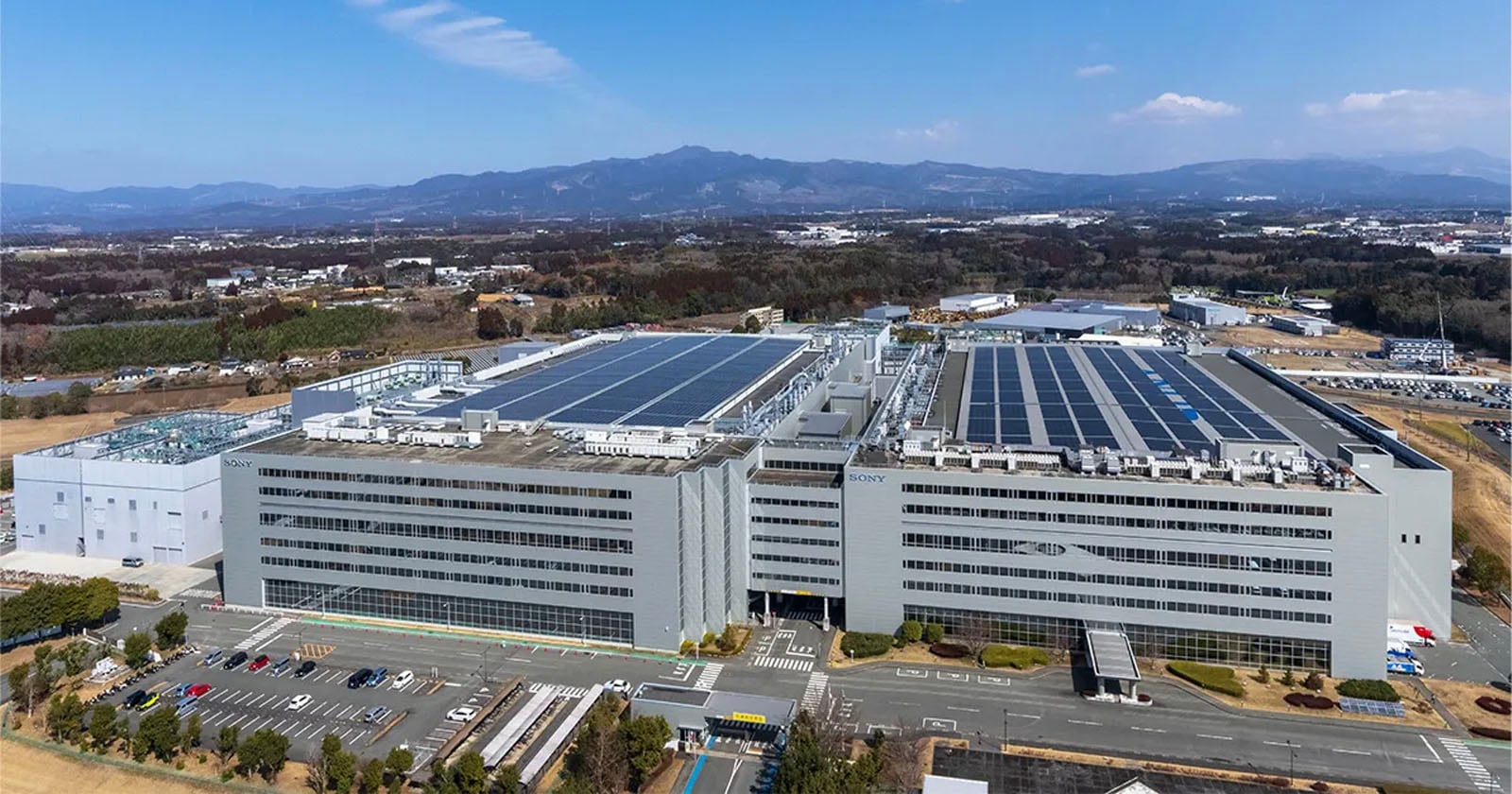
A factory returning to full capacity sounds like a quiet piece of industrial news. But when that factory is Sony Semiconductor's Kumamoto facility, and the product is the image sensor inside the camera you carry or the one you wish you carried, the quiet news becomes something else entirely. It becomes a reminder of how much of our creative lives depends on infrastructure we never see. The 6.8 earthquake that struck last month forced an evacuation and threatened a rhythm we take for granted. That the plant is back online in nearly a month is not just a logistical win. It is a quiet vote of confidence for every photographer who has ever trusted that the next shot is possible.
We talk a lot about the art of photography, and we should. But art has a supply chain. The sensor in your camera is not abstract. It is a piece of silicon that survived a seismic event, was tested, and shipped. For the working photographer, this is not trivia. It is the difference between restocking a kit and waiting out a shortage. We have seen how fragile this ecosystem can be, from natural disasters to global chip shortages. So when a major hub resumes full operation, we read it as a signal: the tools we rely on are not as fragile as they sometimes feel. This is also why we keep an eye on how the industry evolves around these moments. Consider how Signature 27: Where Mobile Photography Meets Elevated Design pushes the boundaries of what a phone can do, or how Viltrox Expands L-Mount Lens Collection with Four Vibrant New Optics gives shooters new glass to love. None of that matters if the sensor behind the lens cannot be made. That is the quiet truth of this moment.
Our honest take is this: resilience is a creative act. We do not often celebrate the engineers who calibrate a cleanroom or the logistics teams who reroute a supply chain after a disaster. But we should. Because every time we pick up a camera, we are holding the result of that unseen labor. The earthquake was a jolt, literally and figuratively. It reminded us that the tools we treat as eternal are actually delicate. And yet, they are also built to endure. That is not a contradiction. It is the very nature of good design. It anticipates disruption and builds for it, not with drama, but with precision.
So what do we tell a reader who asks what this means for them? We say this: your gear is more resilient than you think, but it is not invincible. Protect it, insure it, and back up your work. And when you see a headline about a factory resuming operations, do not scroll past it. That is the story of your next shoot being possible. The specific detail to watch is not the sensor itself, but the timeline. Nearly a month to full capacity is a fast recovery. It tells us that the industry learned something from past disruptions. That is the takeaway worth quoting: resilience is not just about bouncing back. It is about being ready for the next shake, and the one after that. Because there will always be another earthquake, another shortage, another curveball. The question is not if, but how quickly we adapt. And right now, the answer is faster than we expected.