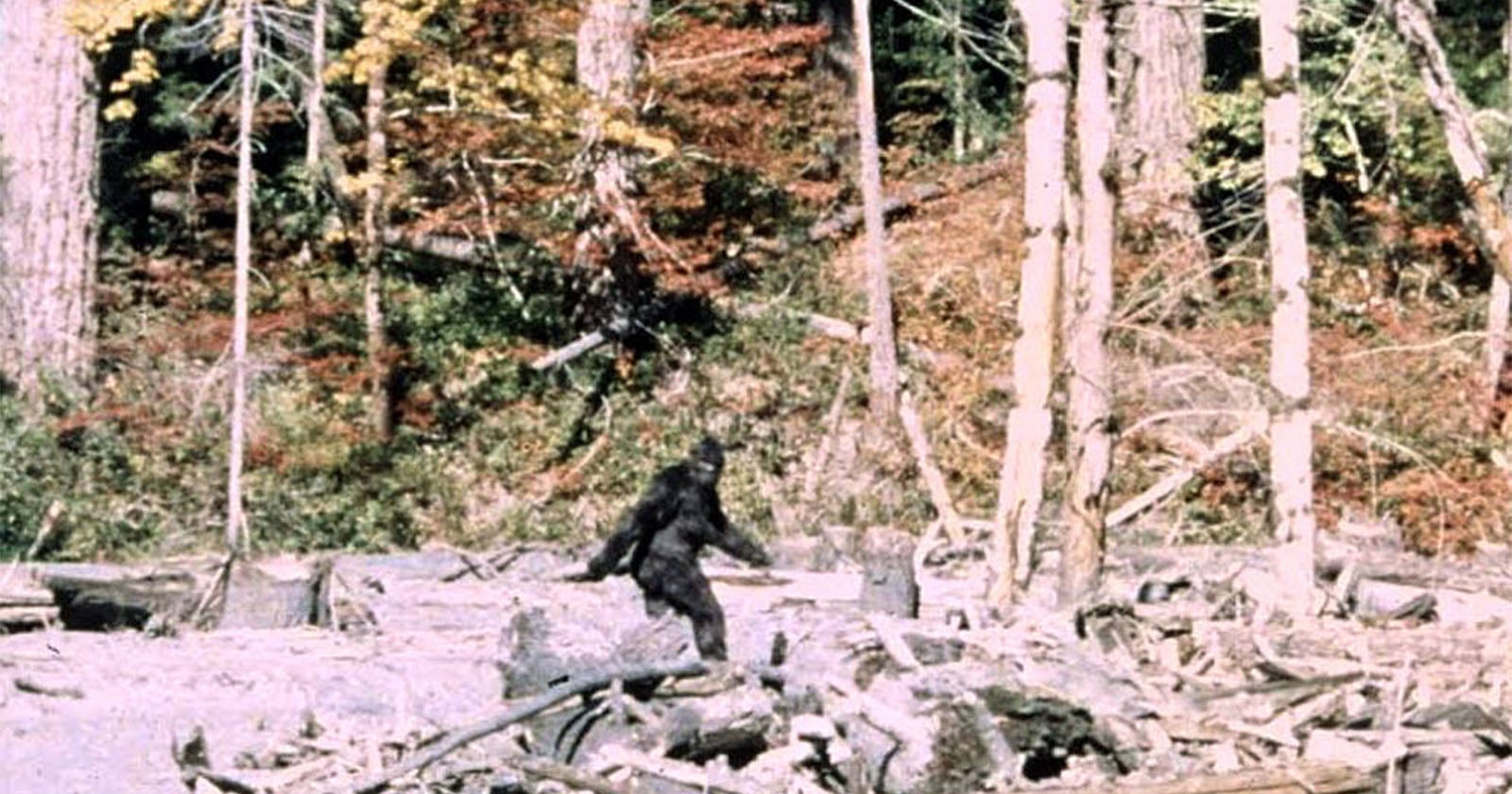
Sixty years of grainy mystery, resolved by a documentary. The Patterson-Gimlin film, that iconic 1967 footage of a creature loping through the Northern California woods, was always the crown jewel of Bigfoot lore. Now the new film *Capturing Bigfoot* confirms what many suspected: it was a hoax. For a community that has built an entire subculture on blurred evidence and hopeful interpretation, this feels like a final curtain call. And yet, we find ourselves less interested in the debunking than in the fiction itself, and what it says about our hunger for a story well told.
This is not a tragedy of lost belief. It is a masterclass in the power of a single, curated image. For nearly six decades, that minute of shaky film held more cultural weight than a mountain of clear photographs ever could. Its power came from its aesthetic: grainy, ambiguous, and utterly immersive. The story it told was aspirational in the strangest sense, the idea that something wild and unknowable might still exist just beyond the tree line. We see a similar impulse in the quiet craft of documentary work, such as the photographer who spent six years meeting more than 400 girls across America, each bringing a single object to frame her story in A Curated Portrait of Girlhood: 400 Stories, One Object at a Time. Both projects understand that authenticity is not about raw truth; it is about selection, composition, and the audacity to present a fragment as the whole.
The real takeaway here is about the audience we become when we choose to believe. The Bigfoot myth thrived not because of evidence, but because of the space it left for imagination. That space is rare now. Our feeds are saturated with high-definition confirmation, with recordings that leave no room for mystery. Even the tools we use to create are under surveillance, as OpenAI recently discovered when a hidden recording device was found in an executive meeting space, a reminder that the line between documentation and intrusion has never been thinner, as covered in A hidden recording device discovered in OpenAI's inner sanctum. The Patterson-Gimlin film worked because it asked us to lean in, to squint, to decide for ourselves. That collaborative act of interpretation is what made it art, not evidence.
So where does this leave us? The hoax is unmasked, but the longing it served remains. The practical consequence is this: we should stop pretending we want proof. What we really want is wonder, crafted deliberately and presented elegantly. The next Bigfoot will not be found in the woods. It will be made in a studio, shot on film, and left just ambiguous enough for us to fill in the rest. The question is whether we will let ourselves be fooled again, or whether we can appreciate the fiction without demanding it be real.