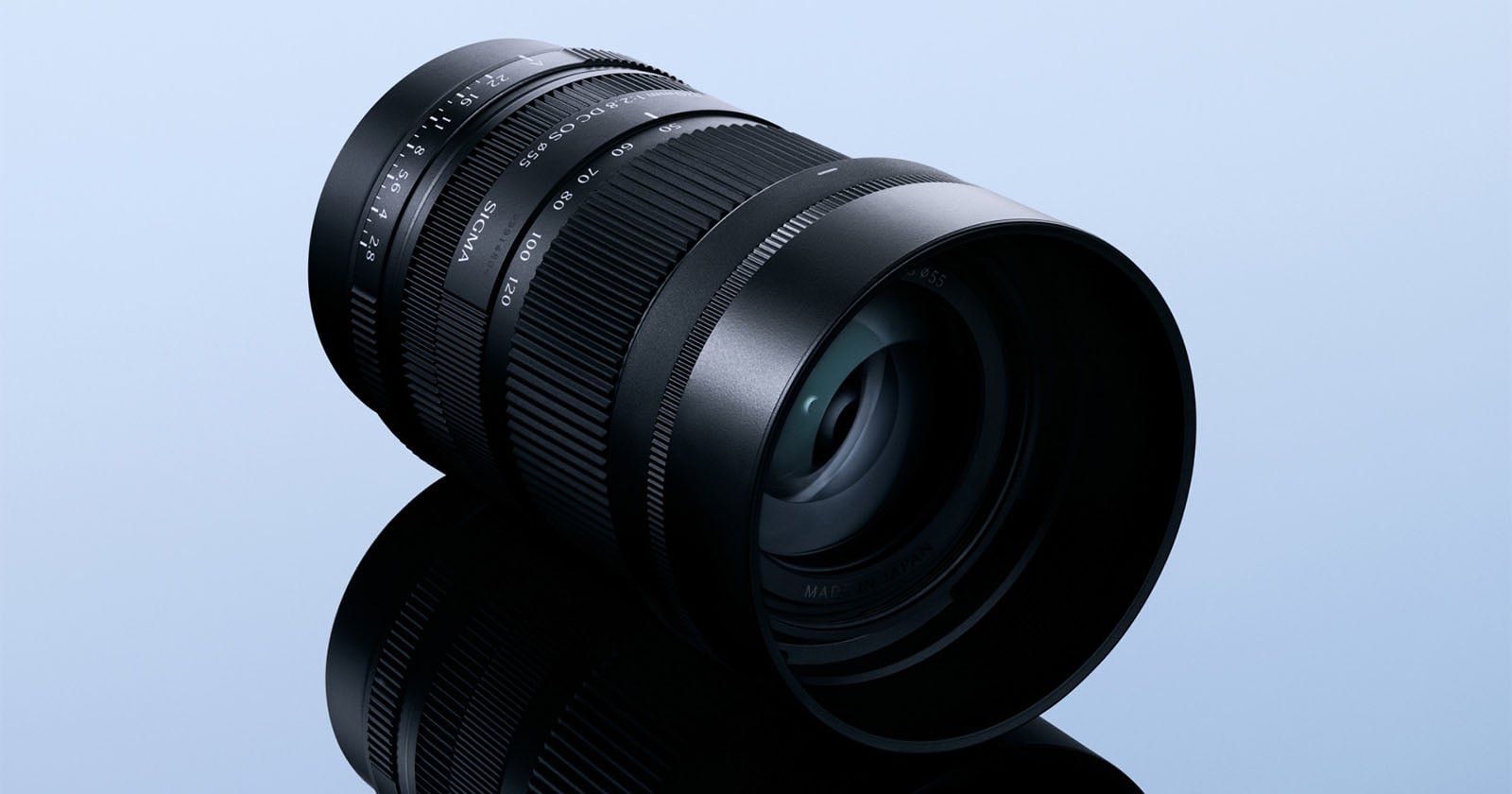
Sigma's latest announcement feels less like a product launch and more like the closing chord of a carefully composed suite. The 50-120mm f/2.8 DG OS Contemporary is now the final piece of the company's compact "holy trinity" of zooms for APS-C cameras, and for anyone who has been building a lightweight, high-performance kit, this is the moment the picture finally comes together. We have long admired how Sigma approaches lens design with an artist's sensibility rather than an engineer's checklist, and this lens confirms that the brand understands something essential: a complete system is not just about covering focal lengths, it is about creating a cohesive visual language. For the creative eye, this trinity offers a rare combination of speed, portability, and character that feels purpose-built for the way we actually shoot, whether we are chasing golden hour light or documenting a quiet moment in the studio.
What makes this announcement resonate is how it completes a story Sigma started telling with the 16-28mm f/2.8 and the 28-70mm f/2.8. Together, these three lenses cover a range that rivals any full-frame setup, yet they do so in a package that respects the photographer's need to move freely. This is not a trinity built for the weight room; it is built for the street, the trail, and the editorial shoot where every gram matters. We see a direct parallel to the approach we praised in The artful zoom that turns everyday frames into a curated visual escape, where the classic 70-200mm f/2.8 remains a staple for full-frame users. Sigma has essentially taken that proven formula and refined it for the APS-C shooter who values discretion and agility without sacrificing that f/2.8 aperture. The result is a lens that feels less like a compromise and more like a deliberate choice.
The timing also invites a thoughtful comparison with recent moves from other manufacturers. When Tamron’s Celebrated 20-40mm f2.8 Finds a New Home on Nikon Z, it underscored how third-party makers are increasingly the ones driving innovation in compact, high-performance optics. Sigma's trinity follows that same spirit, but what sets it apart is the coherence of the system. You are not picking lenses from different eras or design philosophies; you are assembling a set that shares the same DNA. That matters when you are working fast and relying on muscle memory. It also matters when you are curating your gear as an extension of your creative practice, every piece should feel intentional, never accidental.
Our takeaway is concrete: if you have been waiting for a reason to commit to an APS-C system without feeling like you are settling, this is that reason. The 50-120mm f/2.8 completes a trinity that now offers a consistent f/2.8 aperture across a 24-180mm equivalent range, all in a form factor that fits a standard camera bag without a struggle. The open question is how Sigma will handle optical stabilization across the trio now that this final lens includes OS, and whether future firmware or updates will unify the experience further. For now, the creative photographer has a complete toolkit that asks nothing in return but the next frame.