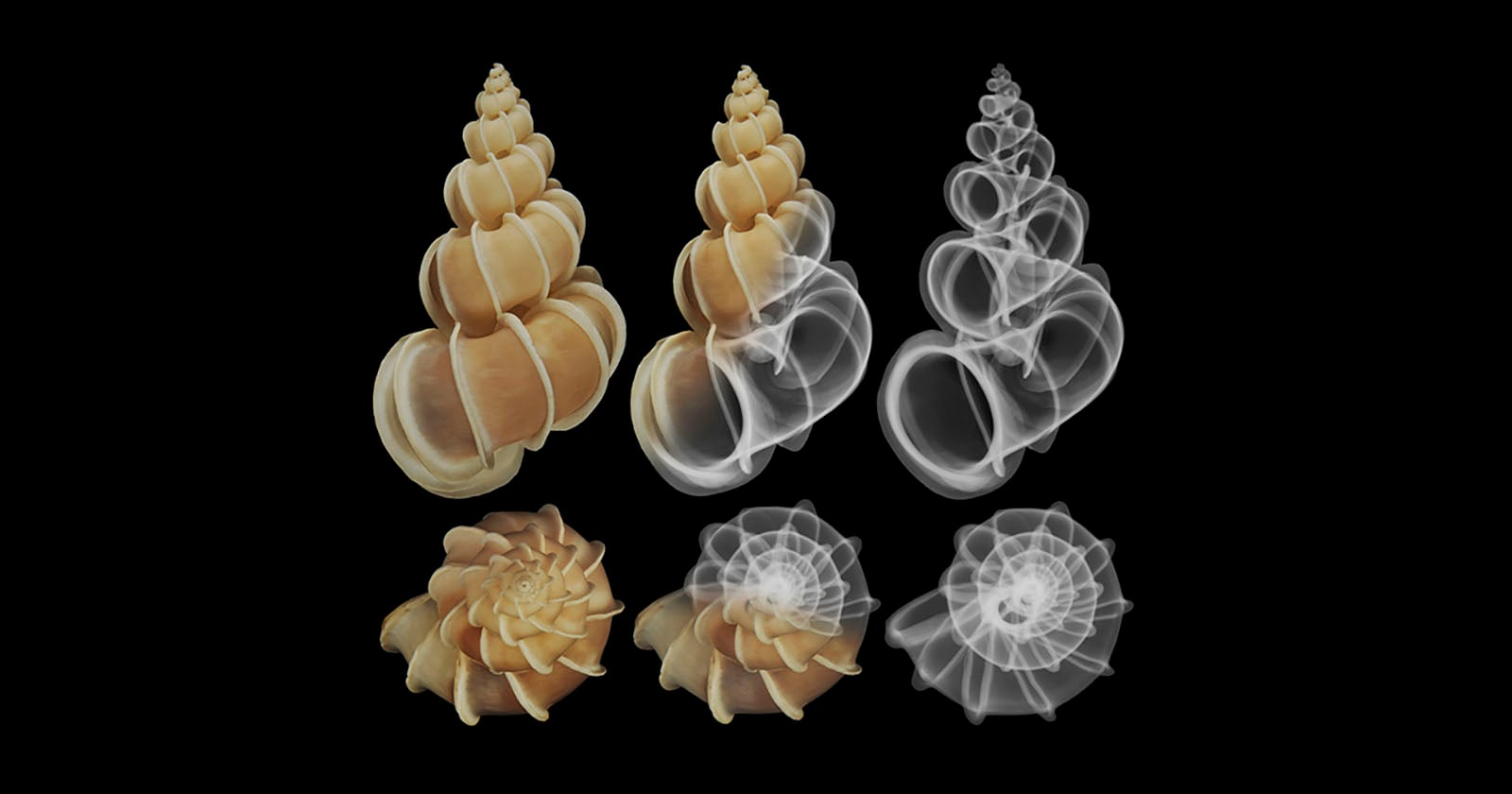
There is a quiet violence in the way Jim Wehtje works. He does not carve a shell open or slice it with a blade. Instead, he sends X-rays through it, and the hidden architecture of nature surrenders itself to film. We have always admired the spiral of a nautilus or the ridges of a scallop, but Wehtje reveals what our eyes alone could never catch: the internal chambers, the unseen struts, the delicate scaffolding that a living creature built and then abandoned. It is a strangely poignant act of seeing. That same impulse to look deeper, to find structure where others see only surface, has guided our own recent explorations, whether it is the slow geometry of Curated by Time Itself: Mars' Wind-Sculpted Cliffs, Framed at Dawn or the intimacy of The Intimate Art of Seeing Autumn Through a Telephoto Lens.
This matters because Wehtje is not just a photographer. He is a radiographic artist, a term that forces us to reconsider what we think we know about beauty. For our audience, people who move between the worlds of fitness, fashion, and art, there is a clear lesson: the most compelling structures are the ones we cannot see. A well-cut garment depends on a seam that never shows. A balanced yoga pose relies on bones and breath, not just the line of the leg. Wehtje reminds us that authenticity in design, in movement, and in life comes from an honest relationship with what lies beneath. His seashells are not hollow museum pieces; they are records of growth, each chamber a chapter of adaptation.
What strikes us most is how these radiographs strip away distraction. Color, texture, and the usual seductions of the natural world fall away, leaving only form. It is a discipline we might borrow more often. In a culture that rewards the curated surface, the perfect gym selfie, the staged flat lay, Wehtje offers an alternative: look at the bone before the skin. His work asks us whether we are building our own lives with the same quiet integrity as a mollusk adding one chamber at a time, or whether we are simply polishing a facade. It is a question that feels especially urgent when we consider other hidden worlds worth revealing, like the persistence of The Wild Within: Urban Beavers Earn Rewilding Europe's Top Honor, where wildness asserts itself not in a pristine forest but in the concrete edges of a city.
The specific takeaway here is a practical one: seek out the hidden architecture in whatever you make or do. Wehtje's radiographs are beautiful, but their real power is instructional. They prove that the most elegant outcome is the one that respects its internal logic. The next time you choose a piece, strike a pose, or even arrange a room, ask yourself what an X-ray of it would reveal. That question alone changes everything.