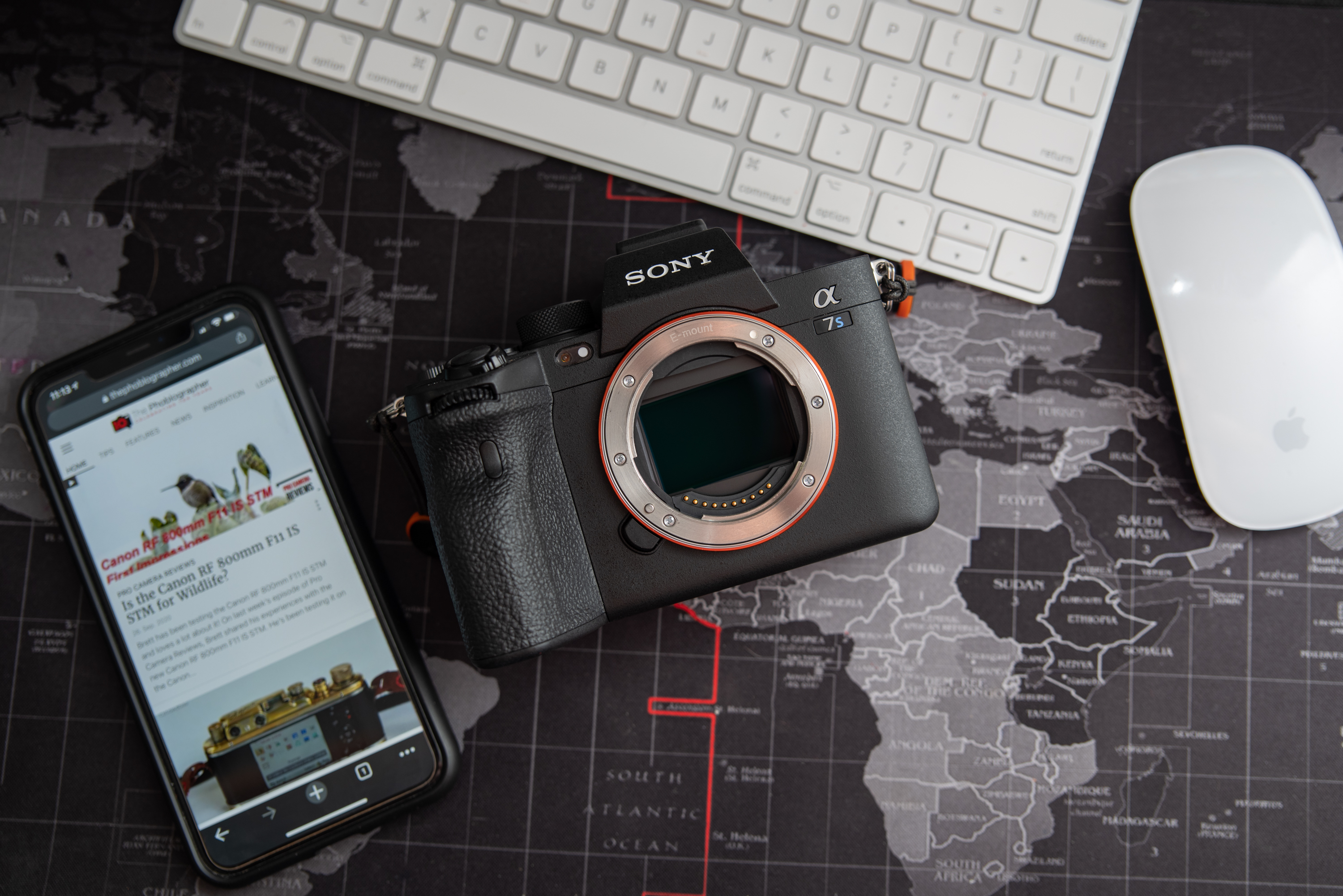
Sony's quietly rumored a7S IV feels less like a product refresh and more like a quiet declaration of intent. Low-light mastery has always been the S-series' signature, and if the reports hold true, this successor will refine an already formidable tool for creators who work in the shadows, literally. That matters because the a7S III, released in 2020, remains a benchmark for high-ISO, cinematic capture. A fourth generation, arriving after the high-resolution a7R VI (which prioritized detail over sensitivity), signals that Sony sees room to deepen its dual-track strategy: one camera for pixel-counting, another for light-painting. For our readers, this is a practical fork in the road, not just a spec-sheet update.
What does a new S-series mean for the way you shoot? Consider how you already navigate the trade-off between resolution and noise. The a7R VI gives you 61 megapixels and a tripod; the a7S IV would give you extraordinary sensitivity and a handheld rig in near-darkness. That distinction is where the creative life happens, especially if you're weaving photography into a broader lifestyle, travel, editorial work, or even staged portraiture that relies on atmosphere rather than flash. We recently covered a $169 pancake prime for Sony APS-C that leans into compact, discreet shooting; pair that ethos with a full-frame sensor built for available light, and you start to see a kit that disappears into a bag but delivers images that feel anything but ordinary. The camera becomes a tool for immersion, not intrusion.
Then there is the post-production reality. Any camera's raw files are only as good as the workflow that touches them. The rumored a7S IV will likely push high-ISO performance even further, but cleaner files also demand smarter editing. Imagen’s Intelligent Studio offers a compelling parallel: tools that adapt to your style, culling and editing on your terms rather than forcing a rigid pipeline. If Sony delivers a camera that captures low-light images with less noise, the bottleneck shifts from acquisition to processing. That is a welcome problem. It means the creative weight moves back to composition and light, not to fixing grain in post. And with Adobe’s acquisition of Topaz Labs now on the table, the AI denoising that once felt like a hack is becoming a standard part of the ecosystem. The a7S IV stands to benefit from that convergence.
The one specific consequence worth watching: battery life. The a7S III already pushed thermal limits for continuous video capture. A new sensor with even greater sensitivity could demand more power or more aggressive heat management. If Sony resolves that, the a7S IV becomes a legitimate cinema body for run-and-gun storytelling. If it doesn't, the trade-off will frustrate anyone who books a long night shoot. That tension, between breakthrough low-light capability and practical endurance, is the detail that will define whether this camera earns its place in your kit or sits as an aspirational spec sheet. Either way, the next chapter is coming, and it will ask you to choose between light and reach.