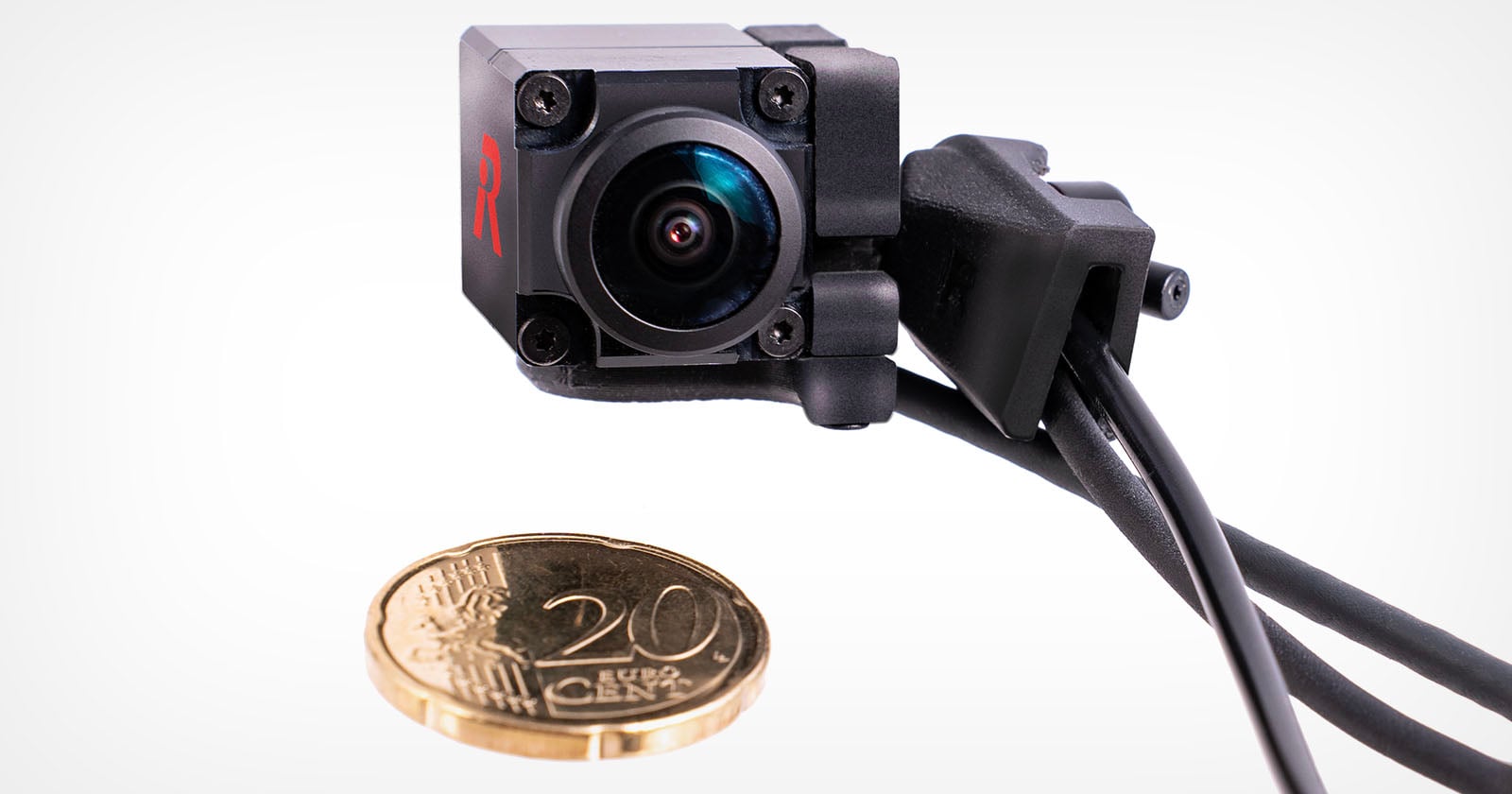
A museum has enshrined a referee's head-mounted camera from the 2026 World Cup Final, and we think that is exactly the right place for it. This isn't a quirky footnote or a novelty piece of sports memorabilia. It is a quiet, powerful admission that the act of seeing, especially in moments of high stakes and human drama, is itself a form of art. The RefCam did not capture a trophy lift or a goal celebration; it captured the perspective of the person whose job is to remain neutral, to watch everything, and to make decisions that alter the course of history. That vantage point, now preserved in a German museum, belongs alongside the tools of photographers and filmmakers who have long understood that where you stand changes everything you see.
Consider the creative discipline required. A referee, much like a landscape photographer using the Nikon 14-30mm f4 S, must frame a wide, chaotic scene and find the one focal point that matters. The Nikon lens endures because it lets artists compress vast horizons into coherent compositions; the RefCam, mounted on a moving human head, does something similar in real time, filtering the noise of a stadium into a single, unblinking narrative. Meanwhile, the Zeiss ZM lenses we have admired for their minimal distortion and precise rendering speak to the same principle: clarity of vision, whether through glass or through a lens strapped to a helmet, is never an accident. It is a choice, and it demands respect.
This is not about the technology. The Premier League tested it, baseball and hockey adopted it, and the RefCam became routine long before this final. What changed is the cultural act of preservation. By placing the camera in a museum, curators are arguing that the perspective of the game's impartial enforcer carries the same weight as a trophy or a signed jersey. For our audience, those of us who move between gyms, galleries, and runways, this distinction matters. We know that authenticity is not found in the polished final image but in the raw, unedited view. The RefCam is the ultimate unretouched frame: it shows the sweat, the split-second hesitation, the angle that only one person saw. That is aspirational in the truest sense. It asks us to consider what we might see if we stopped performing for the camera and started looking through it.
The question left for us is practical. As more sports adopt these cameras, the line between participant and observer blurs further. The referee becomes a cinematographer; the game becomes a living documentary. For creatives, the takeaway is direct: the most compelling image is often the one nobody staged. Whether you are chasing a nature portrait in the wild or capturing the chaos of a pitch, the principle holds. Find the angle that is hardest to replicate, the one no one else would claim. That is the frame the museum wants.