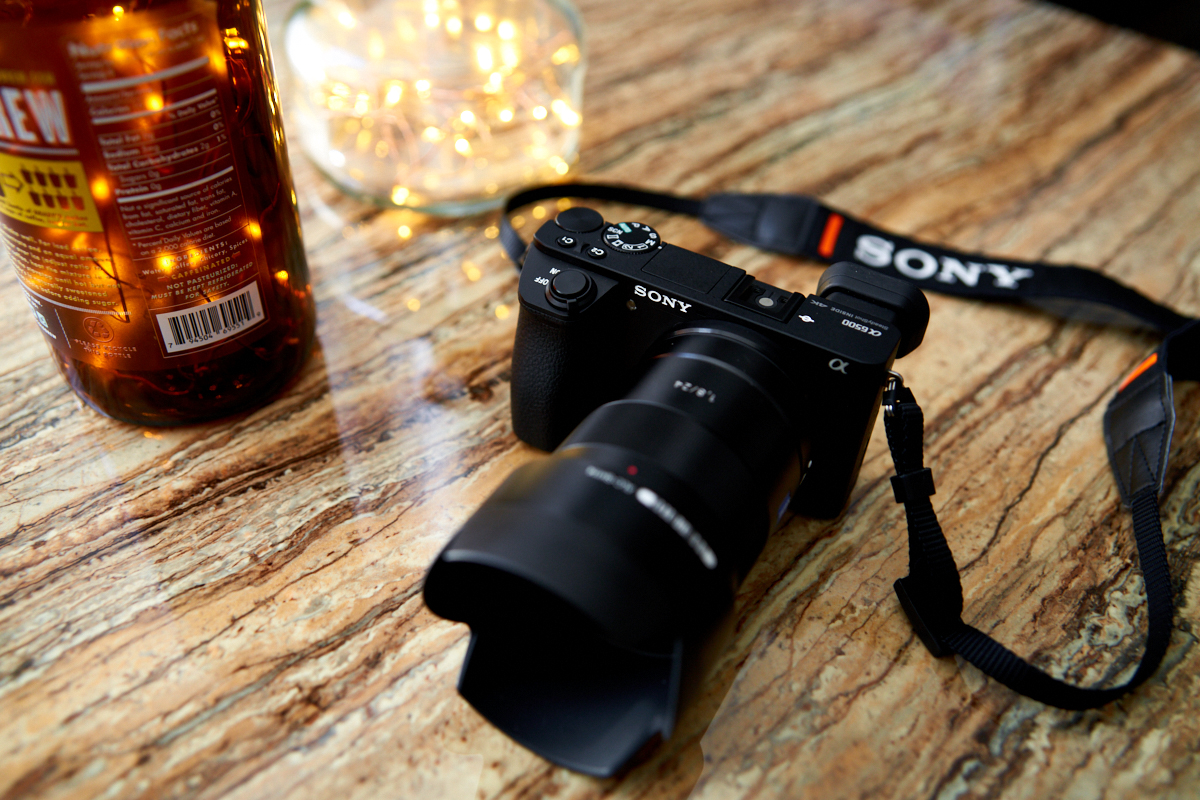
There is something quietly radical about a decade-old camera that still refuses to fade into nostalgia. The Sony a6500 launched as a compact powerhouse, turning heads with its speed and APS-C sensor in a body that felt more like a creative tool than a technical spreadsheet. A decade later, the question is not whether it can keep up with the newest full-frame giants, it is whether the a6500 still deserves a place in a photographer's daily kit. Our take is clear: this vintage Sony holds its ground not because it is the fastest or the sharpest, but because it captures something the marketing specs cannot measure, an honest, immersive relationship between the photographer and the frame.
For young image-makers stepping into a world where gear chatter often drowns out the image itself, the a6500 offers a kind of creative clarity. It is small enough to feel like an extension of the hand, yet capable enough to produce work that holds its own alongside modern mirrorless systems. This is not about nostalgia for nostalgia's sake. It is about what happens when a tool gets out of the way. We see a parallel in A Curated Portrait of Girlhood: 400 Stories, One Object at a Time, where a photographer spent six years meeting hundreds of girls, each bringing a single object that told a story. That project worked because the camera became invisible, a quiet witness rather than a noisy presence. The a6500, with its unassuming size and responsive autofocus, invites that same kind of authentic, unhurried observation. It does not demand attention; it earns trust.
The practical truth for photographers today is that the a6500 still delivers where it matters most: in the field, at the street corner, in the studio with natural light. Its 24-megapixel sensor and 5-axis stabilization produce files that print beautifully and edit fluidly. What it lacks in bleeding-edge AI tracking or 8K video, it makes up for in a tactile, curated experience that feels increasingly rare. Consider the work of Alex Webb, whose vibrant street photography is celebrated in A Curated Eye: 40 US Cities Through Alex Webb's Blues and Bold Color. Webb's images thrive on spontaneity and color saturation, qualities the a6500 handles with a warmth that newer, clinically sharp sensors sometimes miss. The camera does not correct the world into perfection; it lets the world remain imperfect, vibrant, and real.
This is the concrete takeaway: the Sony a6500 is not a collector's relic or a budget compromise. It is a reminder that a great photograph begins before the shutter clicks, in the way a camera fits your rhythm, your eye, your willingness to wait for the light. For the creative collaborator or health-conscious enthusiast who values form and function equally, this vintage Sony offers a path back to the essentials. The open question is whether the industry will remember that, or whether the next decade will bury that lesson under more megapixels and fewer moments. Either way, the a6500 is still here, quietly waiting for the photographer who wants to see, not just capture.