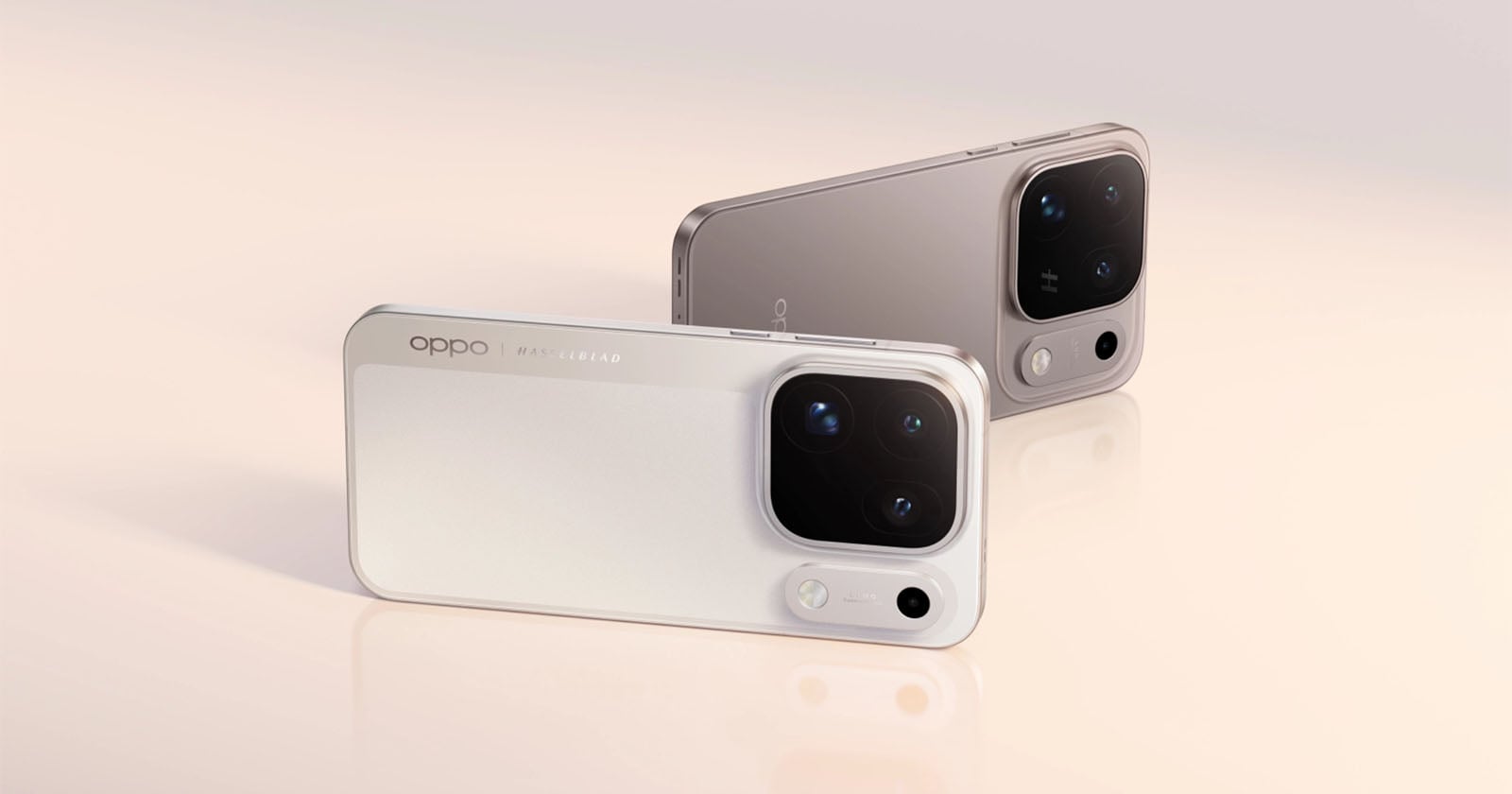
There is something profoundly ambitious about Oppo's decision to put three 200-megapixel cameras on the back of the Find X10 Pro Max, and we think that ambition is exactly what mobile photography has been waiting for. While the entire Find X10 series benefits from Hasselblad's color science and lens heritage, the Pro Max steps into a category of its own by offering a triple rear camera system that redefines what a smartphone can capture. For our readers who live at the intersection of art and technology, this is not a spec sheet battle, it is a statement about intent. Oppo is betting that the people holding its phones are creators first, consumers second, and that they want tools that reward their eye rather than just their thumb.
This launch arrives at an interesting moment in the broader imaging conversation. Just last week, we saw Crafting Clarity: New Filters Solve the Mission 1 Pro's Focus Flaw, where GoPro and PolarPro collaborated to solve a real-world focus issue through precision accessories. That story was about fixing a limitation. Oppo's approach is different: it is about removing the limitation before it exists. By giving photographers three separate 200MP sensors, each presumably tuned for different focal lengths or light conditions, Oppo is offering flexibility that feels more like a medium-format back than a phone camera. Meanwhile, the pause of OM System's PEN camera debut in Japan, covered in Spring's promise fades as OM System pauses the PEN's Japanese debut, reminds us that dedicated camera makers are still struggling to find their rhythm in a market that moves at smartphone speed. Oppo is not just competing with other phones, it is quietly challenging the idea that a separate camera is necessary at all.
What does this mean in practice for the person holding the Find X10 Pro Max? It means the ability to shoot a scene from three perspectives simultaneously, or to combine data from all three sensors into a single image with extraordinary depth and detail. For the lifestyle photographer who documents morning light through studio windows or the texture of a hand-dyed fabric, this is the difference between a good shot and one that feels curated. The Hasselblad partnership ensures that the color rendering carries the subtle, natural warmth that analog shooters chase, while the triple camera system gives you the data to crop, compose, and reimagine after the moment has passed. You are no longer choosing between resolution and speed, or between reach and intimacy, you can have all three at once.
The open question, and the one we will be watching closely, is how Oppo manages the file sizes and workflow that come with a 600-megapixel composite from a device that fits in your pocket. Storage, processing, and editing pipelines will need to evolve alongside the hardware, or the artist will be left with a masterpiece they cannot easily share. That is the detail that matters: not the pixel count, but the path from capture to creation. If Oppo solves that, the Find X10 Pro Max becomes more than a phone, it becomes a new kind of sketchbook.