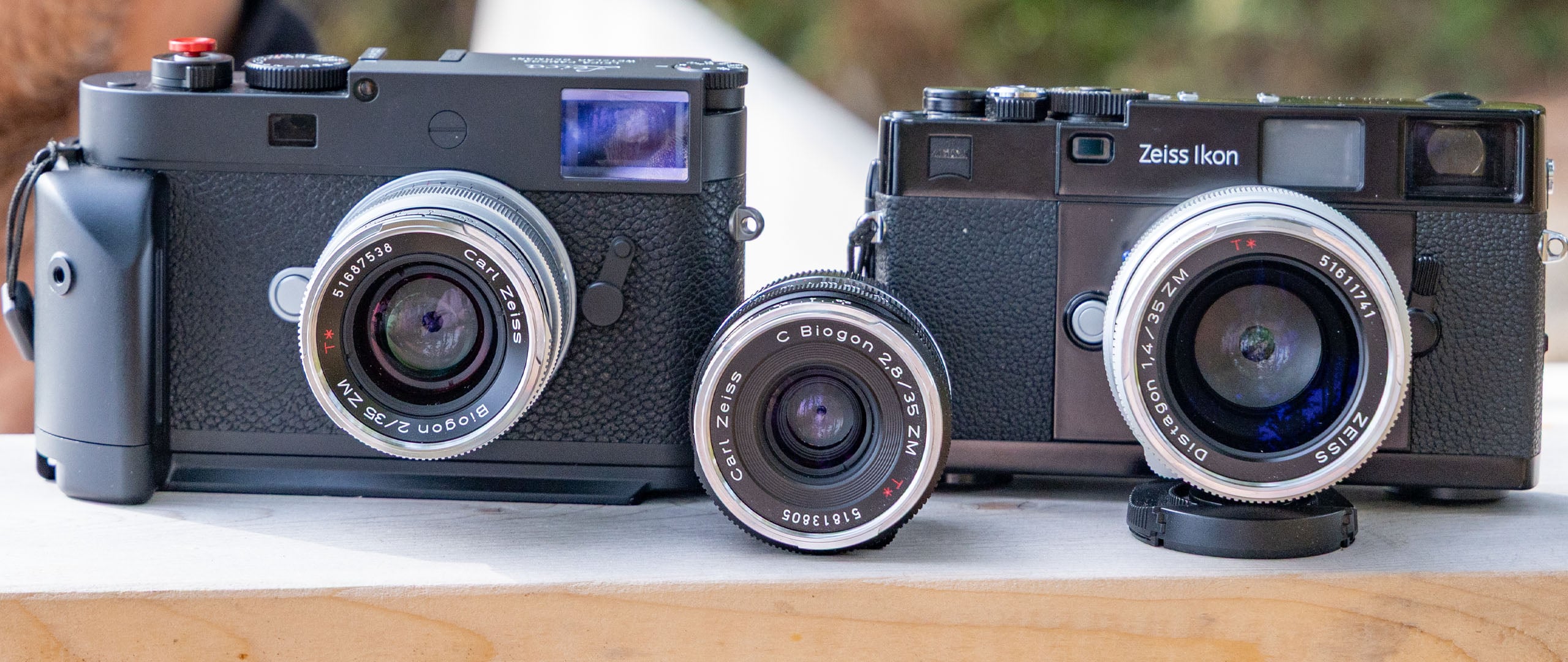
There is something quietly radical about a photographer choosing three lenses of the same focal length. The 35mm prime is already the most popular on the planet, a workhorse that lives on cameras from Tokyo to Tbilisi. But Zeiss has built three distinct ZM interpretations of that single number, and the message is clear: seeing anew has nothing to do with reaching for a wider angle or a longer reach. It has everything to do with how you choose to frame what is already in front of you.
This is a lesson that echoes through the work of artists who refuse to settle for the obvious. Consider the hidden elegance that photographer Dara Ojo began uncovering during the pandemic, a world of macro detail most of us walk past every day. Through his lens, a world of hidden elegance comes into focus. His approach is not about finding a new subject; it is about finding a new way to see the one that is already there. That same spirit drives the Zeiss ZM trilogy. By offering three distinct optical personalities, each with its own character, contrast, and rendering, Zeiss is inviting us to treat a single focal length as a creative palette rather than a fixed prescription. It is an act of curation, not collection.
For the photographer who values both form and function, this matters in a very practical way. You do not need to pack a bag full of zooms or chase exotic glass to refresh your vision. You need a single frame of reference and the willingness to see it differently. Annie Leibovitz understands this instinct intimately. When she captured Florence Pugh for Jaguar's latest artistic frame, she did not rely on novelty; she relied on composition, light, and the deep familiarity of her craft. Annie Leibovitz Captures Florence Pugh in Jaguar's New Artistic Frame. The result is not a product shot; it is a portrait that feels both intimate and monumental. That is the power of mastering one tool so completely that you can make it sing in three different keys.
What this means for you, whether you shoot film or digital, is an invitation to slow down. The 35mm ZM lenses are not about speed or convenience. They are about intentionality. Each version, the Distagon, the Biogon, the C Biogon, asks you to choose a mood before you press the shutter. One leans into clinical precision; another breathes with a softer, more vintage warmth. The choice itself becomes part of the creative process. And if you are planning a photographic journey, that kind of deliberate decision-making is precisely what elevates a trip from documentation to art. Seven Curated Destinations for the Photographic Journey Ahead reminds us that where you point your lens matters, but how you see that place matters more.
The concrete takeaway is this: the next time you find your work feeling predictable, resist the urge to buy a new camera. Buy a different way of looking instead. Zeiss has given you three of them, all at 35mm. The question is not which one is best. The question is which version of yourself you want to see the world through.