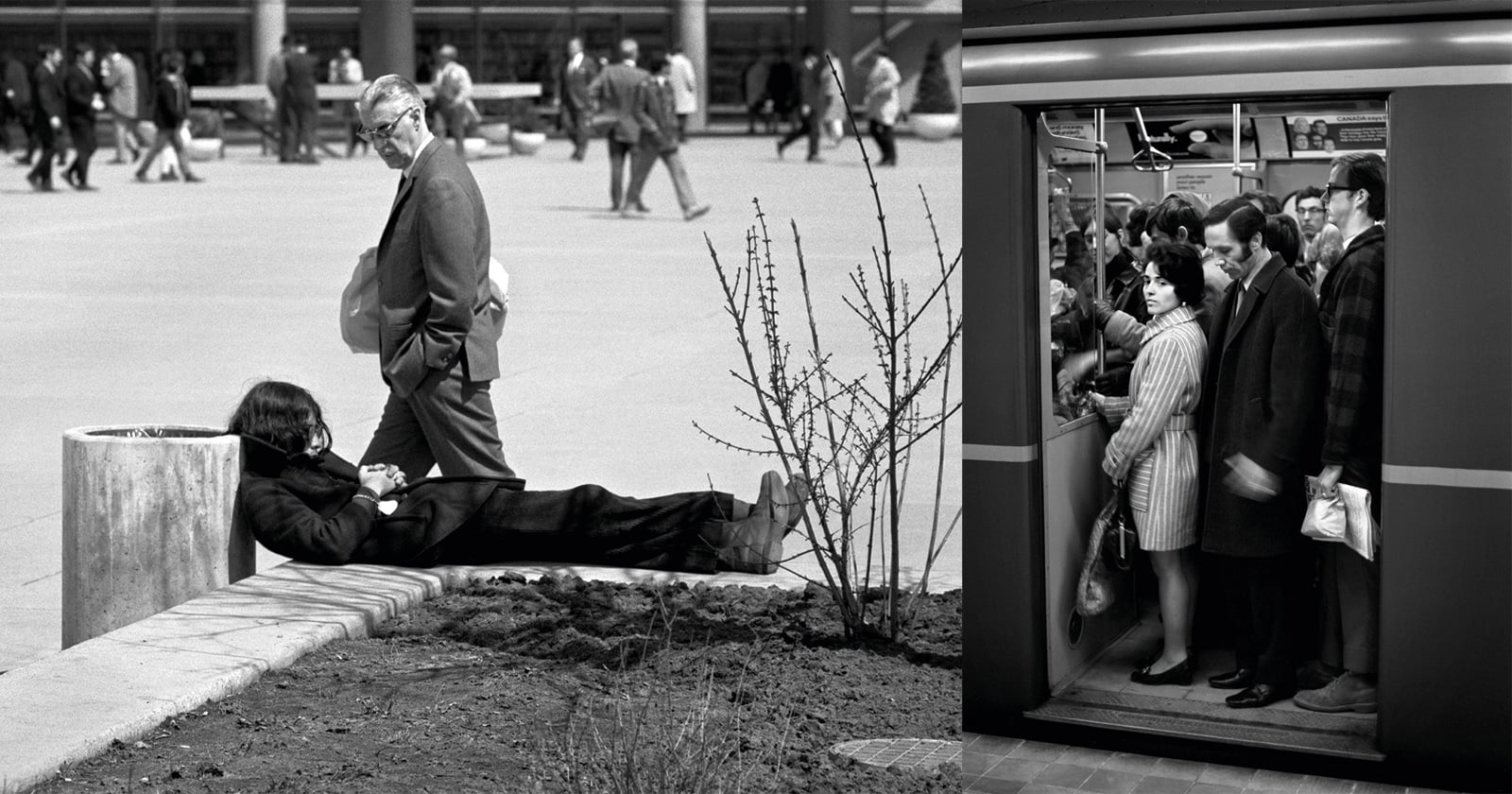
There is something quietly revolutionary about a book of photographs that waited fifty years to be seen. Brian Condron's *Toronto in the Seventies* does not arrive as a nostalgia play or a historical footnote. It arrives as a correction, a reminder that the most enduring images are often the ones that were never rushed into circulation. In an era where every frame is immediately judged, filtered, and archived, Condron's unpublished black-and-white street photographs offer a different kind of value: the kind that accrues in silence. We think this matters deeply for anyone who cares about how we document our lives, not just our cities.
The timing is striking. Our recent coverage of the 5 Boro Foto Fest celebrated a festival that bans AI-generated images outright, insisting on the human hand behind every frame. Condron's work is the ultimate case for that argument. These are not technically perfect images engineered for maximum engagement. They are grainy, candid, and deeply atmospheric, a man walking a dog past a shuttered storefront, a lone figure crossing a rain-slicked street. The grit is the point. The authenticity is the gift. And in a culture that now debates whether a photograph can even be trusted, Condron's book feels like an anchor. It reminds us that the best street photography has always been about the photographer's eye, not the camera's specs.
What makes this more than a collector's curiosity is what it reveals about Toronto itself. The city in these frames is not the polished metropolis we know today. It is raw, textured, and unglamorous, a place where architecture and humanity coexist without curation. This is the same spirit we admired in Fireworks and Frames, where a platinum master captured a city's victory glow through a painstaking, analog process. Both projects honor the slow craft of seeing. Both reject the notion that an image must be immediate to be meaningful. For our readers, the practical takeaway is this: there is power in holding back. In an age of oversharing, Condron's discipline, to shoot, to wait, to trust that time would find the work, is a creative strategy worth adopting.
The open question is what else remains hidden in archives, in shoeboxes, in hard drives we have forgotten. Condron's book proves that a single body of work can reframe a city's identity decades later. It also proves that the photographer's role is not just to capture the moment, but to protect it until the world is ready to see. That is the detail to watch: not just the images in the book, but the quiet act of preservation that made them possible. For anyone building a creative practice, the lesson is unmistakable. Shoot now. Print later. Trust the silence.