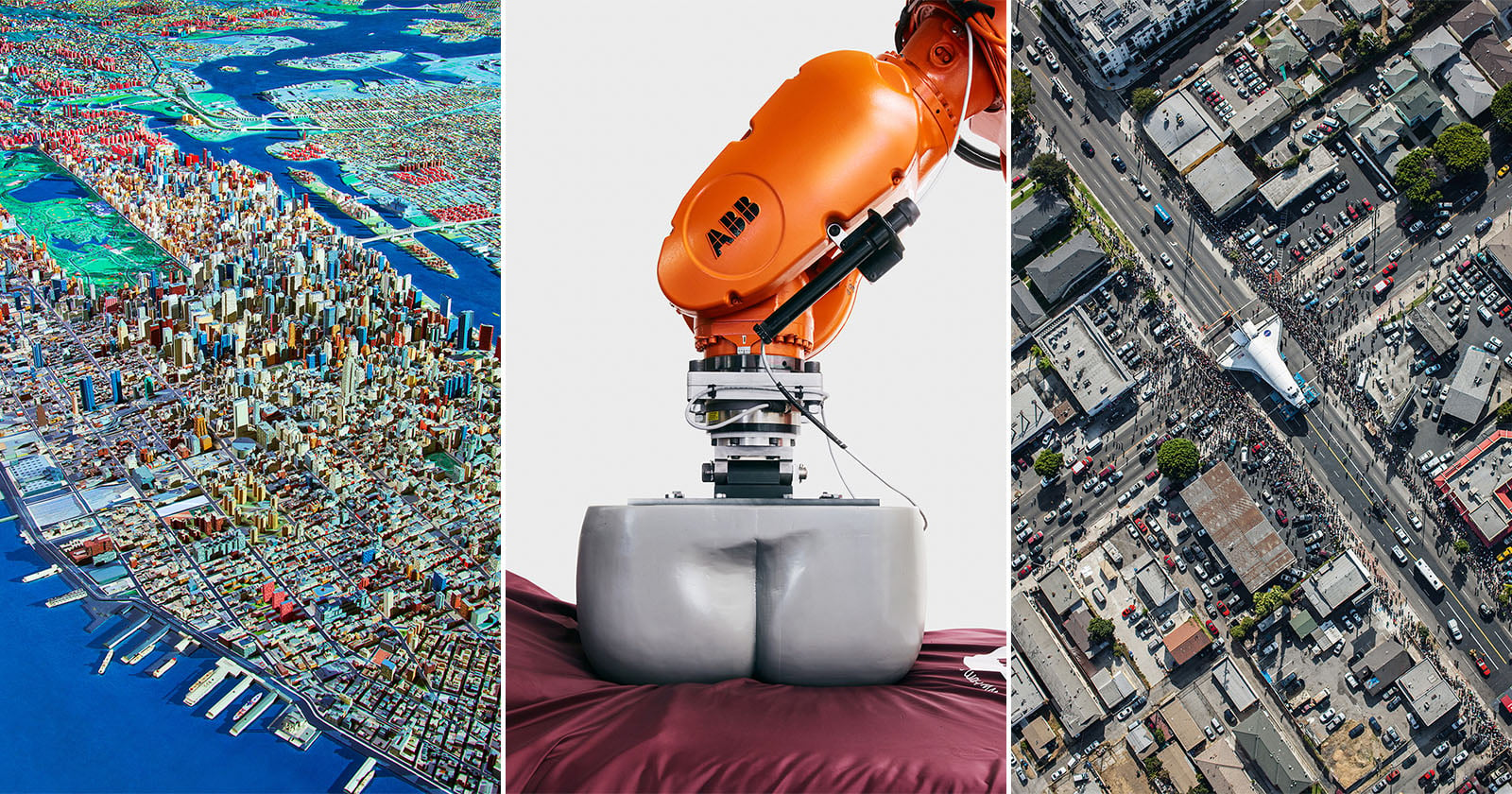
Spencer Lowell's *Futures Past* doesn't just document technology, it dares to ask what technology feels like. That distinction is everything. Across 57 color images, Lowell turns our sleek, cold machines into something unexpectedly warm, occasionally bizarre, and deeply human. This is not a book for engineers seeking schematics. It is a book for those of us who want to understand the soul behind the silicon, the poetry in a robotic arm pressing into a gray form. And that, we think, is precisely the kind of art our moment demands.
We have long admired how a photographer's eye can transform the mundane into the curated. Through Sittichai's lens, Bangkok's everyday chaos becomes curated art does this for street life, finding visual harmony in the ordinary rush of a city. Lowell operates on a different frequency, but the impulse is the same: to impose order and meaning on what might otherwise be overlooked. Where Sittichai finds art in chaos, Lowell finds it in precision. Where one captures the spontaneous, the other constructs the deliberate. Both remind us that seeing is an act of curation. For our readers, who move between fitness studios, gallery openings, and the latest fashion drops, this idea resonates deeply. We are all, in our own way, curating the intersection of beauty and function.
What makes *Futures Past* truly compelling is its refusal to celebrate technology uncritically. Lowell's images hold a mirror to our age, and the reflection is not always comfortable. A space shuttle being transported through a city street is awe-inspiring, yes, but also faintly surreal, a relic of ambition navigating the everyday. This tension is where the work lives. It aligns with the sensibility we champion: aspirational yet grounded, elevated without pretension. Compare this to the sleek unveiling of The Mate 90 Series Arrives as Huawei's Most Artful Statement Yet, where design and function merge into a polished object of desire. Lowell's monograph asks us to look beyond the polish. It asks what that object means, where it came from, and what it leaves behind.
The practical takeaway for our audience is this: *Futures Past* is a manual for seeing your own world differently. The next time you pick up a smartphone or step into a gym filled with gleaming machines, pause. Consider the human hand that designed them, the labor that built them, the history that shaped their form. Lowell's work does not offer answers. It offers a sharper lens. And the specific detail we will be watching is whether this monograph sparks a broader conversation in the art and design communities about the aesthetics of infrastructure, the beauty hidden in server farms, assembly lines, and launch pads. That is a conversation worth having, and *Futures Past* has just lit the fuse.