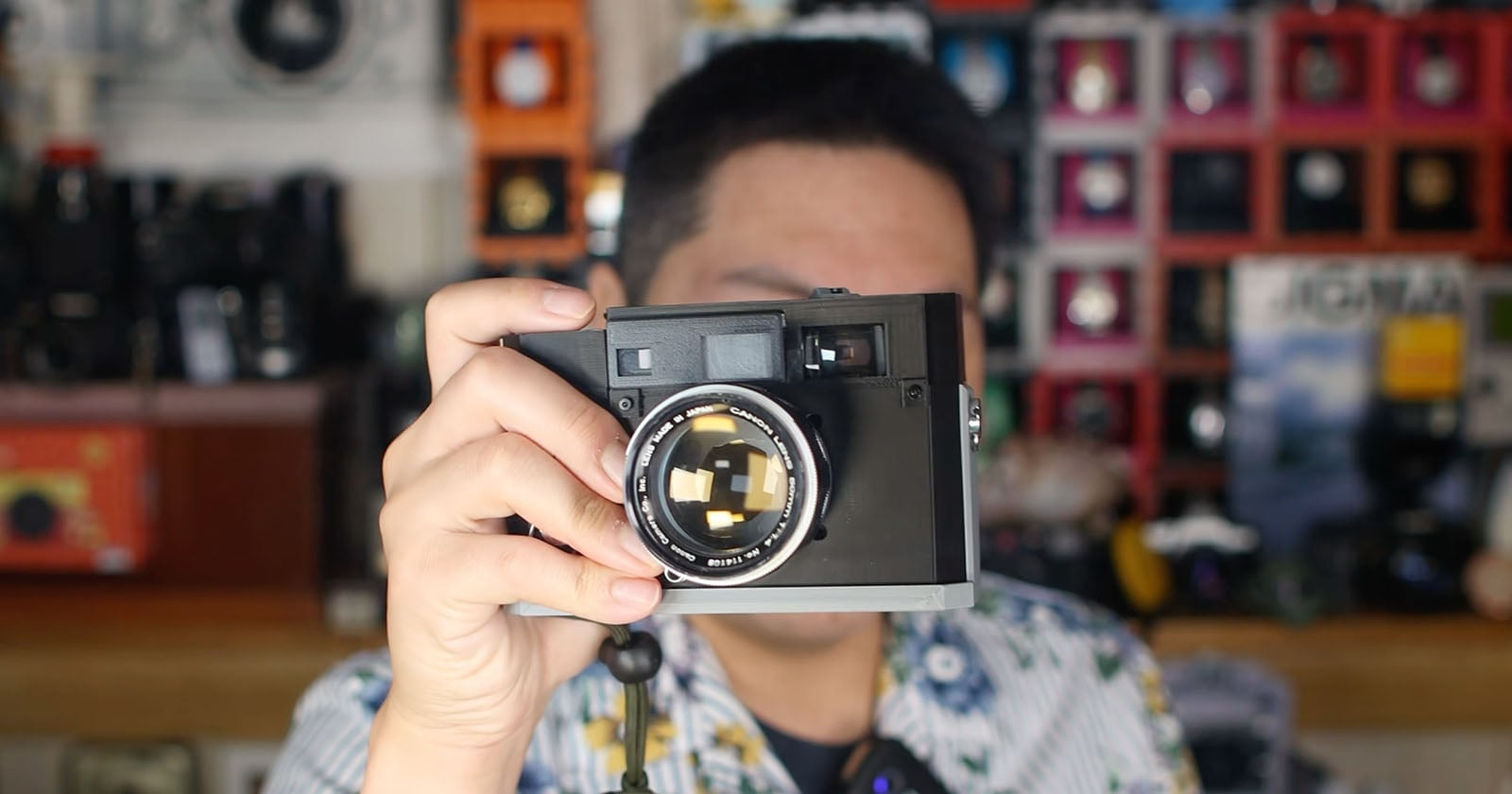
There is something quietly radical about watching a creator gut two obsolete cameras and fuse them into one singular vision. Mr. 50mm has done it again, this time upgrading his DIY digital rangefinder from Micro Four Thirds to APS-C, proving that innovation often lives not in the next flagship release but in the willingness to break things apart and rebuild them. We think this matters because it challenges the assumption that better photography requires a bigger budget or a newer model. For anyone who has ever felt trapped by the upgrade cycle, this project is a tangible reminder that the tools we already own, or can salvage, hold more potential than the industry often admits.
The original build earlier this year used a FED 5 Soviet-era rangefinder and a Panasonic GF3, a combination that felt more like art school experiment than practical tool. Now, by moving to an APS-C sensor, Mr. 50mm has created something that sits in a fascinating middle ground: the soul of a classic mechanical rangefinder married to a sensor size that many professionals still trust for editorial and street work. It is not a product you can buy, and that is precisely the point. It is a statement about intention over convenience. For readers who follow The Art of the Frame: How Sensor Shape Shapes Your Visual Story, this DIY build becomes a live demonstration of why sensor choice is never just a spec sheet number, it is about how you want to see the world. And for those eyeing Curated savings on Sony mirrorless cameras from entry to flagship, the contrast is instructive: you can hunt for a deal on a polished system, or you can build something that no retail shelf will ever offer.
What we find most compelling is how this project mirrors the ethos of creators like David Yarrow, who recently discussed finding inspiration in unlikely places. Mr. 50mm did not wait for a manufacturer to release the perfect digital rangefinder, he made one from parts that most people would call junk. That kind of resourcefulness is not just about saving money; it is about reclaiming agency in a market that constantly tells us we need the next thing. The Art of Influence: David Yarrow on Finding Inspiration in the Unlikely reminds us that the best creative work often emerges from constraints, not from abundance. Mr. 50mm's constraint was a pile of old gear, and the result is a camera that exists nowhere else.
The practical takeaway here is direct: your next great tool might not come from a box. It might come from a shelf of forgotten cameras, a steady hand, and a clear idea of what you actually want to shoot. The question Mr. 50mm leaves us with is not whether his DIY rangefinder will inspire a commercial release, it likely will not. The real question is whether more photographers will stop waiting for permission and start building their own vision, one salvaged part at a time.