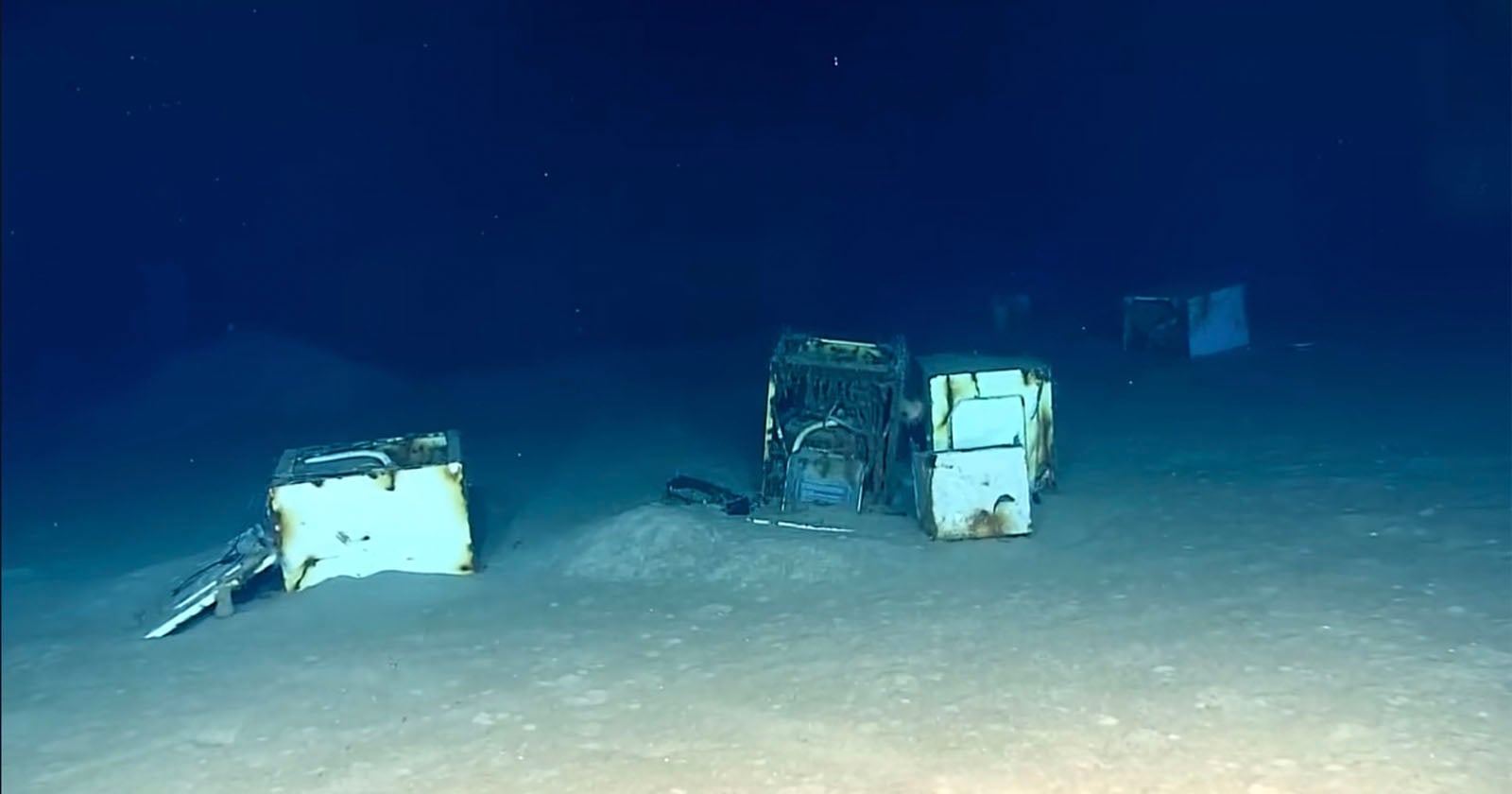
There is something unexpectedly poetic about a washing machine resting on the ocean floor. The footage NOAA released from a 2017 expedition shows a remotely operated vehicle searching for a shipwreck, only to find discarded white appliances half-buried in sandy sediment. It is not the discovery anyone planned, and that is precisely why it lingers. We are drawn to stories of nature's grace, a humpback whale mourning her calf in A Mother's Grief: Witnessing a Whale’s Profound Loss or an octopus riding a dolphin in An Unlikely Duo: Octopus and Dolphin Share a Moment in UK Waters. But this find asks us to look at what we leave behind.
The washing machines are not treasure. They are evidence of a relationship with objects that feels increasingly out of step with the aspirational, curated world many of us work to build. We talk about sustainability in fashion, clean beauty, and mindful movement. Yet here is a machine designed to clean our clothes, abandoned in the one place it cannot be cleaned up. It is a quiet, uncomfortable mirror. The NOAA team went looking for history beneath the waves and found modern convenience instead, frozen mid-cycle in the dark. For readers who value authenticity and intentional living, this footage is a reminder that what we discard often outlives what we cherish.
We would tell a reader who asked about this story that the most honest takeaway is not about the ocean's pollution problem, that is well documented, but about the gap between our ideals and our habits. A curated life does not end at the edge of your closet. It extends to where your objects go when you are done with them. The washing machine on the seafloor is not a metaphor; it is a machine. But its presence there, unexpected and mundane, asks a practical question: What are we willing to see about the full life cycle of the things we use? The humpback whale's grief in that related study is heartbreaking because it is natural. This is heartbreaking because it is manufactured.
The specific detail to watch is what NOAA chooses to do next. They released this footage years later, which suggests they see value in showing the unintended results of exploration. If they continue to share these "failures" alongside their successes, they offer a more complete portrait of our relationship with the ocean. That is a perspective worth following. In the meantime, consider this: the next time you replace an appliance, ask where the old one goes. The answer might be more curious than you expect.