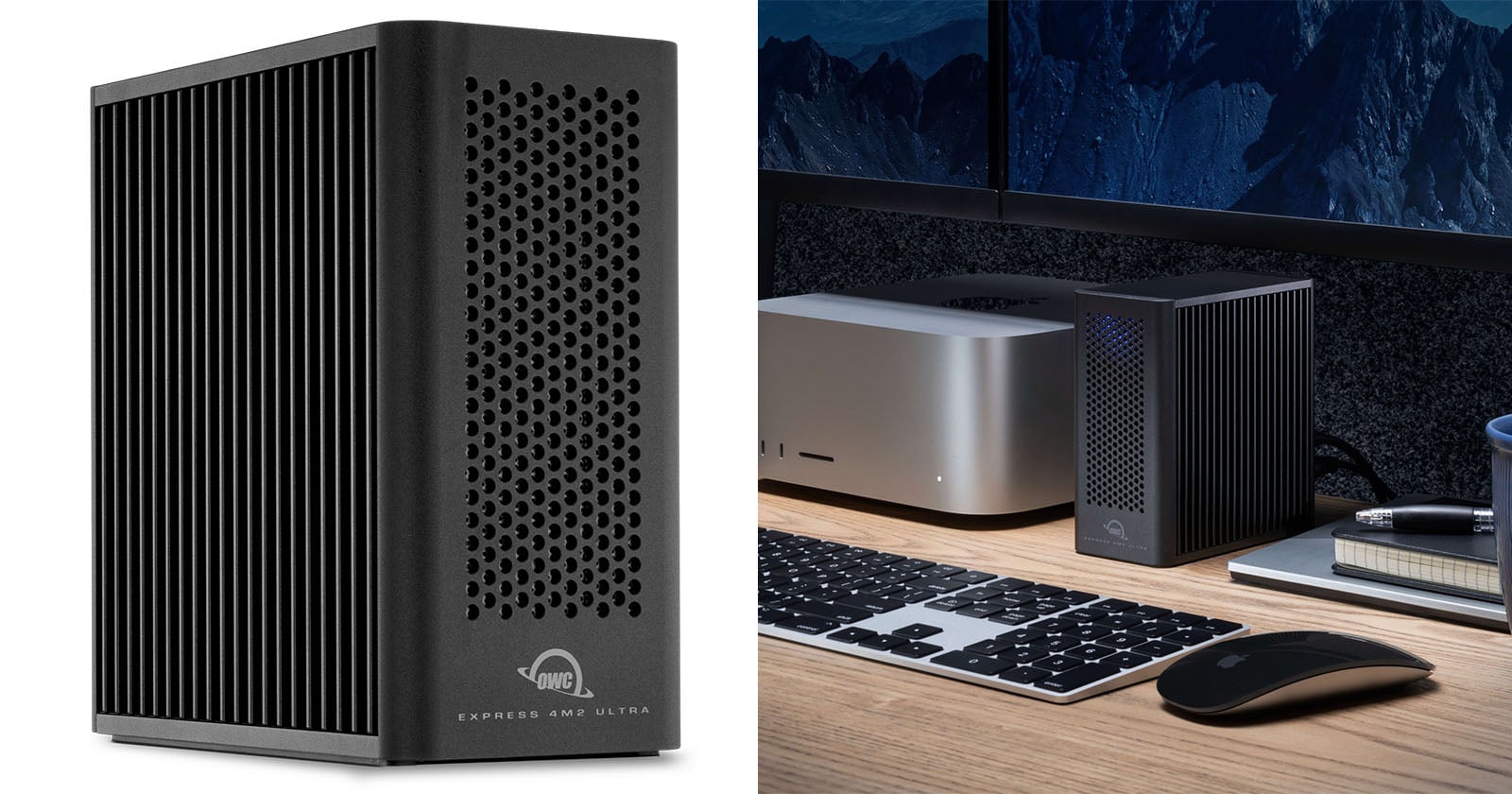
There is a particular kind of quiet thrill that comes when the tools of our creative lives finally catch up to the speed of our thoughts. Other World Computing's new Express 4M2 Ultra is precisely that kind of moment, a compact Thunderbolt 5 NVMe RAID that promises to dismantle the oldest bottleneck in the modern workflow. In a world where our cameras capture ever-heavier files and our edit timelines grow more layered, storage has long been the unglamorous wall we run into. This is the wall coming down. The unit, available pre-loaded in capacities up to 32TB, is not just an incremental bump; it is a statement that the era of waiting is officially over.
We see this as a natural evolution of the same creative hunger driving the other innovations we cover. Consider how Snapdragon Power Elevates the New Surface Pro and Laptop is pushing the boundaries of what a mobile workstation can handle, or how A Pocketful of Perspective: Panasonic's New 20mm Lens is redefining the intimacy of a single frame. These tools are about capturing and processing moments with less friction, and the OWC drive slots perfectly into that ecosystem. It is the silent partner to the ambitious shoot, the unspoken enabler for the photographer who wants to tether their camera and not think twice. The promise here is not just raw speed, but a fluidity that lets you stay in the creative zone, unbroken by the spinning wheel of death.
Our honest take is that the practical impact here is less about the raw terabyte numbers and more about the architecture of trust. For the working professional, the difference between a 10-minute export and a 2-minute export is not a convenience; it is the ability to take on another client, to deliver on a tight deadline, or to simply go home at a reasonable hour. The fact that OWC has engineered this into a compact form factor, moving away from the desk-bound behemoths of yesteryear, speaks to a curated sensibility that our audience appreciates. It is aspirational because it removes the compromise between capacity and portability. We would tell a reader who asks, "Do I need this?" that if you have ever felt your computer stutter while scrubbing through 8K footage, you already know the answer. This is not about having the fastest toy; it is about removing the friction between your vision and the final render.
The real question this raises is not whether the drive is fast enough, but whether your entire workflow is ready to handle what comes next. As we see the rise of AI-assisted editing and more complex multi-stream projects, the storage medium becomes the quiet foundation. The most compelling detail to watch is how the Thunderbolt 5 standard evolves beyond just this single enclosure. For now, the takeaway is simple and worth quoting: "The bottleneck has shifted from the drive to your imagination." We would advise any serious creator to look at this not as a peripheral, but as the new centerpiece of their digital studio, the one piece of gear that justifies every other expensive investment on your desk.