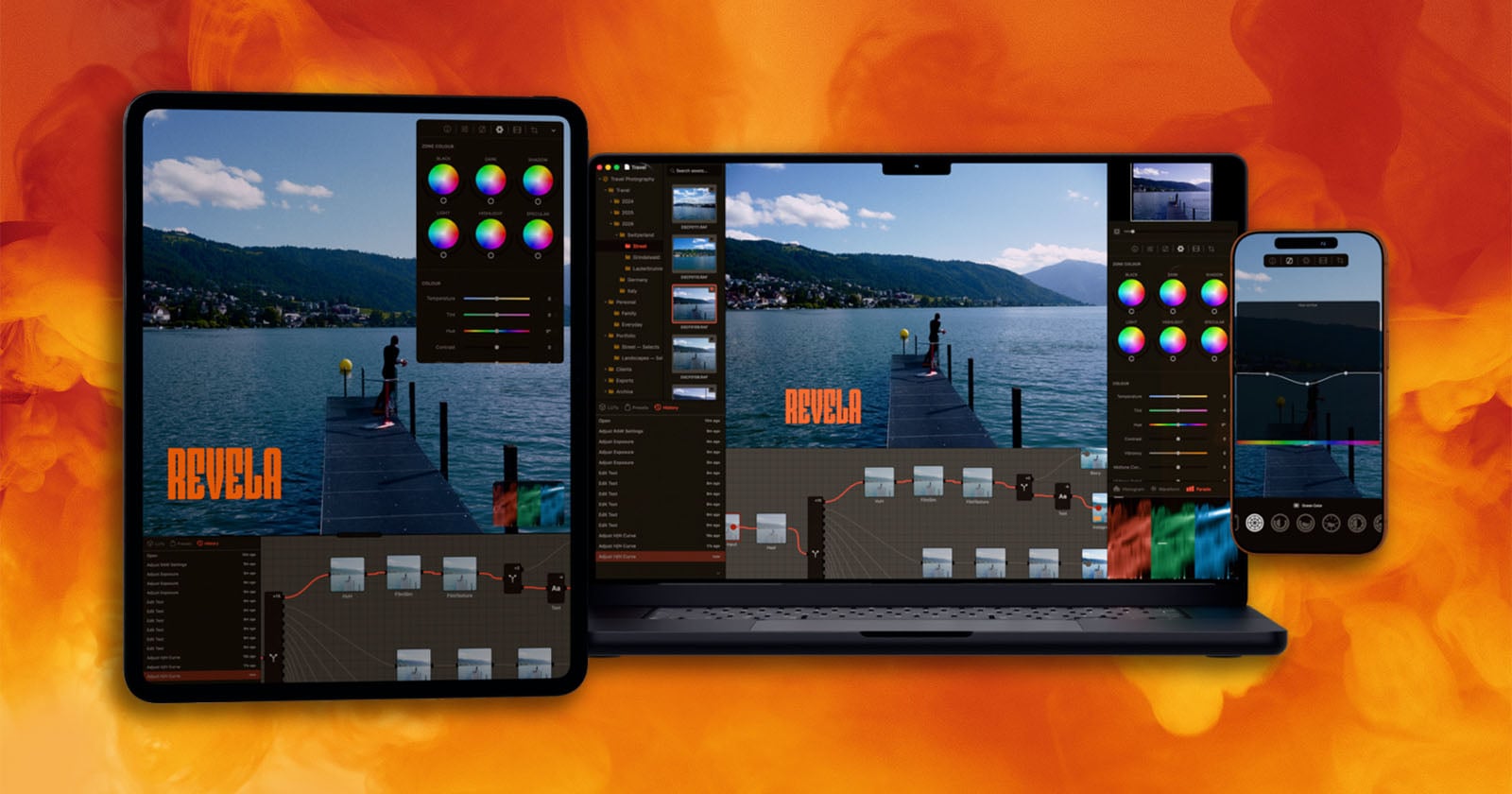
There is a particular kind of calm that settles over a workspace when the tools finally match the ambition inside your head. Pearla Mostra, the freshly formed company behind this week's announcement, seems to understand that feeling intimately. Alongside the considerably refined Pearla Verana IV camera app, the studio has introduced Pearla Revela, a non-destructive node-graph editor for photos and videos across iPhone, iPad, and Mac. On paper, that sounds like a professional feature list. In practice, it feels like an invitation to stop fighting the software and start thinking in pure, visual logic.
The node-graph approach is not new, but bringing it to touchscreens and consumer hardware with this level of polish is a bold statement. For our readers who have spent years wrestling with layers and adjustment masks, Revela offers a different rhythm. You are no longer stacking panels; you are building a visual map of your intent. Every adjustment, every grade, every effect is a node, a tangible piece of your creative decision-making that you can rewire, mute, or reconnect without ever damaging the original file. That is the quiet revolution here. It is non-destructive in the truest sense, not just for your pixels, but for your process. You can experiment with a wild, orange-teal grade or a stark monochrome pull and know, with absolute certainty, that the source remains pristine beneath the graph.
What makes this more than a technical curiosity is the way it democratizes a formerly intimidating workflow. We would tell any reader who has felt the ceiling of traditional sliders to give this a serious look. The learning curve is real, but it is not steep in the way you might fear. It is more like learning a new language where the grammar is visual. The payoff is a fluidity that mirrors thought itself. You want to see how a grain effect interacts with a specific luminance mask? Drag a connection. You want to swap the order of your sharpening and your color balance? Reroute the wire. It is immersive, yes, but also deeply authentic to how a creative mind actually assembles an image. This is not about adding more presets; it is about giving you a clearer view of the architecture of your own taste.
The practical consequence for our audience is significant. This is not just another app vying for a spot on your home screen; it is a signal that the barrier between mobile and desktop work is dissolving into a matter of preference, not power. The question we are left with, and the one we would watch closely, is how Pearla Mostra integrates this with the new Verana IV's capture capabilities. The editor is powerful, but the magic will be in the handoff. If the camera can feed the graph with the same level of raw, unprocessed data that the node system encourages, then we are looking at a workflow that is not just new, but genuinely liberating. For now, the takeaway is simple: your vision deserves a more flexible canvas, and Revela is a compelling argument that the canvas should bend to you. The specific detail to watch is how deeply the iPadOS version takes advantage of the Apple Pencil's hover and scribble gestures, because that will determine whether this remains a niche tool or becomes the new standard for mobile artistry.